


The recent posts have focused on transatlantic slavery. Ever since I first started writing and speaking about this subject more than 15 years ago, I have repeatedly encountered a particular reaction: the almost reflexive urge to downplay the scale, brutality, and lasting consequences of slavery
This is often done by pointing out that slavery has existed in many parts of the world, not least in Africa and the Muslim world, and arguing that the transatlantic version therefore receives an undeserved amount of attention.


I remember, for example, publishing a column in Dagens Nyheter, one of Sweden’s largest newspapers, a few years ago about the Netherlands’ apology for slavery. Despite being a column, the piece was not particularly argumentative. It was essentially an account of the Dutch prime minister formally apologizing for the country’s role in slavery and the slave trade in both the Atlantic world and Asia. It also provided some background on the events leading up to the apology and the divided response it received.
I discussed the Dutch people who felt the apology was long overdue, those who believed the country did not need to apologize at all, and those who thought the apology was either meaningless or insufficient.
I also noted that quite a few nations – including my country of Sweden – have never apologized, and suggested that the Netherlands’ apology might put pressure on states that had so far remained silent.


Later that same day, Smålandsposten, a Swedish regional newspaper, published a response in which its political editor criticized me and claimed I had demanded an apology from Sweden as well.
People can, of course, hold all kinds of opinions about whether Sweden should apologize for slavery. But what was interesting in this case was that I had not actually demanded a Swedish apology at all. Once again, I had merely written that the Netherlands’ apology might put pressure on other countries that had been involved in different ways. It was speculation about the apology’s possible consequences, not a demand.
The fact that the writer described it that way anyway says something about how charged and sensitive the issue of responsibility for transatlantic slavery remains for many people. Some apparently see red the moment the subject is even mentioned.
But the most interesting thing about his article was that it provided a clear example of what I mean by the reflexive urge to downplay. He argued that discussing apologies for transatlantic slavery was ahistorical. What he meant was: where do we draw the line? Countless states have committed serious atrocities throughout history, so why should Europe in particular have to apologize or pay for its crimes? To drive home the point that others had also committed atrocities, he wrote:
“Few people know this, but more Europeans were shipped to North Africa as slaves than Africans were shipped to the United States.” (My translation.)
That certainly sounds striking.
But whenever someone compares different forms of slavery across history, it is important to pay attention to how and why that particular comparison is being made. In my experience, there is a good chance that it is being made dishonestly.
Let me show you what I mean:
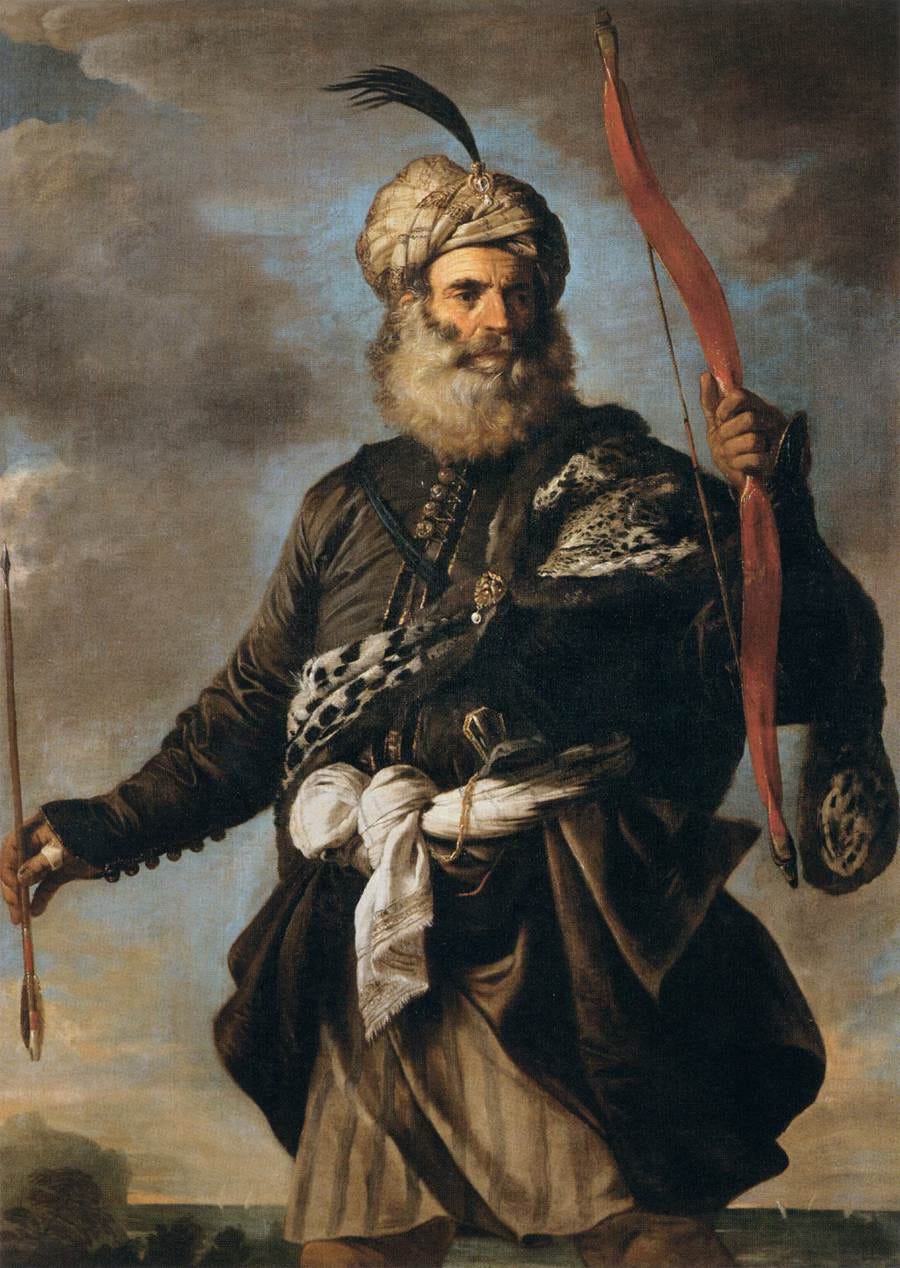
When people talk about Europeans who were enslaved in Africa, they are usually referring to slavery along the so-called Barbary Coast. This included the North African regencies of Algiers, Tunis, and Tripoli, which formally belonged to the Ottoman Empire but enjoyed considerable autonomy, as well as the independent kingdom of Morocco.
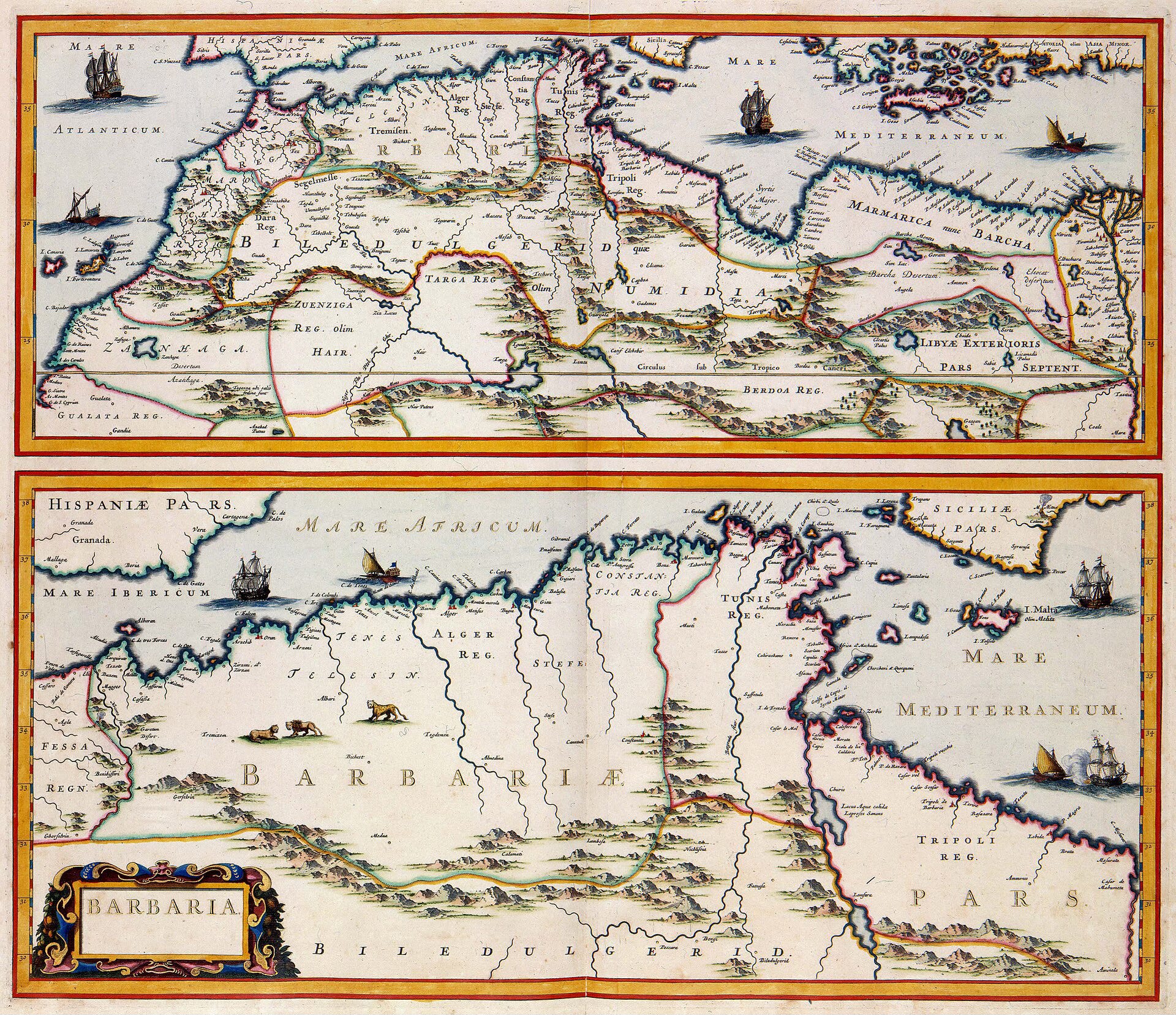
From the 1500s until the early 1800s, North African corsairs operated from bases along this coast. From there, they sailed across the Mediterranean and parts of the eastern Atlantic, primarily attacking ships and coastal communities belonging to Christian powers with which they had no peace or protection agreements. The areas affected included present-day Italy, the Canary Islands, England, the Netherlands, and Ireland. Raids reached as far north as Iceland.
During these attacks, the corsairs captured people. For some captives – especially those believed likely to fetch money – ransom was a central part of the system. Others were sold and exploited as slaves in galleys, construction work, quarries, and private households.
The number of Europeans who were made slaves is uncertain because the surviving sources are fragmentary, and there are no complete, continuous records of how many people were captured and enslaved. One frequently cited high estimate is 1.25 million. It comes from the historian Robert C. Davis, whose book Christian Slaves, Muslim Masters was published in 2003.
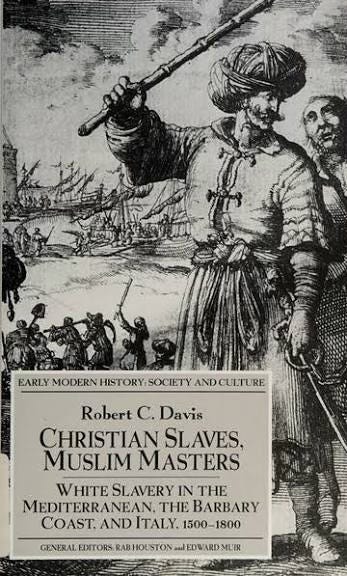
In the absence of reliable figures, Davis worked with estimates, and there is far from a consensus around his models and calculations. Other historians, including Peter Earle, who published Corsairs of Malta and Barbary in 1970 and The Pirate Wars in 2003, argue that the numbers were considerably lower.
But even if, for the sake of argument, we accept Davis’s high estimate of 1.25 million, we still need to ask why the writer framed the comparison in that particular way: you know, “more Europeans to Africa than Africans to the United States.”
First, slavery along the Barbary Coast was part of the struggle between Muslim and Christian powers around the Mediterranean. During these conflicts, Christian states also enslaved Muslims. One example was the Order of St. John – later known as the Knights of Malta – which was based in Malta from the 1500s.
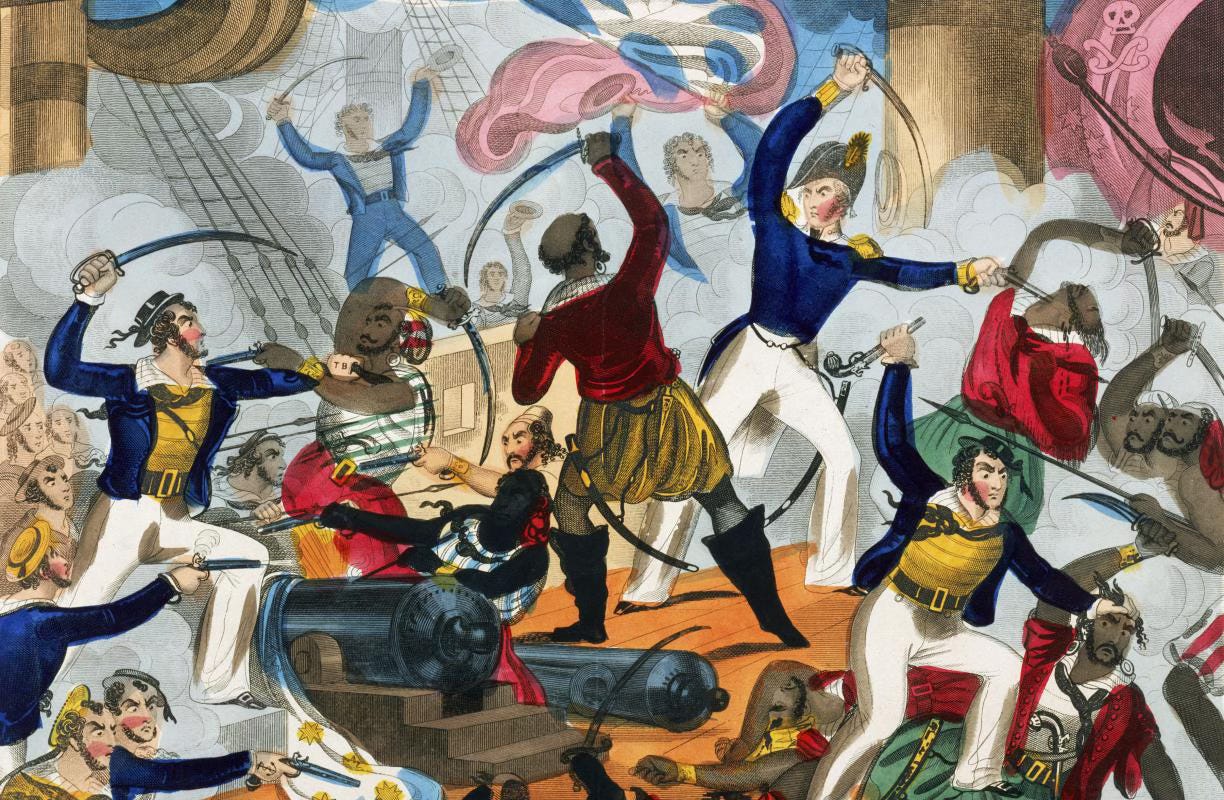
The enslavement of Europeans was therefore not a reaction to, or revenge for, the European enslavement of West and Central Africans. Barbary slavery belonged to a different, partly reciprocal system of warfare, privateering, ransom, and captivity around the Mediterranean.
But the biggest reason to question the comparison is that it relies on a bit of sleight of hand and, very conveniently, revolves around the United States. Why focus specifically on the United States?
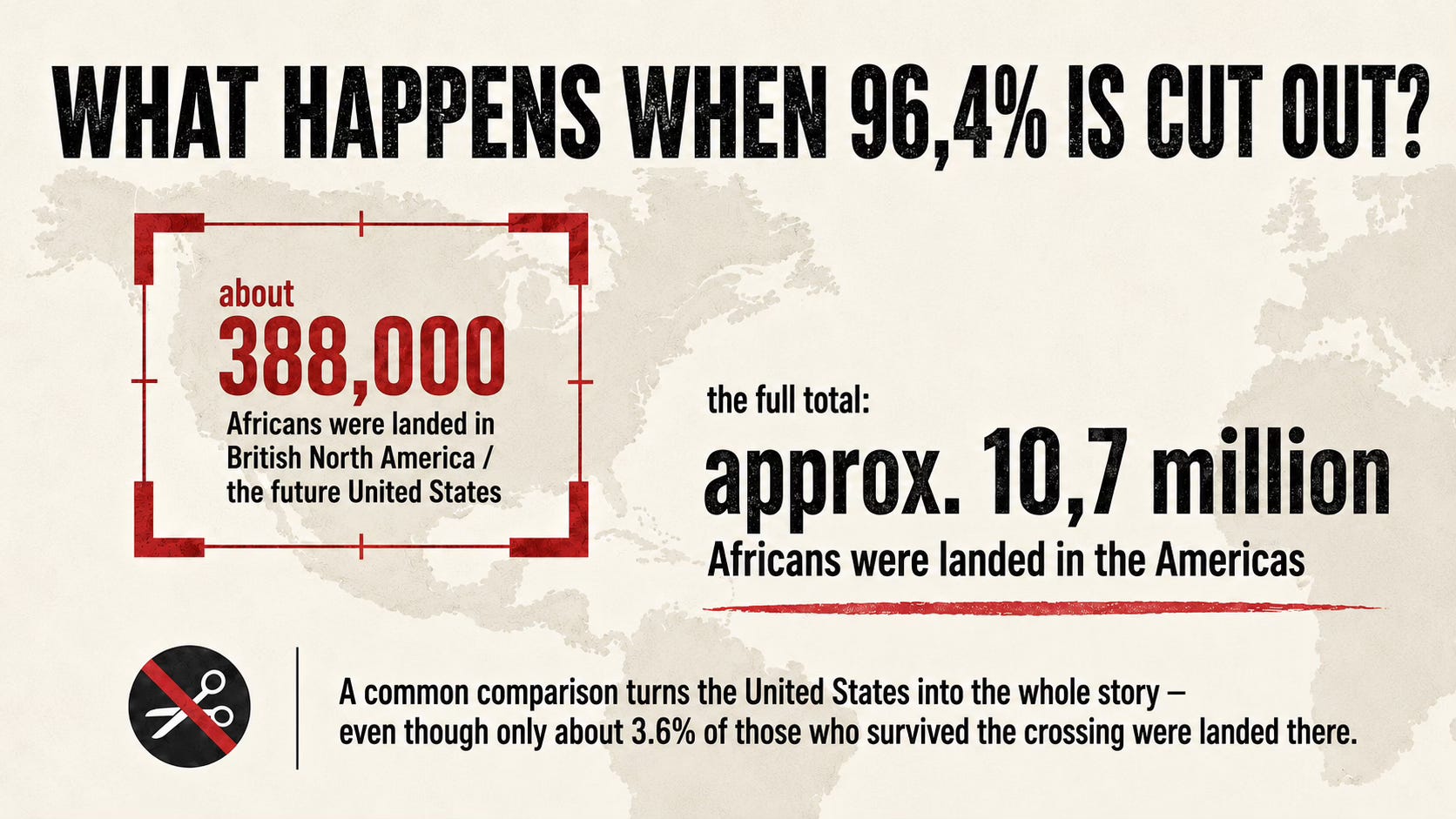
As I explained in my series on slavery, historians estimate that more than 12.5 million Africans were forced aboard slave ships bound for the Americas. Around 10.7 million survived the crossing and were disembarked. Of those, only about 388,000 – roughly 3.6 percent – were landed in British North America and the territory that later became the United States. More than 96 percent were landed elsewhere, above all in the Caribbean and Brazil.
The writer said nothing about that. Why? If the aim is to compare Barbary slavery with the transatlantic slave trade, why compare the entirety of one system with only a small geographical fraction of the other?
The answer, of course, is that the full picture does not serve the political point he was trying to make. Once the entire transatlantic trade is taken into account, the explosive claim falls apart. You can say that more Europeans were taken to North Africa than Africans were taken directly to the future United States. You cannot say that more Europeans were taken to North Africa than Africans were transported across the Atlantic to the Americas.
Although this was never Davis’s intention, his book has become popular in alt-right and far-right circles internationally, where its figures have been used to relativize the transatlantic slave trade – an interpretation Davis himself has rejected.
This is exactly what I warn against when I talk about the dangers of comparing different forms of slavery.
Distorted comparisons like the one in Smålandsposten do not come from any genuine curiosity about how different historical slave systems actually operated. They are used to push a political agenda. In this case, the agenda was to make people believe that Europe’s role in the transatlantic slave trade was not as extensive or devastating as it is usually presented, or that the moral balance somehow evens out because Europeans “went through the same thing” and other perpetrators were supposedly much worse.
It is also striking how the same people suddenly become interested in slavery along the Barbary Coast – or elsewhere in the Muslim world – the moment transatlantic slavery comes up. They seldom discuss it on its own terms. The result is whataboutism on an epic scale, aimed at minimizing or downplaying the brutality and scale of the transatlantic system.
Beyond the enormous difference in the estimated number of people enslaved across the Atlantic and along the Barbary Coast, we also need to recognize how these two systems differed. This is something I have had to repeat constantly: slavery is always wrong, but not all forms of slavery look the same.
The enslavement of European Christians by the Barbary corsairs was organized primarily along religious and political lines. It did not develop into the same kind of race-based, hereditary legal order that emerged across much of the colonial Americas. That does not mean that race was irrelevant to North African slavery more broadly, only that European captives were not assigned a permanent slave status based on an inherited idea of European racial inferiority.
In the colonial Americas, African ancestry gradually became tied to an inherited legal status of enslavement. People could be bought, sold, and inherited as property, and children inherited their mothers’ status. In parts of the plantation system, enslaved people were treated as disposable labor.
Enslaved Christian Europeans could convert to Islam. Conversion did not automatically bring freedom, but it could improve a captive’s position or prospects.
Some European converts became corsairs themselves. One well-known example is the Dutch privateer Jan Janszoon, who was captured in 1618, converted to Islam, and became a notorious corsair in Salé under the name Murad Reis.
In the colonies of the Americas, by contrast, converting to Christianity did not make an enslaved African, or that person’s children, free.
The Barbary states also did not create anything comparable in scale, duration, or economic function to the permanent intercontinental network that supplied plantation economies in the Americas with enslaved labor for centuries.
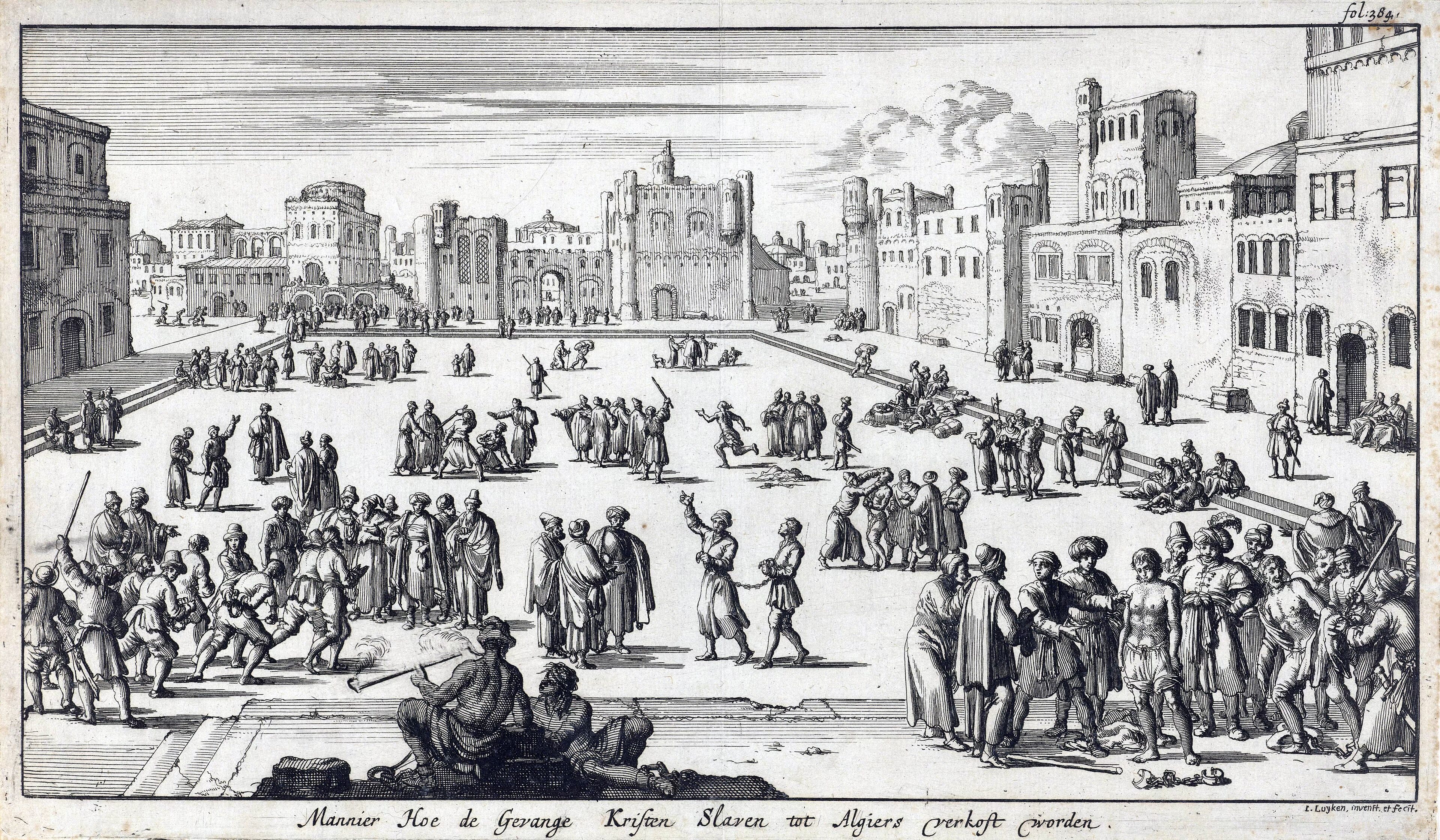
To be absolutely clear: slavery is by definition abhorrent, and my point is not that the Christian Europeans enslaved by the Barbary corsairs escaped violence or lived tolerable lives. They were obviously subjected to atrocities.
But the differences I have highlighted – the enormous number of people enslaved, the race-based and hereditary legal order, and the system’s intercontinental scale – are crucial to understanding why transatlantic slavery stands out. They also help explain why so much research and writing has been devoted to it.
Transatlantic slavery became intertwined with racist legal systems, colonial expansion, and profit-driven mass production for the global market. Much of the modern Americas emerged from societies whose economies, populations, institutions, and racial hierarchies had been profoundly shaped by transatlantic slavery, although its importance varied considerably from one region to another. The transatlantic system has therefore shaped the Western Hemisphere far more profoundly than Barbary slavery did.
Those who engage in this kind of whataboutism around transatlantic slavery also often claim that the enslavement of Europeans has been silenced, almost censored – that it is something people are not “allowed” to discuss.
What they overlook is that there is a large body of research on the subject. In addition to the previously mentioned Christian Slaves, Muslim Masters, Corsairs of Malta and Barbary, and The Pirate Wars, there is Davis’s follow-up book, Holy War and Human Bondage: Tales of Christian-Muslim Slavery in the Early-Modern Mediterranean.
There is also the anthology White Women Captives in North Africa: Narratives of Enslavement, 1735–1830, edited by Khalid Bekkaoui; Linda Colley’s Captives; Nabil Matar’s British Captives from the Mediterranean to the Atlantic; and Giles Milton’s popular history White Gold.
It is fair to say that Barbary slavery is less familiar to the general public than transatlantic slavery. But it is simply untrue to describe the subject as censored or forbidden. There is an established international field of research and an extensive body of literature. Anyone who wants to discuss it or draw attention to it is free to do so.
Barbary slavery, like other forms of slavery, deserves attention. I only wish more people could discuss it without relying on dishonest comparisons to diminish the scale and devastation of transatlantic slavery.
Further reading:
Corsairs of Malta and Barbary by Peter Earle (1970)
Captives: Britain, Empire, and the World, 1600-1850 by Linda Colley (2002)
The Pirate Wars by Peter Earle (2003)
Christian Slaves, Muslim Masters: White Slavery in the Mediterranean, the Barbary Coast, and Italy, 1500-1800 by Robert C. Davis (2003)
White Gold by Giles Milton (2004)
Holy War and Human Bondage: Tales of Christian-Muslim Slavery in the Early-Modern Mediterranean by Robert C. Davis (2009)
White Women Captives in North Africa by Khalid Bekkaoui (editor) (2010)
Scholarly articles:
“African resistance to the Atlantic slave trade in West Africa” by Winston McGowan in Slavery & Abolition (vol. 11, 1990)
“Counting European Slaves on the Barbary Coast” by Robert C. Davis in Past & Present (nr. 172, 2001)
Articles:
“New book reopens old arguments about slave raids on Europe” by Rory Carroll for The Guardian (March 11, 2004)
“Segerfeldts konstruktion svajar betänkligt” by Mattias Hagberg in Göteborgs-Posten (September 27, 2018)
“Svartvit svensk debatt om ‘Den svarte mannens börda’” by Stefan Eklöf Amirell in Dagens Nyheter (October 25, 2018)
”Riddare blev pirater i Guds namn” by Andreas Ebbesen Jensen & Niels-Peter Granzow Busch in Världens historia (July 3, 2021)
“Slaveriursäkt är historielöst” bt Fredrik Haage for Smålandsposten (December 5, 2023)