


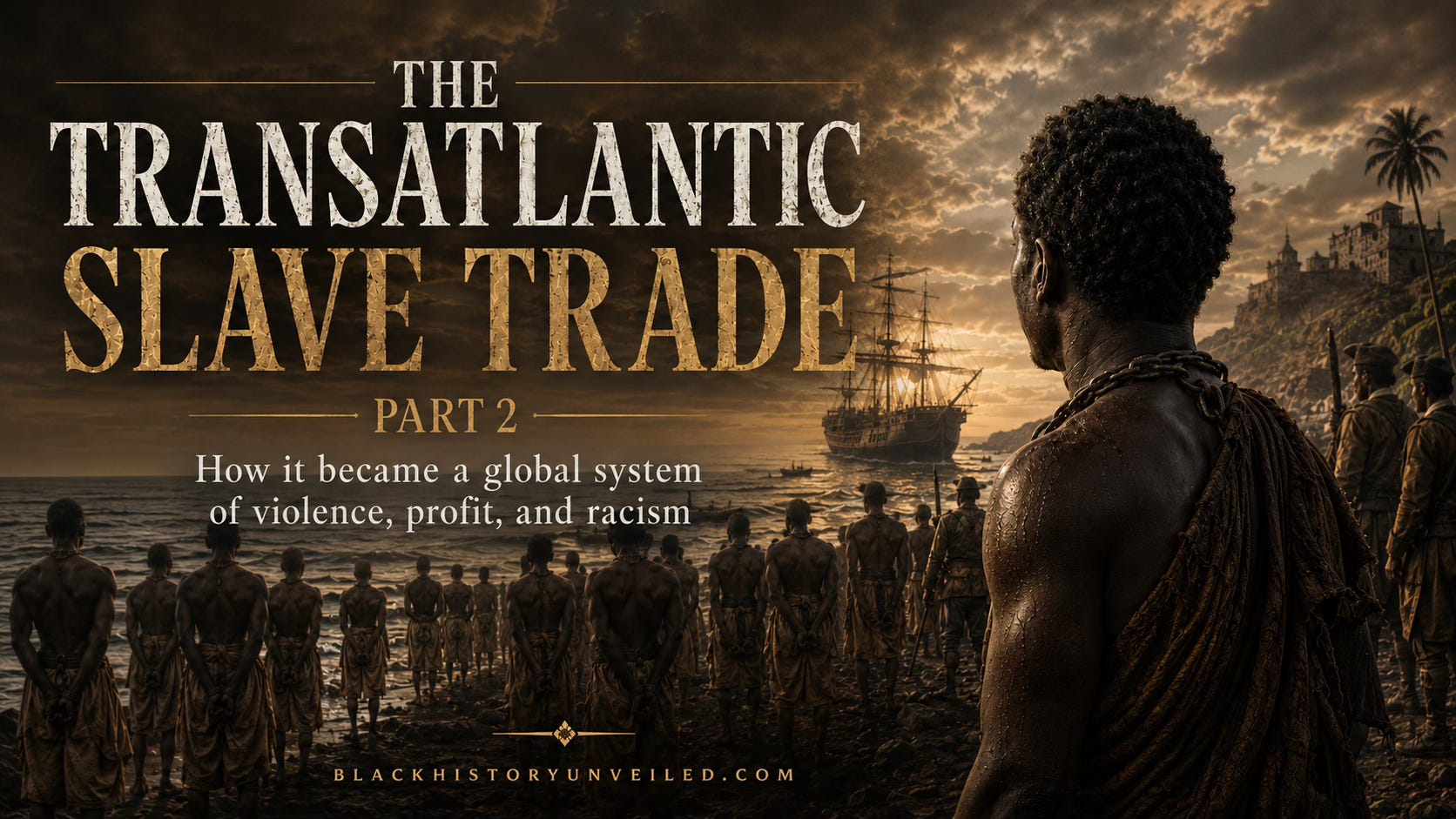
“The first object which saluted my eyes when I arrived on the coast was the sea, and a slave ship, which was then riding at anchor, and waiting for its cargo. These filled me with astonishment, which was soon converted into terror when I was carried on board. I was immediately handled and tossed up to see if I were sound by some of the crew; and I was now persuaded that I had gotten into a world of bad spirits, and that they were going to kill me.
Their complexions too differing so much from ours, their long hair, and the language they spoke, (which was very different from any I had ever heard) united to confirm me in this belief.”
A little later in the text, the testimony continues:
“When I looked round the ship too and saw a large furnace or copper boiling, and a multitude of black people of every description chained together, every one of their countenances expressing dejection and sorrow, I no longer doubted of my fate; and, quite overpowered with horror and anguish, I fell motionless on the deck and fainted.
When I recovered a little, I found some black people about me, who I believed were some of those who brought me on board, and had been receiving their pay; they talked to me in order to cheer me, but all in vain. I asked them if we were not to be eaten by those white men with horrible looks, red faces, and loose hair.”
The author continues:
“Soon after this, the blacks who brought me on board went off and left me abandoned to despair. I now saw myself deprived of all chance of returning to my native country, or even the least glimpse of hope of gaining the shore.”
But the account does not end there:
“I was soon put down under the decks, and there I received such a salutation in my nostrils as I had never experienced in my life: so that, with the loathsomeness of the stench, and crying together, I became so sick and low that I was not able to eat, nor had I the least desire to taste anything.
I now wished for the last friend, death, to relieve me; but soon, to my grief, two of the white men offered me eatables; and, on my refusing to eat, one of them held me fast by the hands, and laid me across, I think, the windlass, and tied my feet, while the other flogged me severely. I had never experienced anything of this kind before.”
These words were written by Olaudah Equiano and are among the earliest and most renowned testimonies left by enslaved Africans. They serve as a chilling testament to the horrors endured by the victims.
They offer a glimpse into the brutal violence they faced and the relentless fear that gripped their hearts. Imagine the torment of being torn from your homeland, sold like chattel, with no understanding of why or where you were being taken. Remember his name – we’ll revisit his story later.

The previous part of my series on the transatlantic slave trade dealt with Portugal’s mapping of Africa’s western coast and the beginning of the traffic in human beings. Initially, they employed the brutal process of outright abductions. But over time, their strategy evolved into a form of diplomacy: buying human beings by offering valuables, forging alliances, and making grandiose promises.
While exploring Africa, the Portuguese colonized small islands such as São Tomé and Príncipe, Madeira, and the Cape Verde Islands. Here, they established plantations where enslaved Africans were forced to work, and some of these plantations, particularly those cultivating sugar, began to generate vast fortunes.
But in 1492, sailing under the Spanish flag, Christopher Columbus stumbled upon the Caribbean, and with it, the world Europeans would soon begin to call America. The Spaniards were soon followed by the Portuguese, the French, and the British.
The new territories Europeans came upon and conquered created enormous commercial opportunities. Instead of the small islands of the Atlantic or off the African coast, they had found entire new continents to subjugate.
Sugarcane took center stage once again. It was a crop that produced an almost addictive end product, something we modern humans continue to crave. Everyone wanted sugar, but the challenge lay in its cultivation. It was an incredibly demanding crop to grow, and the colonizers soon realized it was virtually impossible to entice free laborers to work on the sugar plantations.
So, just like on the islands off the African coast, the solution became slave labor. Besides, enslaved people could be used to cultivate other crops and to mine the countless minerals and metals that lay hidden beneath the earth.
The Destruction of Indigenous Worlds
Initially, the indigenous peoples of the Americas were the targets of European enslavement. The Spanish introduced the encomienda system, wherein the crown granted select colonizers the authority to extract labor and taxes from the indigenous populations of a specific area. In return, the colonizer pledged to ”protect” the inhabitants and ”civilize” them by imparting Christian teachings.
The system was officially justified as a regulated arrangement of protection, tribute, labor, and Christian instruction. In practice, it became a form of slavery, as many colonizers, once given responsibility for a group of Indigenous people, quickly began subjecting them to grueling labor and meting out brutal punishments for any disobedience.
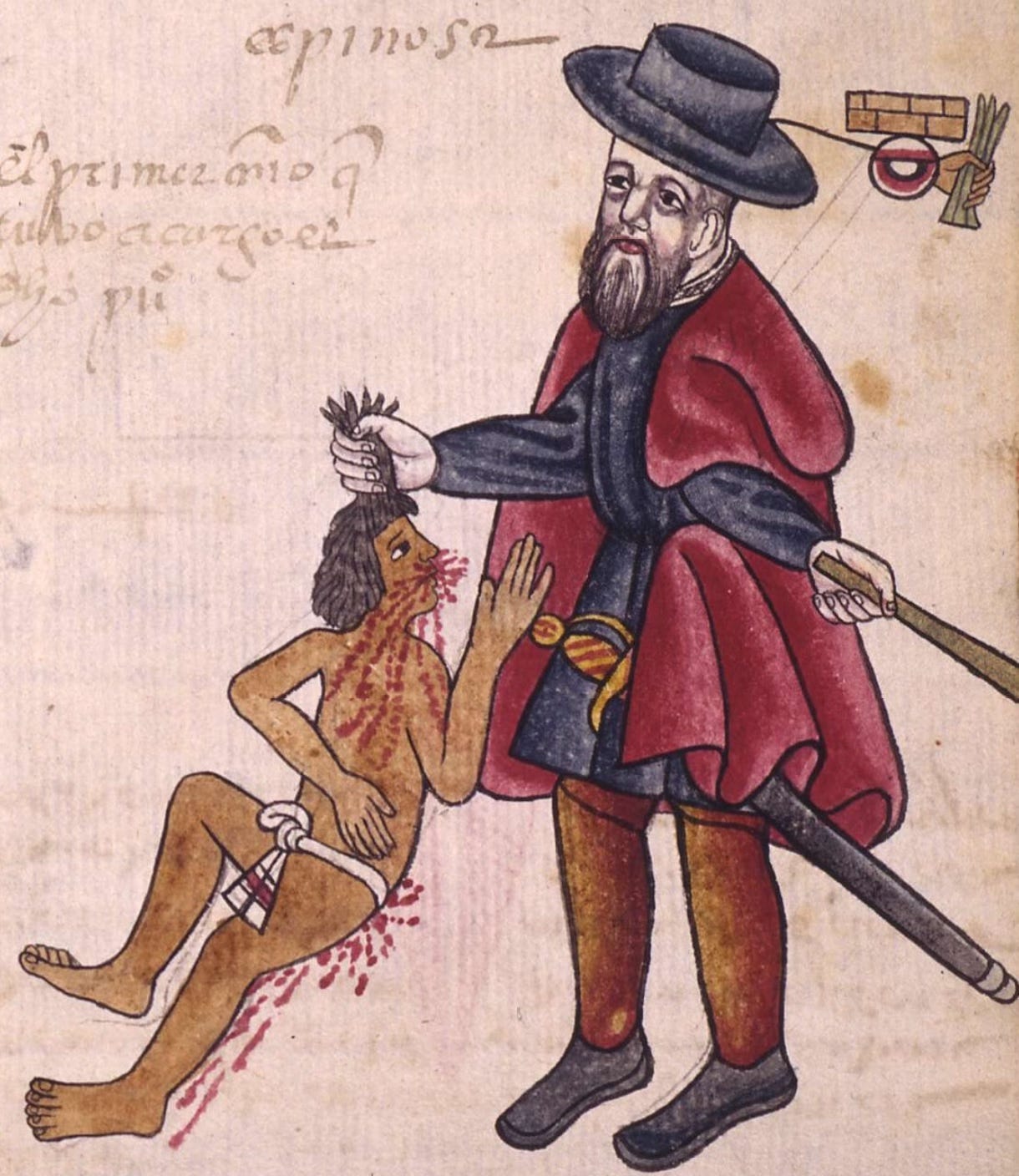
However, as the 16th century dawned, despite the ongoing enslavement of the native inhabitants, Europeans began to favor importing enslaved people from West and Central Africa.
One of the primary reasons was the decimation of the Native American population. The violence unleashed by the colonizers and the introduction of foreign diseases ravaged the indigenous peoples, leaving death and destruction in their wake.
Smallpox, measles, influenza, typhus, and other Old World diseases began spreading rapidly after Europeans landed, with catastrophic results. Many millions of indigenous people perished, and entire communities were obliterated. Eventually, there were not enough natives left to enslave. The demand for slaves had surpassed the dwindling native population.
The Church and the Legalization of Conquest
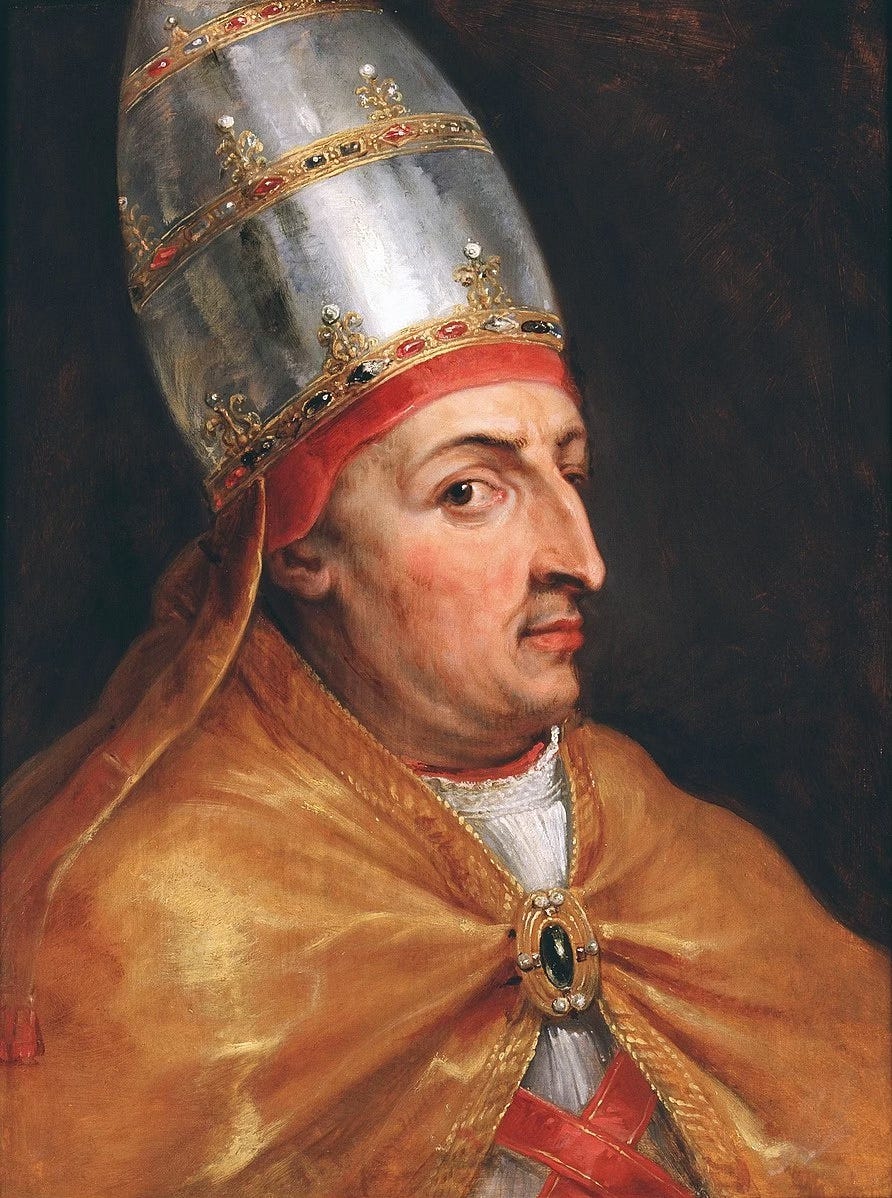
The Catholic Church also played a role. In 1452, Pope Nicholas V issued Dum Diversas, a papal bull that granted King Afonso V of Portugal the right to subjugate all:
“Saracens and pagans and any other unbelievers and enemies of Christ wherever they may be, as well as their kingdoms, duchies, counties, principalities, and other property [...] and to reduce their persons into perpetual servitude”.
In 1455, the same pope issued a new bull – Romanus Pontifex – which even more clearly specified the Portuguese king’s right to invade and take over territories south of Cape Bojador in present-day Western Sahara, and to enslave their non-Christian inhabitants. In Born in Blackness, American journalist Howard W. French writes:
“These papal bulls did more than grant the Portuguese exclusive rights. They signaled to the rest of Christian Europe that the enslavement of sub-Saharan Africans was not only accepted but encouraged.”
Why Black Africans Became the Main Targets
Individuals also influenced the shift toward the increased enslavement of Africans. One of them was Bartolomé de las Casas, a Spaniard who set foot in the New World only around ten years after Columbus’s landing.
In 1502, de las Casas arrived on Hispaniola. Like many other Spanish colonizers in the Caribbean, he partook in the rampant abuse of the local population during the conquest of the land. He became an encomendero, responsible for a group of indigenous people. A few years later, he was also ordained a priest.
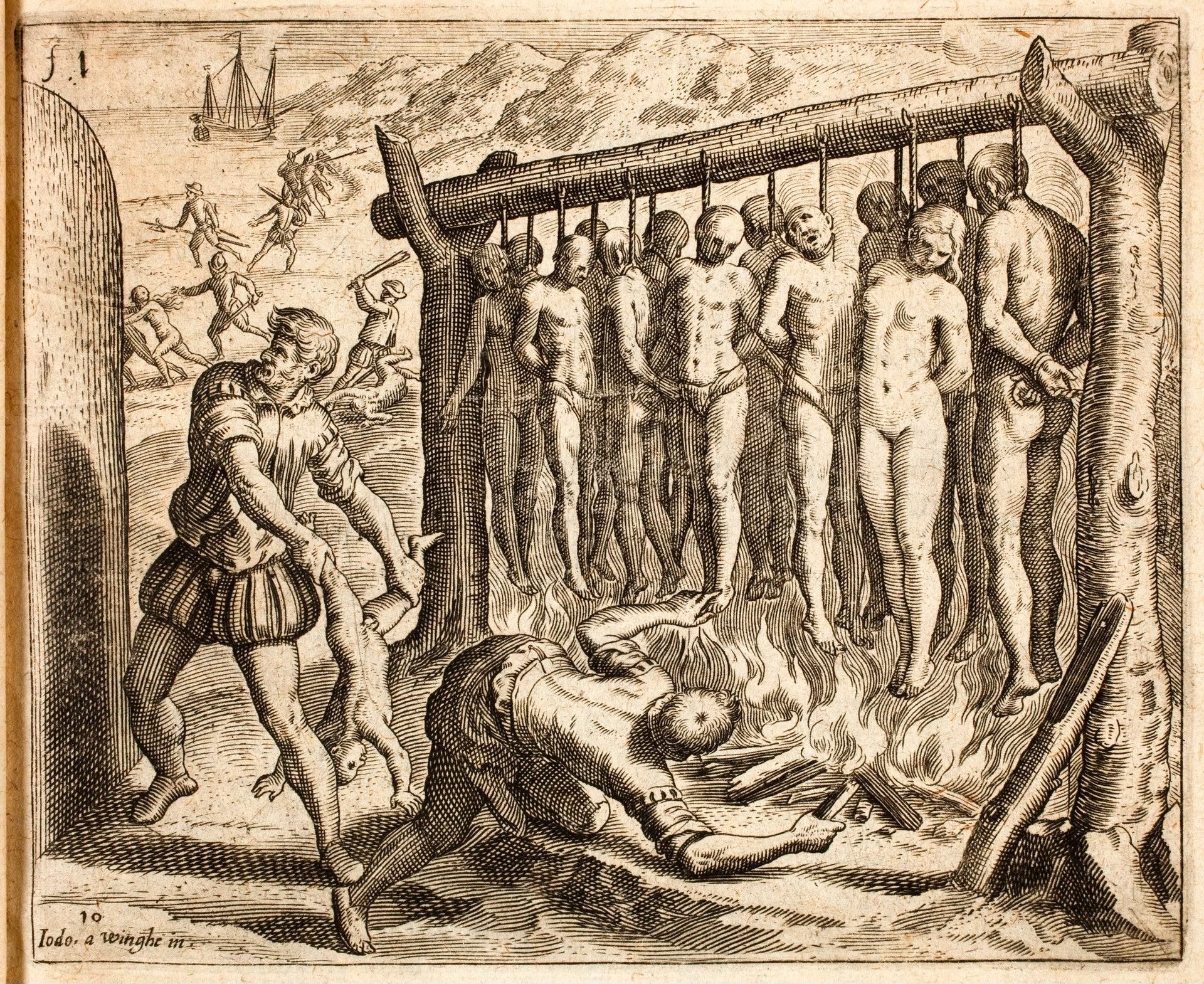
One of the campaigns he participated in was the Spanish conquest of present-day Cuba. He had heard others condemn the treatment of the natives. Still, the atrocities unfolding before his eyes in Cuba shattered his convictions.
In one of his many writings, quoted in Indian Freedom: The Cause of Bartolomé de las Casas, 1484-1566, he noted:
“One time, the Indians came out to greet us with food and gifts, came ten leagues from their large village. Then, when we got there, they gave us fish in abundance, bread, food, to the limit of their larder. All of a sudden the devil got into the Christians. Right before my eyes, they put to the sword without provocation or cause more than three thousand souls who sat in front of us, men, women, children. I saw there cruelty on a scale no living being has ever seen or expects to see.”
His account continues:
“There was an official on the island who received an allotment of three hundred Indians. At the end of three months’ time, he had worked to death in the mines two hundred and seventy of them. Thirty survived, a mere tenth. They gave him another three hundred and more, and he killed them, more and he killed them, until he died and the devil took his soul. In three or four months, during my stay there, seven thousand children died of hunger because their parents had been hauled off to work the mines. I saw other things that were equally horrific.”
In the 1510s, Bartolomé de las Casas began advocating for the rights of the Americas’ original inhabitants. He returned home and pleaded passionately before the Spanish crown to end the encomienda system. But one of his proposed solutions for ending the suffering of the indigenous people was to replace them with enslaved Africans.
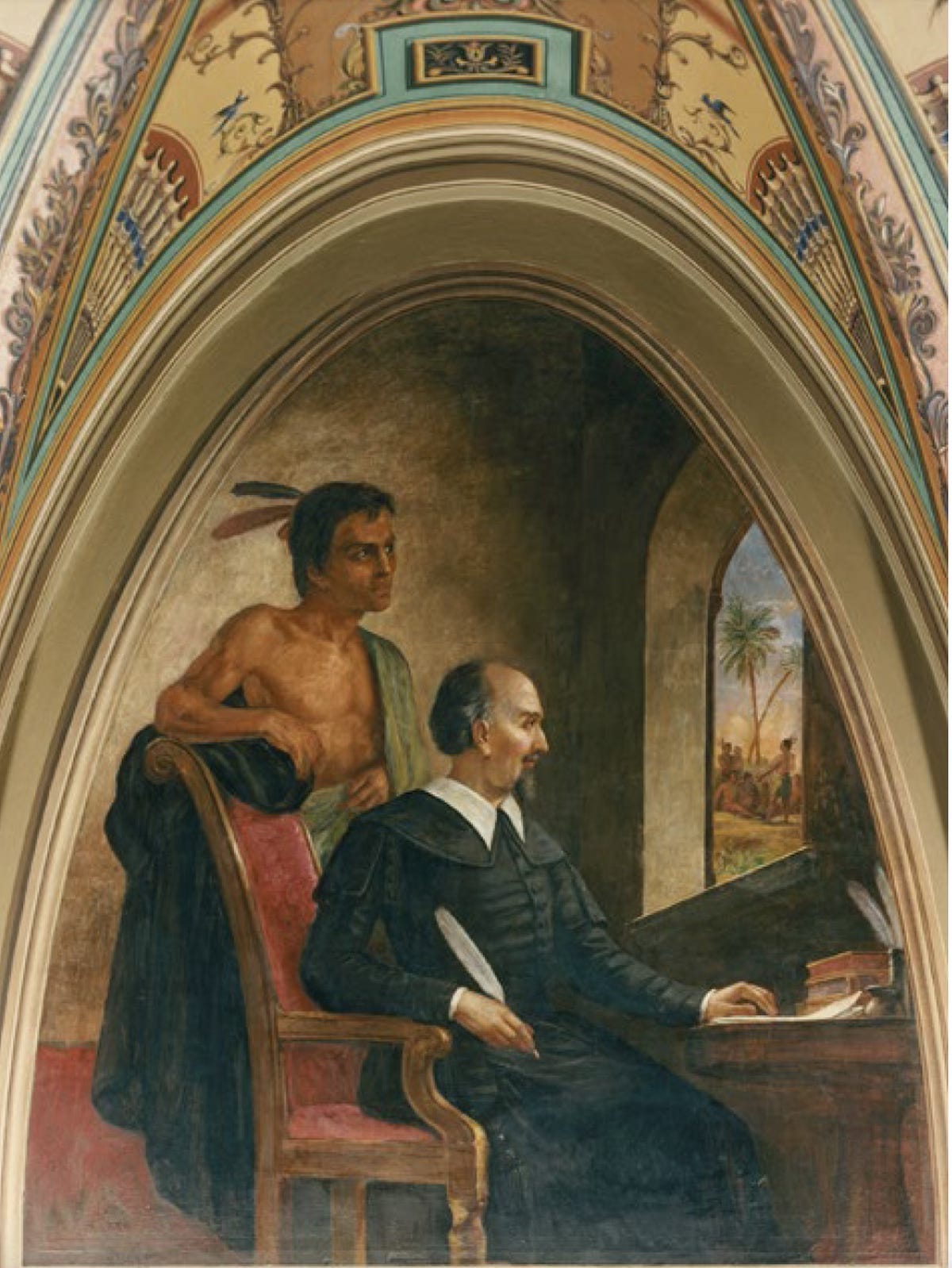
Through his consequential writings and relentless advocacy, Bartolomé de las Casas wielded significant influence, championing legal changes over five decades that would mitigate the harsh treatment of the indigenous inhabitants. Yet, as he approached his final years, he admitted that the enslavement of Africans was just as cruel and unjust. By this point, however, the machinery of the slave trade had become all too lucrative, an enterprise too profitable to stop.
Historians disagree over the extent of de las Casas’ role in popularizing the enslavement of Africans. After all, the transatlantic slave trade had already begun, so he couldn’t be blamed for that. But it’s fair to say that his early writings were hardly in the Africans’ favor.
Another obvious reason European colonizers began enslaving increasing numbers of Africans was that West and Central Africa were the most convenient and practical sources. This was partly because wars between African kingdoms in these regions created a supply of people to buy, and partly because of simple geography. It was, for example, far more practical for Portuguese human traffickers in Brazil to import enslaved people from present-day Angola – a voyage straight across the ocean – than to try to buy people from, say, the Middle East or Southeast Asia.
In addition, the prolonged contact between Africa, Europe, and Asia – commonly referred to as the “Old World” – had granted Africans a certain resistance to the diseases brought by Europeans. Many West and Central Africans also had greater prior exposure, and in some cases partial inherited protection, against certain tropical diseases, especially malaria.
Yet another reason it became more common to enslave Africans was that Indigenous populations had local family ties and existing loyalties. They had intimate knowledge of the land, which made it easier for them to flee and organize rebellions.
Slave traders deemed it more efficient to uproot individuals from their familiar surroundings and keep them captive in distant lands. Even if enslaved Africans managed to escape from plantations in America, the Atlantic marked an almost insurmountable barrier to returning home.
Europe Joins the Trade
The Church continued to play a central role in the new emerging world order. In 1494, Spain and Portugal concluded a new agreement, the so-called Treaty of Tordesillas, which built on the Treaty of Alcáçovas, which I wrote about in part one.
In the new agreement, the two countries divided the territories they claimed between them. A line was drawn west of the Cape Verde Islands: the Portuguese had claims east of the line, while the Spaniards were granted rights to discoveries west of it. In 1506, the treaty was ratified by Pope Julius II.
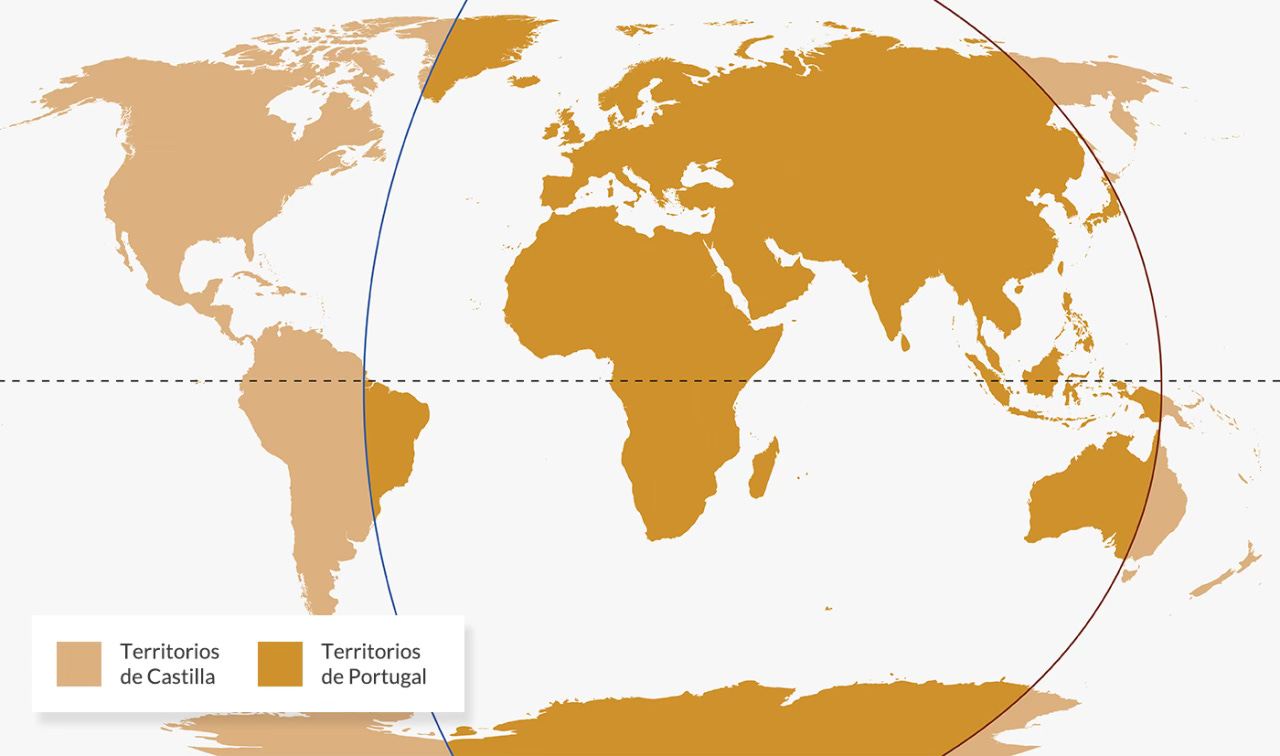
For Portugal and Spain, this arrangement seemed like a splendid solution. However, other European nations found it far from satisfactory. Besides, the church’s reform and split into Catholic and Protestant branches in the early 16th century only compounded matters. The emerging Protestant states shrugged off the Pope’s decrees and refused to sit by idly while Spain and Portugal monopolized all discoveries. Even in Catholic France, King Francis I questioned the pope’s authority to divide up the world.
Consequently, the 16th and 17th centuries witnessed a surge of newcomers to the transatlantic slave trade – not just powerhouses like England and France but smaller nations such as the Netherlands, Denmark, and Sweden.

The mechanisms of the transatlantic slave trade are reflected in its alternative name: the triangular trade. European ships laden with a myriad of goods, including weapons, gunpowder, wine, metals, and clothing, embarked on voyages to West and Central African ports, where they exchanged these commodities for enslaved men, women, and children.
In the ships’ claustrophobic cargo holds, they were kept under monstrous conditions during the long voyage across the Atlantic.
When the ships reached ports in North and South America, the Africans were sold into slavery.
Once the ships were emptied, they were filled with the lucrative cargo of the new world – sugar, tobacco, and rum – before returning home to Europe.
From Capture to the Coast
The suffering of the enslaved began early. Many of the victims were prisoners of war and had already experienced one of the worst things human beings can endure: war. Others had been kidnapped, convicted criminals, social outcasts, or otherwise unwanted, and had therefore already undergone potentially traumatic experiences.
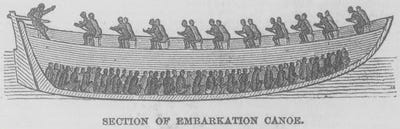
Many captives were taken far inland and forced to march toward European coastal forts. These journeys could stretch for hundreds of miles, cross difficult terrain, and take months to complete. Captives were often chained together and subjected to violence, hunger, and sexual abuse along the way.
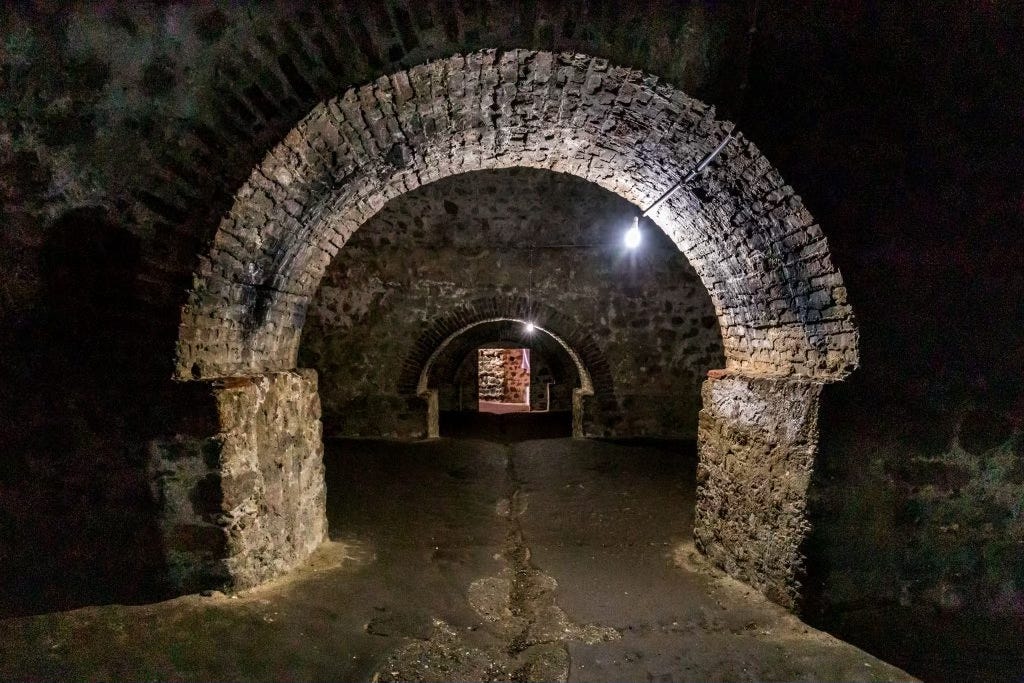
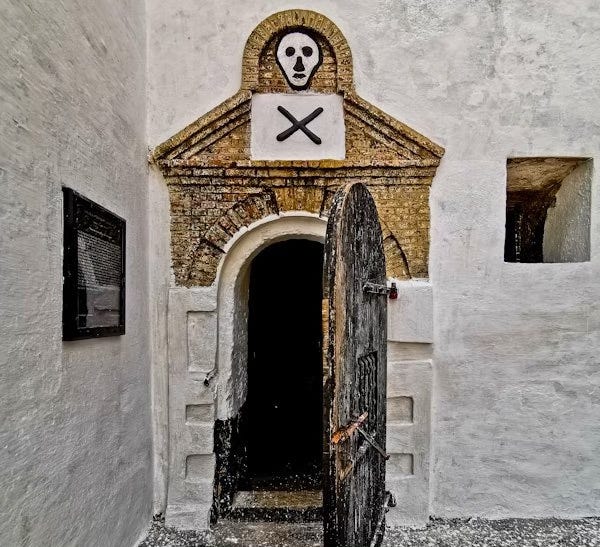
Upon reaching the coast, the survivors were sold and branded before being locked into the forts’ dungeons or holding pits, crammed together into dark, suffocating spaces, devoid of light and ventilation, and under merciless tropical heat. Hundreds – sometimes up to a thousand people – could be confined together. Sometimes trapped for months, they waited for the slave ships to appear on the distant horizon.
The Middle Passage
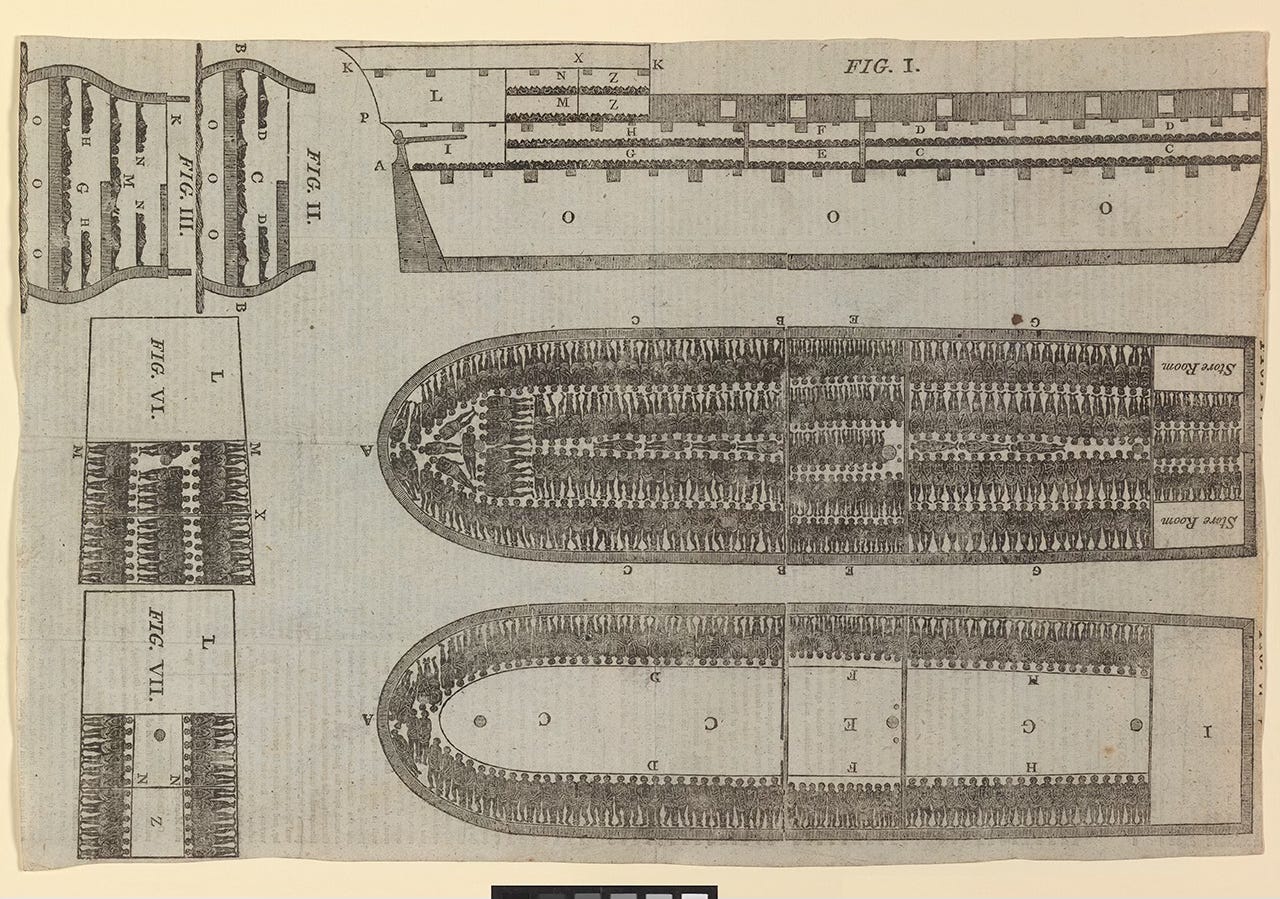
Once aboard the ships, the enslaved were packed tightly together below deck and chained to one another. To maximize profit, each enslaved person was allotted as little space as possible. The exact dimensions varied from ship to ship, but they were generally so small that one had to crouch or lie down to fit.
In his book Africa: A Biography of the Continent, British author John Reader sheds light on the specifics. In 1713, for instance, the Royal Africa Company, a British participant in the slave trade, dictated that each enslaved person would be allowed:
“Five foot in length, eleven inches in breadth, and twenty-three inches in height.”
As Reader correctly notes, most coffins are bigger.
There are countless testimonies describing how barbaric the Atlantic crossing was. One of the most famous comes from Olaudah Equiano, the man whose words opened this article.
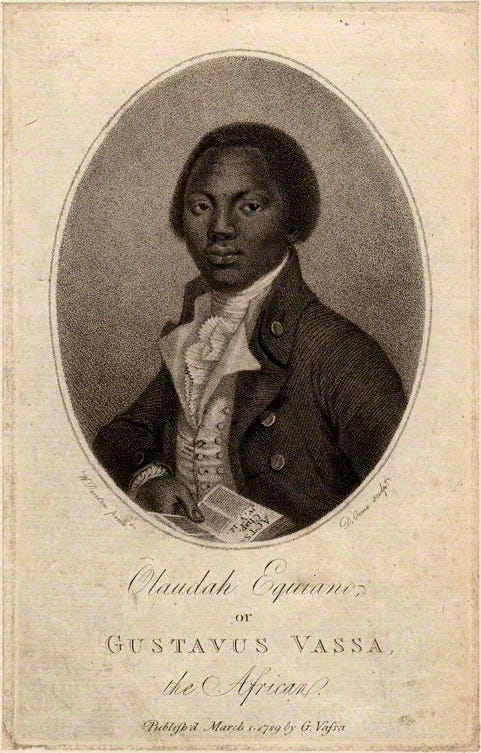
According to Equiano’s own account, he was only a child when, in the mid-1700s, he and his sister were kidnapped in what is now Nigeria. The siblings were separated, marched to the coast, and sold into slavery.
Olaudah Equiano is also known as Gustavus Vassa, the slave name given to him by his new owner, though it is not known why that particular name was chosen, given its obvious resemblance to the sixteenth-century Swedish king Gustav Vasa.
What makes Equiano especially remarkable is that, after years in slavery, he had the rare fortune of ending up with an owner who allowed him to purchase his freedom.
He seized the opportunity in 1766. He eventually settled in England, where in 1789 he published The Interesting Narrative of the Life of Olaudah Equiano, or Gustavus Vassa, the African.
It was a testimony of monumental consequence and became a cornerstone of the emerging abolitionist movement. In the book, he describes the Atlantic crossing:
“The stench of the hold while we were on the coast was so intolerably loathsome, that it was dangerous to remain there for any time, and some of us had been permitted to stay on the deck for the fresh air; but now that the whole ship’s cargo were confined together, it became absolutely pestilential.
The closeness of the place, and the heat of the climate, added to the number in the ship, which was so crowded that each had scarcely room to turn himself, almost suffocated us. This produced copious perspirations, so that the air soon became unfit for respiration, from a variety of loathsome smells, and brought on a sickness among the slaves, of which many died, thus falling victims to the improvident avarice, as I may call it, of their purchasers.
This wretched situation was again aggravated by the galling of the chains, now become insupportable; and the filth of the necessary tubs, into which the children often fell, and were almost suffocated. The shrieks of the women, and the groans of the dying, rendered the whole a scene of horror almost inconceivable.”
In the book, he also writes about how some enslaved people would rather throw themselves overboard to certain death than stay on the ships.
The fact that large numbers of bodies were cast from the slave ships — some from people who jumped in suicide, others from people who died or were killed for various reasons and were, so to speak, buried at sea — meant that the ships were often followed by sharks feasting on the corpses.
According to other testimonies, the stench of a slave ship could be detected from far away.
Yellow fever, tuberculosis, gastrointestinal disease, intestinal parasites, and dysentery thrived in the ships’ cramped spaces, and the food and water given to the enslaved were so meager that they could barely survive. During unforeseen events such as storms or ships losing their way, entire groups of enslaved people could be thrown overboard so that supplies would last for the crew.
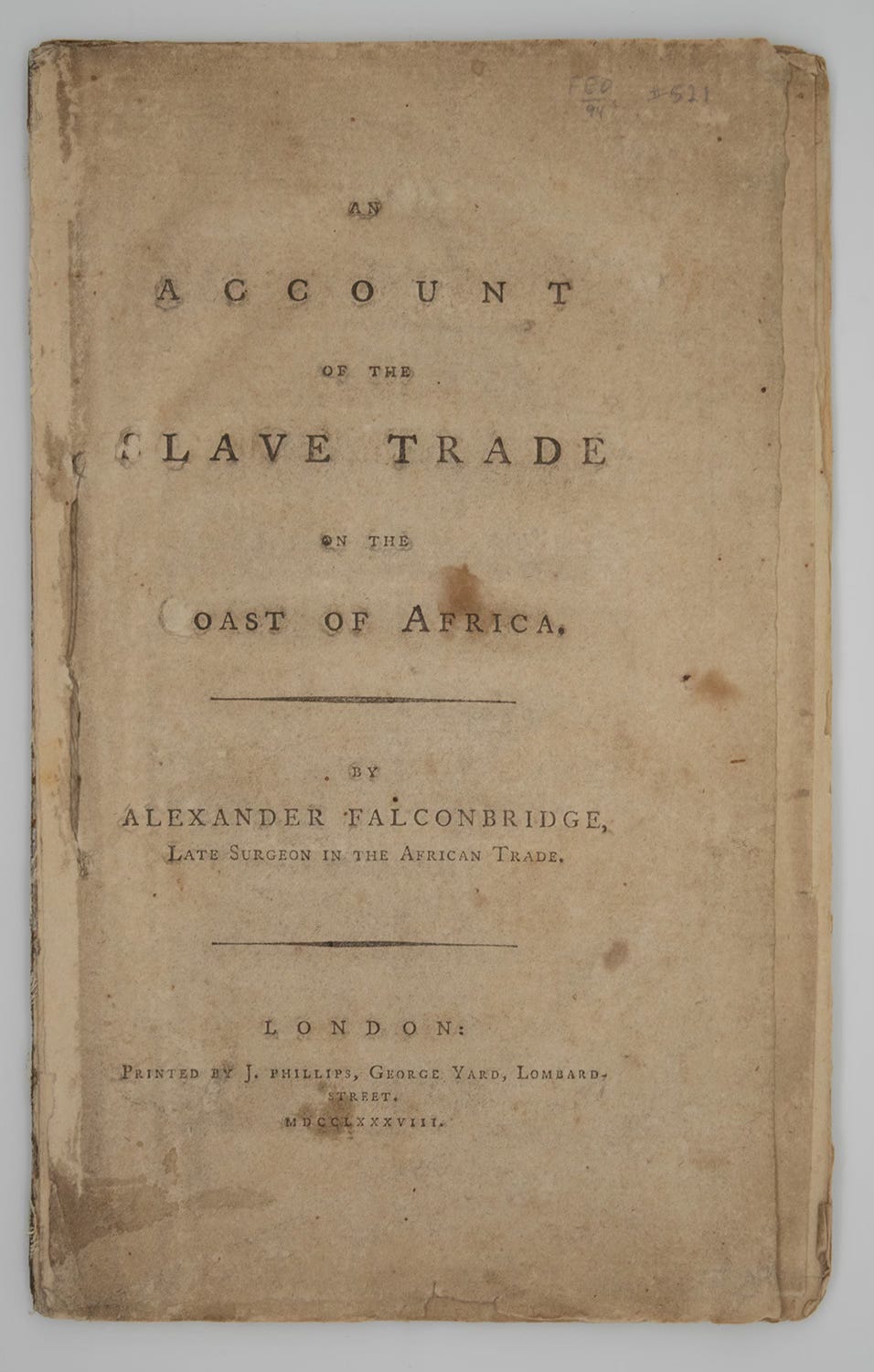
Alexander Falconbridge was a well-known British surgeon who served aboard slave ships on four voyages during the 1780s and who later became a prominent abolitionist. In 1788, he published An Account of the Slave Trade on the Coast of Africa, in which he described what he had witnessed:
“Upon the negroes refusing to take sustenance, I have seen coals of fire, glowing hot, put on a shovel, and placed so near their lips, as to scorch and burn them. And this has been accompanied with threats, of forcing them to swallow the coals, if they any longer persisted in refusing to eat.
These means have generally had the desired effect. I have also been credibly informed, that a certain captain in the slave trade, poured melted lead on such of the negroes as obstinately refused their food.”
He also writes about what the crew subjected the enslaved women to:
“The officers are permitted to indulge their passions among them at pleasure, and sometimes are guilty of such brutal excesses, as disgrace human nature.”
Later in the text, Falconbridge writes about the consequences of the lack of fresh air in the holds where the enslaved were confined. He explains that some ships were equipped with portholes: openings along the sides that allowed fresh air to flow down to the captives. But he also wrote that storms or rough seas often forced the openings to close. He describes such a scene from one of his travels:
“While they were in this situation, my profession requiring it, I frequently went down among them, till at length their apartments became so extremely hot, as to be only sufferable for a very short time.
But the excessive heat was not the only thing that rendered their situation intolerable. The deck, that is, the floor of their rooms, was so covered with the blood and mucus which had proceeded from them in consequence of the flux, that it resembled a slaughter-house. It is not in the power of the human imagination, to picture to itself a situation more dreadful or disgusting.”
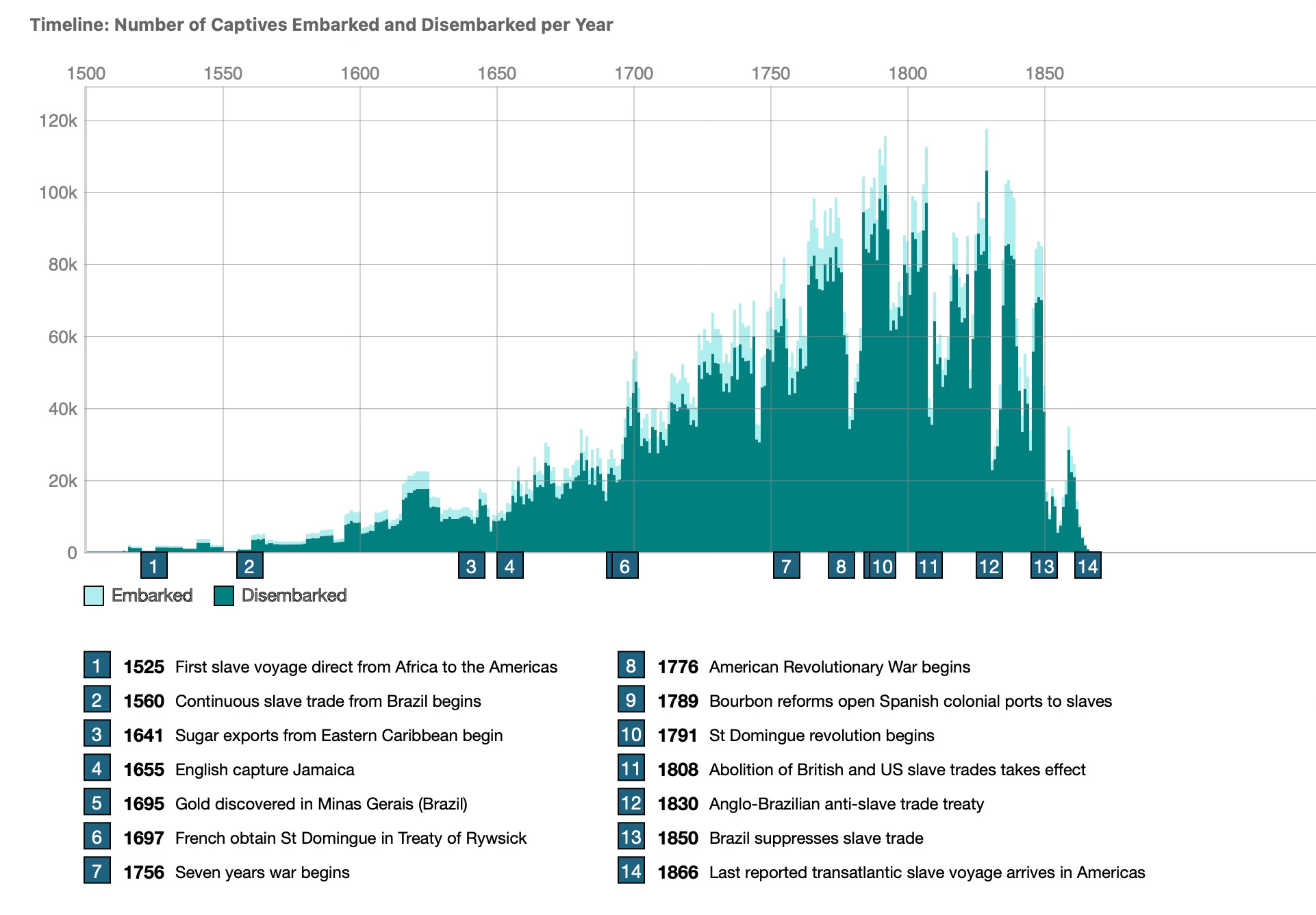
Given these testimonies, it is no surprise that mortality rates were high. A common estimate is that between 10 and 20 percent of the enslaved died during the Atlantic crossing.
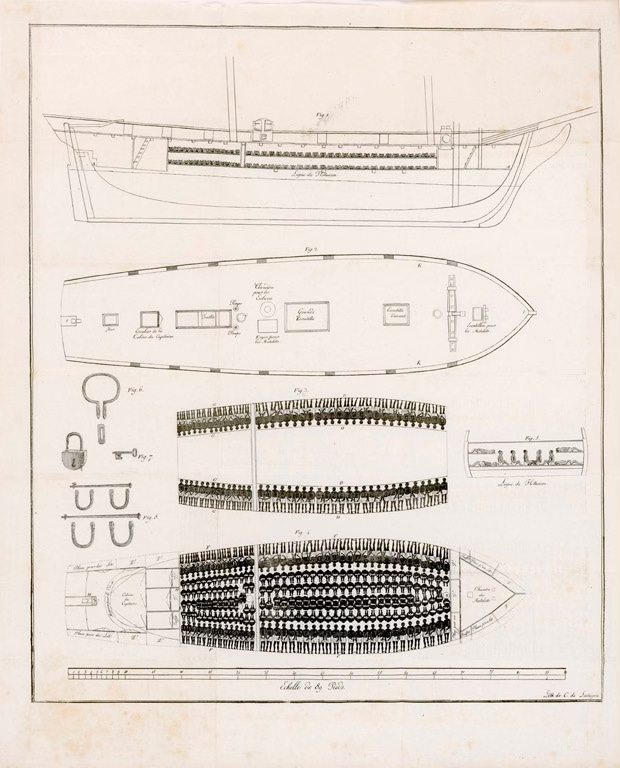
Many people have seen the illustrations of slave ships showing how tightly the enslaved were packed together. But something that is often overlooked is that they were not “just” forced to live like this during the weeks it took to cross the Atlantic. Often, they could remain confined below deck for months while the ships lingered just off the African coast, waiting to be loaded with additional slaves.
To maximize profit, the ships had to be filled to capacity – traffickers did not want to sail with half-empty vessels – and so the ships might anchor and wait, or slowly move between different slave ports along the African coast, before finally setting sail.
A Life in Slavery
When the ships reached one of America’s ports, the enslaved were washed and prepared for sale again. They often had to endure another agonizing march inland because the sale didn’t always take place near the coast. For those who survived the entire ordeal from Africa to the New World, their reward was a lifetime of servitude.
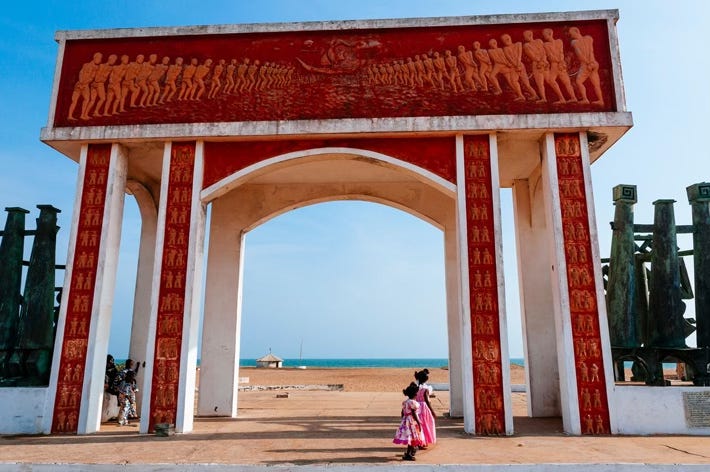
Once sold, the roles they were forced into were as diverse as they were taxing. They could be forced to work on plantations and in mines, be forced to work as shepherds, fishermen, carpenters, cooks, maids, lumberjacks, and seamen – they had every type of job imaginable.
The threat of violence was constant. Working too slowly or carelessly, attempting to learn to read, practicing one’s original religion, associating with the wrong person, trying to escape – all could be punished with the most horrific methods.
Sexual violence against the enslaved was also frequent, from their capture in Africa to the Atlantic crossing, to their new lives in the Americas.
Slavery and the Engine of Capitalism
For the Western colonial powers in the Americas, slavery was extraordinarily profitable. They gained access to a massive labor force that could be compelled to work exceptionally hard without pay. This labor force also produced infrastructure and goods for trade and export.
In this way, the new states quite literally rose on the shoulders and backs of the enslaved, while in Europe, wealth was built on the profits generated by their labor and suffering.
Among the African parties involved, there were different reasons for selling people to Europeans. For some, it could be a “practical” way of getting rid of convicted criminals or neighboring populations they had historically viewed as enemies. For others, it was an act of desperation to avoid being enslaved themselves. In many cases, it was driven by classic motives such as greed or the desire to expand power and territory.
The endless international demand for Black slaves intensified existing conflicts between African kingdoms and sparked new ones. Some African kingdoms involved in the slave trade declared war on weaker neighbors for the chance to sell their inhabitants, and the firearms Europeans traded in exchange for people became especially destabilizing.
Guns became yet another incentive for African kingdoms to join the slave trade. The slave trade continually generated new conflicts, and those conflicts in turn created even more refugees and prisoners of war who could be sold into slavery.
When discussing the Africans who willingly participated in the trade, one must also mention all those who opposed it. Common forms of resistance included African societies building defensive fortifications and establishing warning systems. In some cases, entire villages were relocated to more inaccessible inland regions. In places such as present-day Congo and Angola, full-scale wars broke out between African and European powers over the issue of slavery.
The enslaved themselves also resisted, of course, by running away, refusing to work, fighting back, or committing suicide, and this resistance could occur at any stage: from the moment they were captured in Africa to after they had been sold into slavery in the Americas.
The Machinery of Racism
The idea of finding the “origin” of racism has long fascinated both historians and anthropologists. Is racism something innate in human beings, a consequence of us being programmed to fear or distrust the unfamiliar? Or is racism something we learn? The question is complicated and depends, not least, on how one defines racism, prejudice, discrimination, and so on.
But one can say with considerable certainty that anti-Black racism and transatlantic slavery are deeply interconnected – the two reinforced and shaped one another. The fact that Black people were enslaved caused them, over time, to be viewed as inferior beings. And the fact that they were viewed as inferior beings made it more legitimate to enslave them.
Black people were regarded as godless heathens and uncivilized barbarians, and in the eyes of Europeans, they therefore became natural targets. Europeans may have held racist ideas about Black people even earlier, but it was during the era of transatlantic slavery that these ideas became entrenched and institutionalized.
A Lucrative Venture
The growing demand for the goods of the New World required European colonizers to seize more land to maintain sufficiently high production levels, which in turn demanded an ever larger labor force and created a near-insatiable appetite for new slaves.
The triangle formed by these transports became a wheel that kept turning in the name of capitalism. This is one of the most distinctive features of the transatlantic slave trade. As noted in part one, slavery was a part of everyday life in many parts of the world at the time, including Africa, but this was a new kind of slave trade – one deeply rooted in the emerging capitalist system’s relentless pursuit of growth and increased profits.
The young states on the other side of the Atlantic became outright slave societies, where slave labor formed a central and foundational part of their economies and social systems.
Some historians argue that the Americas – neither North nor South – could not have been fully colonized without slave labor, or at least that the process would have taken much longer.
Or as historian James Walvin writes in his book Freedom: The Overthrow of the Slave Empires.
“Of all the people (Europeans and Africans) who landed in the Americas before 1820, the Atlantic slave ships transported 80 percent. African slaves were the major pioneers of great expanses of the Americas.
The misery and suffering on the slave vessels, first widely exposed in the late eighteenth century, have haunted the public imagination ever since. Yet, despite the slave ships’ fearsome death rate, and despite the damage they inflicted on the survivors, the Atlantic slave trade laid the foundations for an astonishing commercial success.
The survivors of the Atlantic crossing, in the words of David Brion Davis, ‘became indispensable in creating the prosperous New World that by the mid-nineteenth century began attracting millions of voluntary European immigrants’. African slaves were the foundations on which later societies were built.”
Exactly how large a role slavery played in the rise of the new nations is still hotly debated.
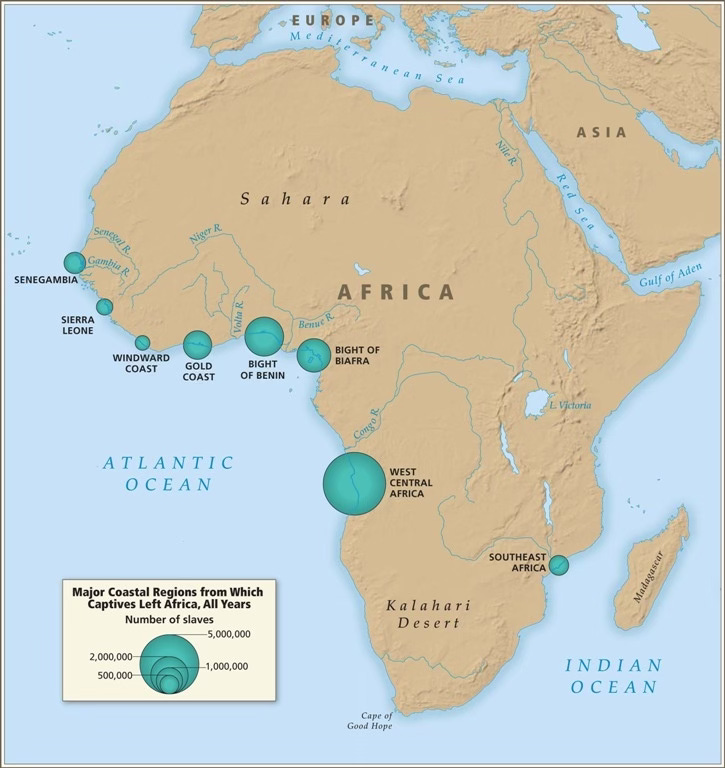
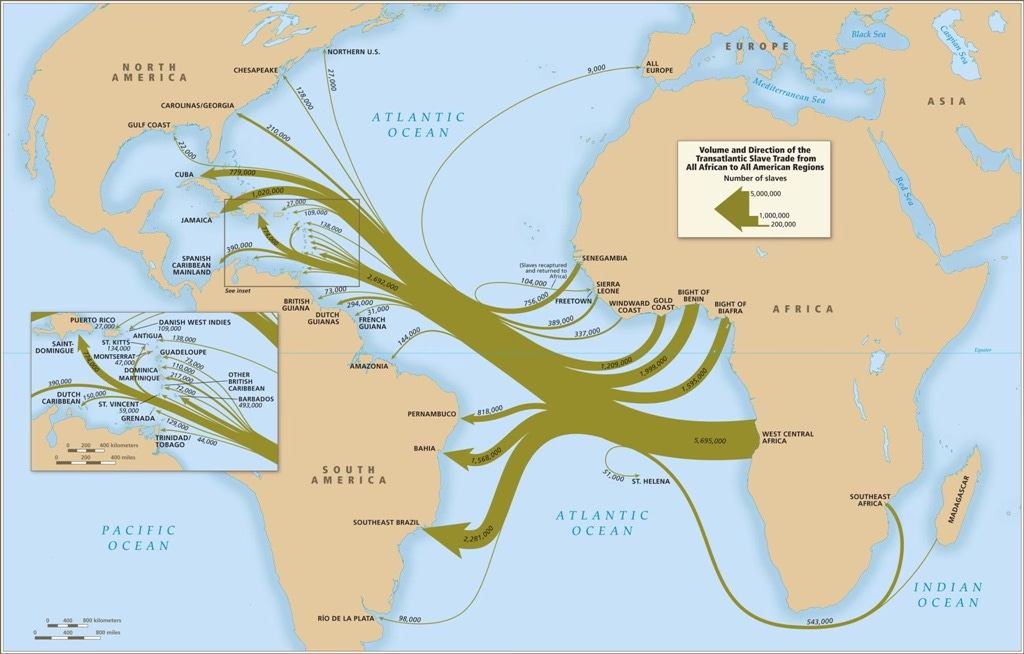
The numbers are difficult to establish with certainty, but a common estimate is that 12.5 million Africans were enslaved between the fifteenth and nineteenth centuries as part of the transatlantic trade. Up to two million of them died during the Atlantic crossing, while millions more were killed when they were captured in Africa or marched toward the Europeans’ coastal forts.
Beyond the U.S.
Of those 12.5 million people, fewer than 400,000 were imported into the United States, which is notable because slavery in the American South has, for many, become the defining image of the entire period.
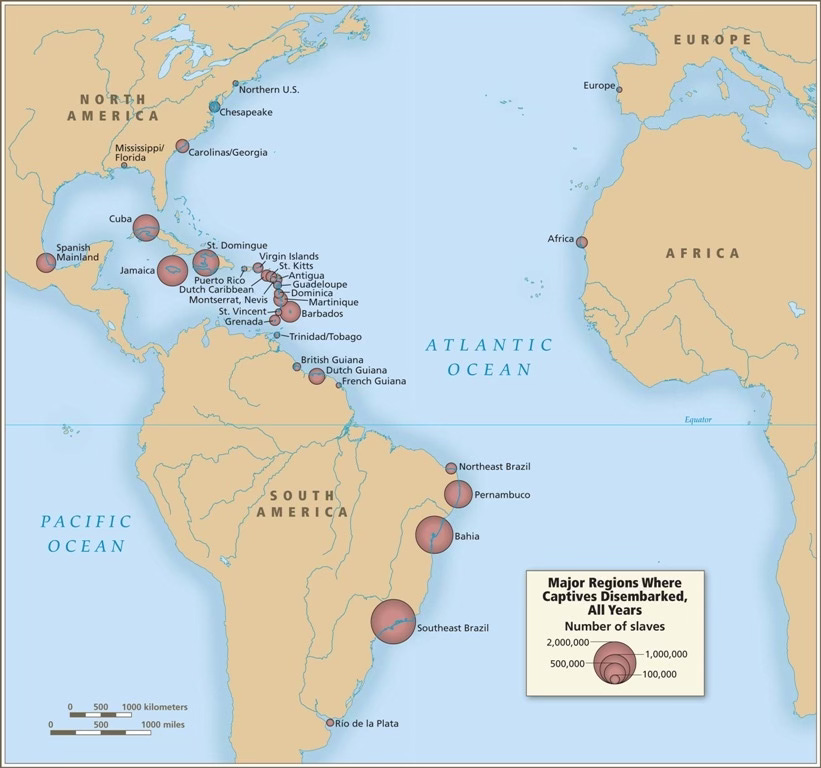
In reality, Brazil was by far the primary destination for enslaved Africans, with nearly five million imported slaves, mainly from present-day Angola and Congo. The Caribbean ranked second, with present-day Jamaica, Haiti, Cuba, and Barbados among its major destinations.
Not One Slavery, but Many
Although slave imports to the United States accounted for less than four percent of the total transatlantic trade, American slavery distinguished itself in several ways. Unlike the islands of the Caribbean, arable land seemed endless, and sugar did not dominate the economy. The existence of more varied and, by comparison with sugar production, less physically demanding forms of labor created space for different kinds of social relations among the enslaved.
These were some of the factors that caused the enslaved population in the United States to reproduce at a higher rate than in many other countries. Since children born to enslaved women also became slaves, owners could multiply their investment, meaning they had no incentive to discourage population growth.
Natural population growth was also reinforced by sexual coercion, forced relationships, and slave owners’ direct interest in ensuring that more children were born into slavery.
Over time, slavery in the American South developed into a strange and deeply unsettling intimacy. Slave owners claimed they were doing the enslaved a favor by “saving” them from barbaric Africa and giving them a “tough but fair” existence in the West.
Black people were viewed as undeveloped children in need of guidance from a strict patriarchal authority, hence the use of the term “boy” for Black men. Slave labor itself was partly portrayed as repayment for having been lifted out of Africa and welcomed into the Christian fold.
In some circles, this cultural feature has been used to portray American slavery as more “benign” than other forms of slavery, which is bizarre considering that this infantilization was rooted in the idea of Black Africans as an inferior race.
Whether slave owners genuinely believed they were doing enslaved people a favor, or whether they understood deep down that it was merely an excuse, is naturally difficult to determine. But a common counterargument is that they were attempting to disguise the selfish exploitation of other human beings as something noble and self-sacrificing – a Christian act.
This tradition did, however, mean that enslaved people in the American South were more often treated as long-term investments, unlike in places such as the Caribbean, where they were more commonly viewed as disposable labor or expendable goods. By the outbreak of the American Civil War in 1861, there were four million slaves in the United States.
The United States may have accounted for only a small share of total transatlantic imports, but it developed its own domestic slave trade. States considered to have a “surplus” of slaves sent enslaved people to states that needed more labor – something that regularly tore families apart.
With the invention of the cotton gin in the early 1790s, it became easier to separate cotton fibers from seeds, and cotton cultivation became vastly more profitable. This led to an enormous expansion of American slavery, since it was enslaved people who were expected to pick the cotton.
Even after the United States had long ceased to depend on the transatlantic importation of enslaved people, it could instead rely on its own domestic slave market. As cotton exports grew at a staggering pace, the scale of slavery expanded alongside them, continuing right up until the outbreak of the American Civil War in the mid-nineteenth century.
In the acclaimed and controversial book The Half Has Never Been Told: Slavery and the Making of American Capitalism, the American historian Edward E. Baptist writes:
“From 1783, at the end of the American Revolution, to 1861, the number of slaves in the United States increased fivefold, and all of this expansion produced a powerful nation. White enslavers could force enslaved African American migrants to pick cotton faster and more efficiently than free laborers.
Their methods quickly transformed the South into the dominant force on the global cotton market, and cotton was the world’s most traded commodity at the time because it was the key raw material of the first century of the Industrial Revolution. The profits from cotton monopolies drove the modernization of the rest of the American economy, and by the time of the Civil War, the United States had become the second nation to undergo large-scale industrialization.”
Race, Mixture, and the One-Drop Rule
Another distinguishing feature was the rigid racial order that developed in the United States and came to shape society. Although sexual relations “across racial lines” occurred – often through coercion – they were regarded as morally unacceptable and regulated by law. Laws banning interracial marriage were not declared unconstitutional by the U.S. Supreme Court until 1967.
The distinctions between Black and white became so rigid that “one-drop rules” were developed to preserve racial hierarchies and prevent “mixing.” Different American states had different definitions, but all essentially held that even people with only a small amount of Black African ancestry were to be classified as Black. In some states, a person was considered Black if they had at least one-sixteenth “Black blood”; in others, one-thirty-second was enough. Some states used formulations such as “any traceable amount.”
Without such a rigid system, it is not unlikely that the Black population of the United States would, to a greater extent, have been absorbed into the white majority. Instead, Black Americans today make up just over 14 percent of the population – more than 40 million people, roughly one hundred times the number originally imported.
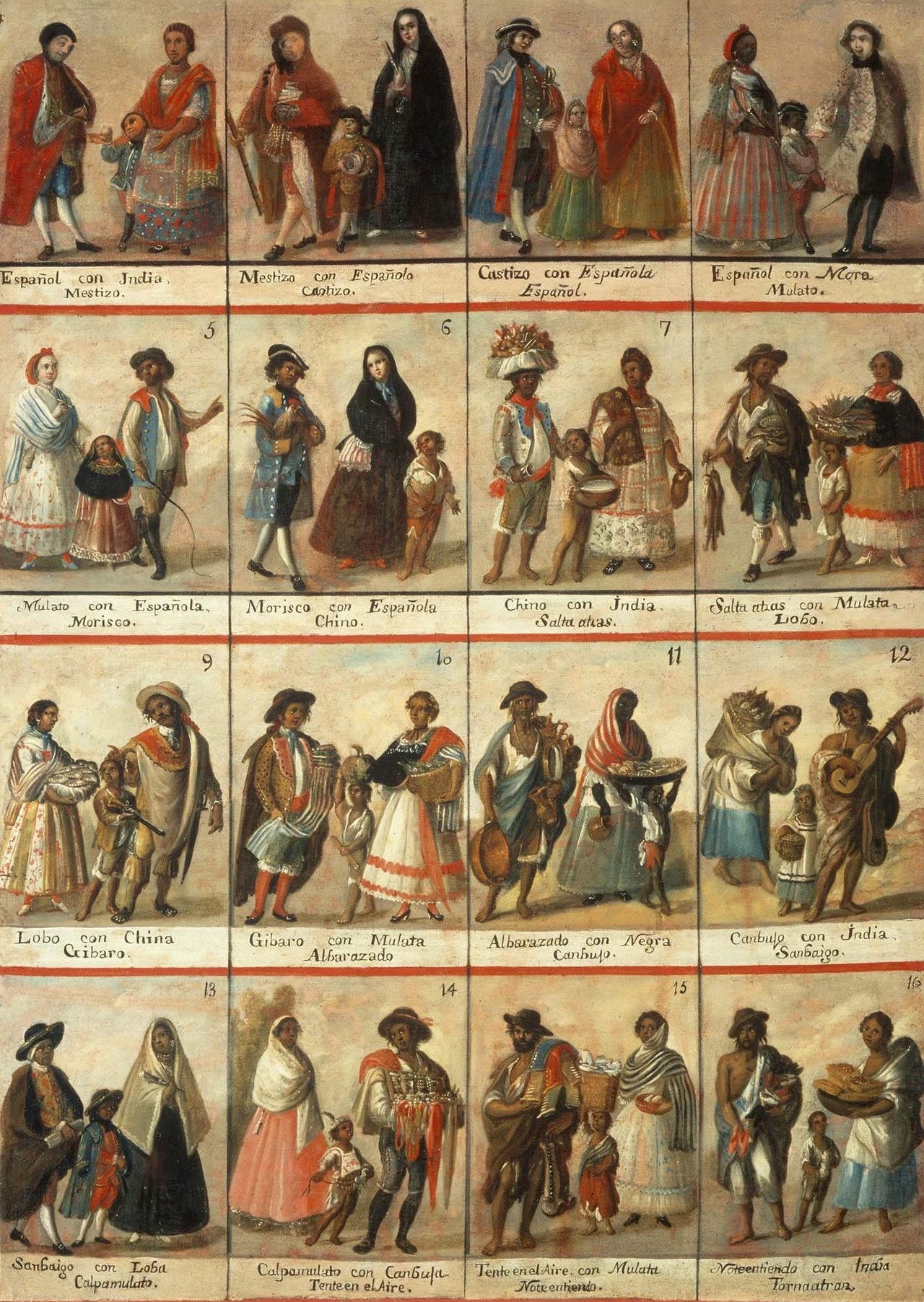
In the Portuguese and Spanish colonies – places with large enslaved Black populations – there were not the same rigid racial distinctions.
As a result, sexual relationships and unions “across racial lines” were more common, which has contributed to the fact that modern countries such as Brazil, the Dominican Republic, and Cuba have large mixed-race populations.
In the 18th century, casta paintings became popular in New Spain, illustrating multiple possible ethnicities and mixes. They included mestizo, the offspring of a Spaniard and a native, mulato, the offspring of a Spaniard and an African, and zambo, the offspring of an African and a native.
As in most other places in the world, however, Black people were placed at the bottom of the hierarchy, while those who were mixed in various ways had a more advantageous position, while whites, of course, were at the top. The seeds of colorism were planted early.
Another example can be found in a completely different part of the world. In places such as Iraq, Iran, and India, there are today Black minorities whose origins can partly be traced to the slave trades across the Sahara, the Red Sea, and the Indian Ocean. Many can also trace their ancestry to African travelers, scholars, and pilgrims who settled in those regions long ago.
But the fact that these minorities are not even larger or more visible may also be connected to a more fluid understanding of race. During parts of the Muslim world’s thousand-year-long slave trade involving sub-Saharan Africans, this outlook may have meant that the large number of imported Black Africans have long since been absorbed by the local majority population.
Slavery’s Long Shadow
As these examples show, broad generalizations are of limited usefulness, since the regional variations of slavery – their rules, customs, and structures – could differ enormously. But slavery left extraordinarily deep marks, in everything from economics to public health. Many of the problems we see in the Western Hemisphere today, such as racism and the unequal distribution of wealth between Black and white populations, can also be traced back to the slave trade.
These are only some of the many reasons why this period is so important to study and understand.
In part three of my series on the transatlantic slave trade, I will examine what finally brought the traffic in human beings to an end after more than 400 years during the nineteenth century.
What is usually emphasized is the arrival of the Enlightenment, with its ideals of reason and liberty. But once again, economic factors played at least as large a role.
Further reading:
Books:
An Account of the Slave Trade on the Coast of Africa by Alexander Falconbridge (1788)
The Interesting Narrative of the Life of Olaudah Equiano, Or Gustavus Vassa, The African by Olaudah Equiano (1789)
Capitalism and Slavery by Eric Williams (1944)
Plagues and Peoples by William H. McNeill (1976)
Slavery and Social Death: A Comparative Study by Orlando Patterson (1982)
The African Slave Trade by Basil Davidson (1988)
Indian Freedom: The Cause of Bartolome de las Casas by Bartolomé de las Casas and Francis Patrick Sullivan (1995)
Africa: A Biography of the Continent by John Reader (1997)
Africa and Africans in the Making of the Atlantic World, 1400-1800 by John Thornton (1998)
Pawnship, Slavery And Colonialism In Africa by Toyin Falola and Paul E. Lovejoy (editors) (2003)
Fighting the Slave Trade: West African Strategies by Sylviane Diouf (2003)
A History of Indigenous Slavery in Ghana: From the 15th to the 19th Century by Akosua Adoma Perbi (2004)
The Sugar Masters: Planters and Slaves in Louisiana’s Cane World, 1820–1860 by Richard J. Follet (2005)
The Atlantic Slave Trade by Herbert S. Klein (2010)
Transformations in Slavery: A History of Slavery in Africa by Paul E. Lovejoy (2012)
A History of Modern Africa: 1800 to the Present by Richard J. Reid (2012)
The Fortunes of Africa: A 5000-Year History of Wealth, Greed, and Endeavor by Martin Meredith (2014)
The Problem of Slavery in the Age of Emancipation by David Brion Davis (2014)
The Half Has Never Been Told: Slavery and the Making of American Capitalism by Edward E. Baptist (2014)
What is Slavery? by Brenda E. Stevenson (2015)
A Fistful of Shells: West Africa from the Rise of the Slave Trade to the Age of Revolution by Toby Green (2019)
Freedom: The Overthrow of the Slave Empires by James Walvin (2019)
Born in Blackness by Howard W. French (2021)
Scholarly articles:
“The Role of Las Casas in the Emergence of Negro Slavery in the New World” by Robert L. Brady in Revista de Historia de América (Nr. 61/62, 1966)
”What Africans Got for Their Slaves: A Master List of European Trade Goods” by Stanley B. Alpern in History in Africa (vol. 22, 1995)
”The Demographic Cost of Sugar: Debates on Slave Societies and Natural Increase in the Americas” by Michael Tadman in The American Historical Review (vol. 103, nr 5, 2000)
”Madeira, Sugar, and the Conquest of Nature in the ’First’ Sixteenth Century, Part II: From Regional Crisis to Commodity Frontier, 1506–1530” by Jason W. Moore in Review (vol. 33, nr 1, 2010)
”‘Voyage Iron’: An Atlantic Slave Trade Currency, its European Origins, and West African Impact” by Chris Evans and Göran Rydén in Past & Present (vol. 239, nr 1, 2018)