


Last week, Martin Luther King Jr. Day was overshadowed by President Donald Trump's inauguration. But in truth, the day has long been associated with hollow gestures, diluted tributes, and appropriation. It's crucial, especially now, to remember the fierce resistance he faced and the transformative ideals he stood for.
On Monday, countries worldwide—most notably the United States—commemorated Martin Luther King Jr. Day. It's a day honoring one of the revolutionary leaders of the civil rights movement, whose fight propelled landmark legislation like the Civil Rights Act and the Voting Rights Act of the mid-1960s.
Yet the day has increasingly become synonymous with shallow celebrations. Instead of reflecting on King's bold and radical work, it often devolves into a flurry of social media posts featuring sanitized quotes stripped of their original context and meaning.
Remember the 2018 Super Bowl ad from Ram Trucks, which used excerpts from King's sermon The Drum Major Instinct—a speech criticizing consumerism—to sell vehicles. Or remember in 2019, when then-Vice President Mike Pence quoted King to urge Democrats to support Donald Trump's border wall. And ever since 2020, we've seen politicians and commentators with ideologies diametrically opposed to King's twisting his words to denounce current protest movements against institutionalized racism and discrimination.
King's commitment to nonviolence was a cornerstone of his strategy and deserves recognition. But solely fixating on his gentlest, most agreeable words risks oversimplifying his mission and erasing the gritty, often uncomfortable truths about the fight for justice.
It wasn't the idea of "choosing love over hate" that forced America to confront its systemic racism. It took grassroots organizing—often initiated by "forgotten" black women like Ella Baker and Septima Poinsette Clark—boycotts that hit businesses where it hurt and sustained acts of civil disobedience. And even today, the work is far from finished.
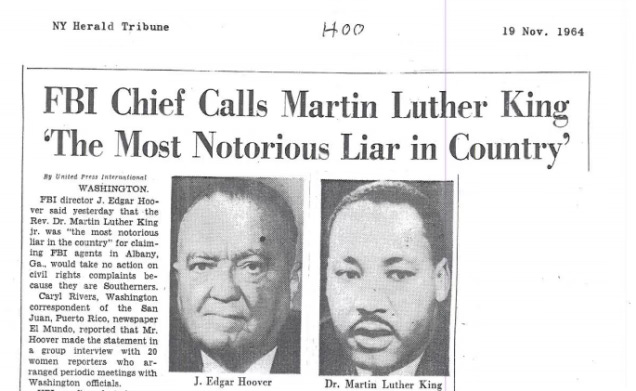
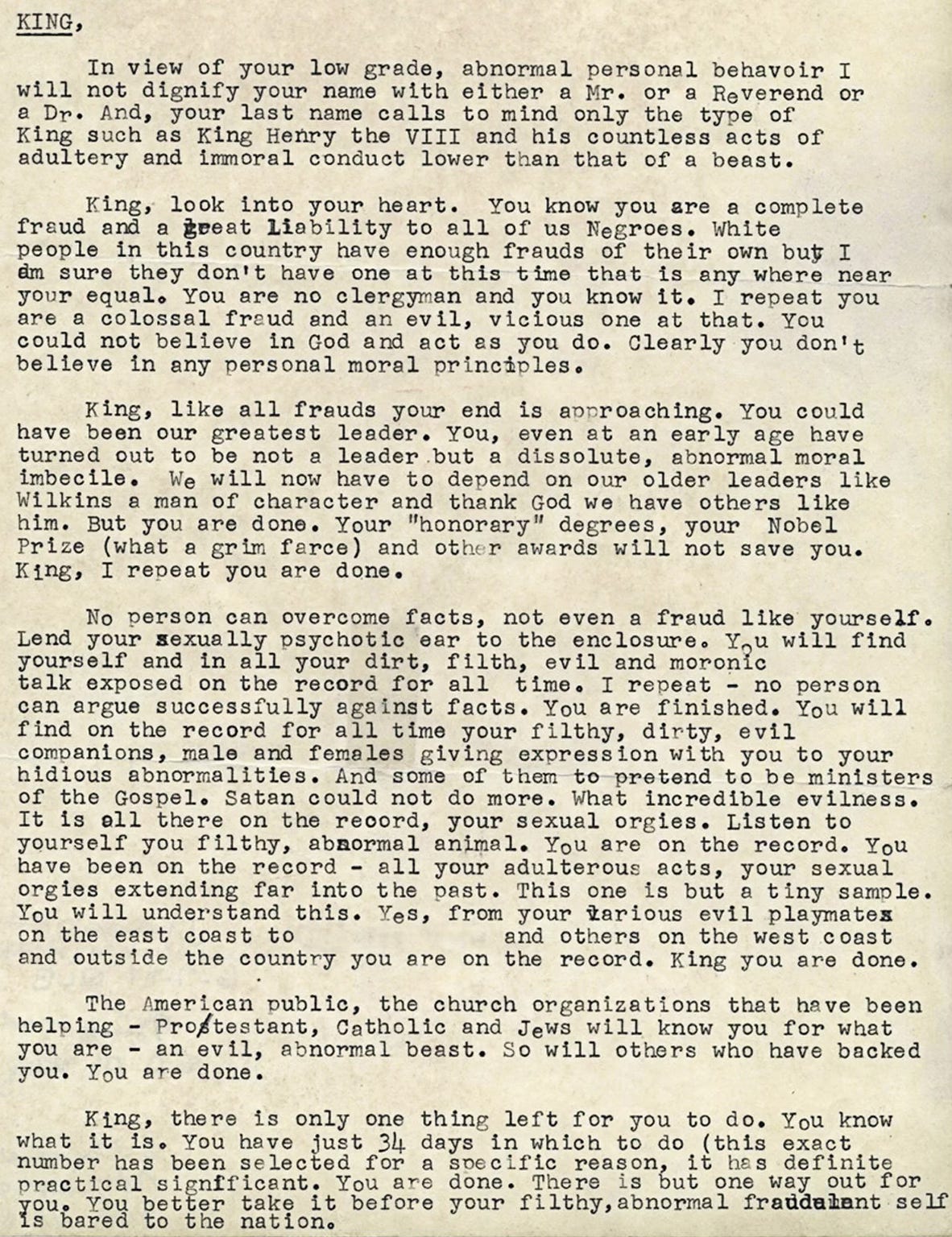
Another lesson that tends to get overlooked is that protest movements that are praised in retrospect were often perceived negatively by their contemporaries. King himself was relentlessly vilified during his lifetime. He was under FBI surveillance, and J. Edgar Hoover labeled him "the most notorious liar in the country" in 1964. That same year, the FBI even sent King an anonymous blackmail letter urging him to commit suicide.
Public sentiment was similarly harsh: According to the Washington Post, a Gallup poll revealed that 61% of those surveyed disapproved of the 1961 Freedom Riders, who challenged segregation in the South. That same year, 57% believed sit-in protests would hinder racial integration. Before the 1963 March on Washington, where King delivered his iconic I Have a Dream speech, 60% viewed the demonstration negatively.
Gallup polls from the mid-1960s also show King's growing unpopularity: in 1963, 39% of Americans surveyed had a negative image of him, which grew to 63% three years later. This correlates with King's increasingly harsh criticism of poverty, capitalism, and global imperialism. And, of course, everything culminated with his assassination in 1968, aged just 39.
For every uplifting quote shared by those who might have opposed him in his time, it's worth revisiting some of his more unflinching words—reminders that Martin Luther King Jr. was far more radical than many are willing to acknowledge today:
"I have almost reached the regrettable conclusion that the Negro's great stumbling block in his stride toward freedom is not the White Citizen's Councilor or the Ku Klux Klanner, but the white moderate, who is more devoted to order than to justice"…"Who paternalistically believes he can set the timetable for another man's freedom."1
"Whites, it must frankly be said, are not putting in a similar mass effort to re-educate themselves out of their racial ignorance. It is an aspect of their sense of superiority that the white people of America believe they have so little to learn."2
"Again we have deluded ourselves into believing the myth that capitalism grew and prospered out of the Protestant ethic of hard work and sacrifice. The fact is that capitalism was built on the exploitation and suffering of black slaves and continues to thrive on the exploitation of the poor."3
"A nation that continues year after year to spend more money on military defense than on programs of social uplift is approaching spiritual death."4
"God didn't call America to engage in a senseless, unjust war as the war in Vietnam. And we are criminals in that war. We've committed more war crimes almost than any nation in the world. And we won't stop it because of our pride and our arrogance as a nation."5
Even establishing Martin Luther King Jr. Day in 1986 was fraught with conflict. It took years of campaigning, during which supporters faced staunch opposition, including from Republican Senator Jesse Helms, who accused King of communist sympathies.
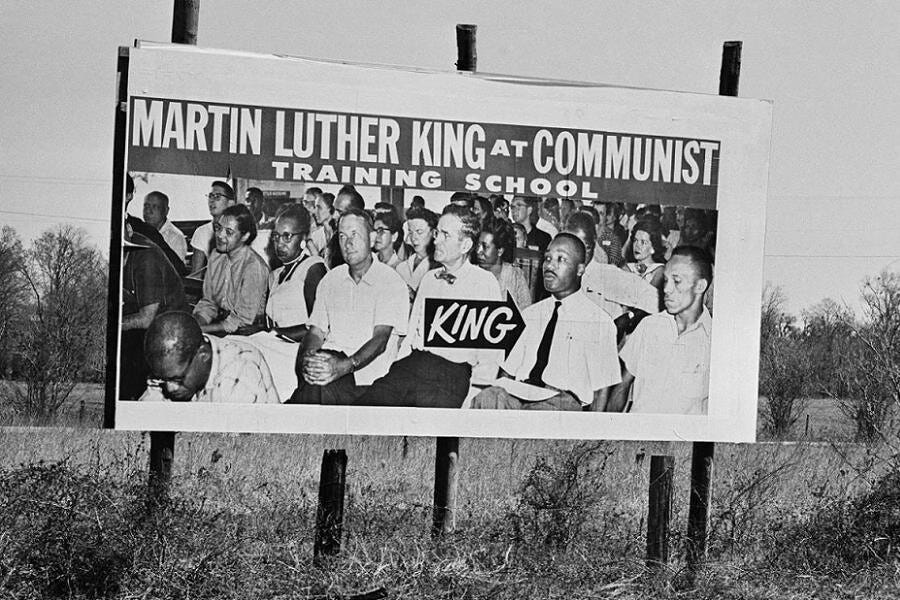
Therefore, Martin Luther King Jr. Day is not just a day to post glossy quotes. It's a day to remember the massive opposition he and the rest of the movement faced.
Perhaps that says something about the criticism facing today's progressive movements.
Letter from Birmingham Jail by Martin Luther King, Jr. (April 16, 1963)
Where Do We Go from Here: Chaos or Community? by Martin Luther King, Jr. (1967)
The Three Evils of Society speech, delivered at the National Conference on New Politics, August 31, 1967
Beyond Vietnam sermon, delivered at Riverside Church in New York, April 4, 1967
The Drum Major Instinct sermon, delivered at Ebenezer Baptist Church in Atlanta, Georgia, February 4, 1968