


The Berlin Conference is often remembered as the meeting where Europe’s great powers divided Africa among themselves. But the reality was far more complicated – and the conference’s true significance was different from what many people believe.
On a snowy Saturday, November 15, 1884, diplomats and representatives from 14 powers gather in Berlin. The delegations represent giants such as France, Great Britain, and Austria-Hungary, but also smaller players such as Italy, Portugal, and the Swedish-Norwegian union. Representatives of the Ottoman Empire and the United States also attend.
One by one, the representatives arrive in carriages outside an elegant yellow-brick mansion on Wilhelmstraße in central Berlin. It is the official residence of the German chancellor, Otto von Bismarck, who is hosting the gathering.
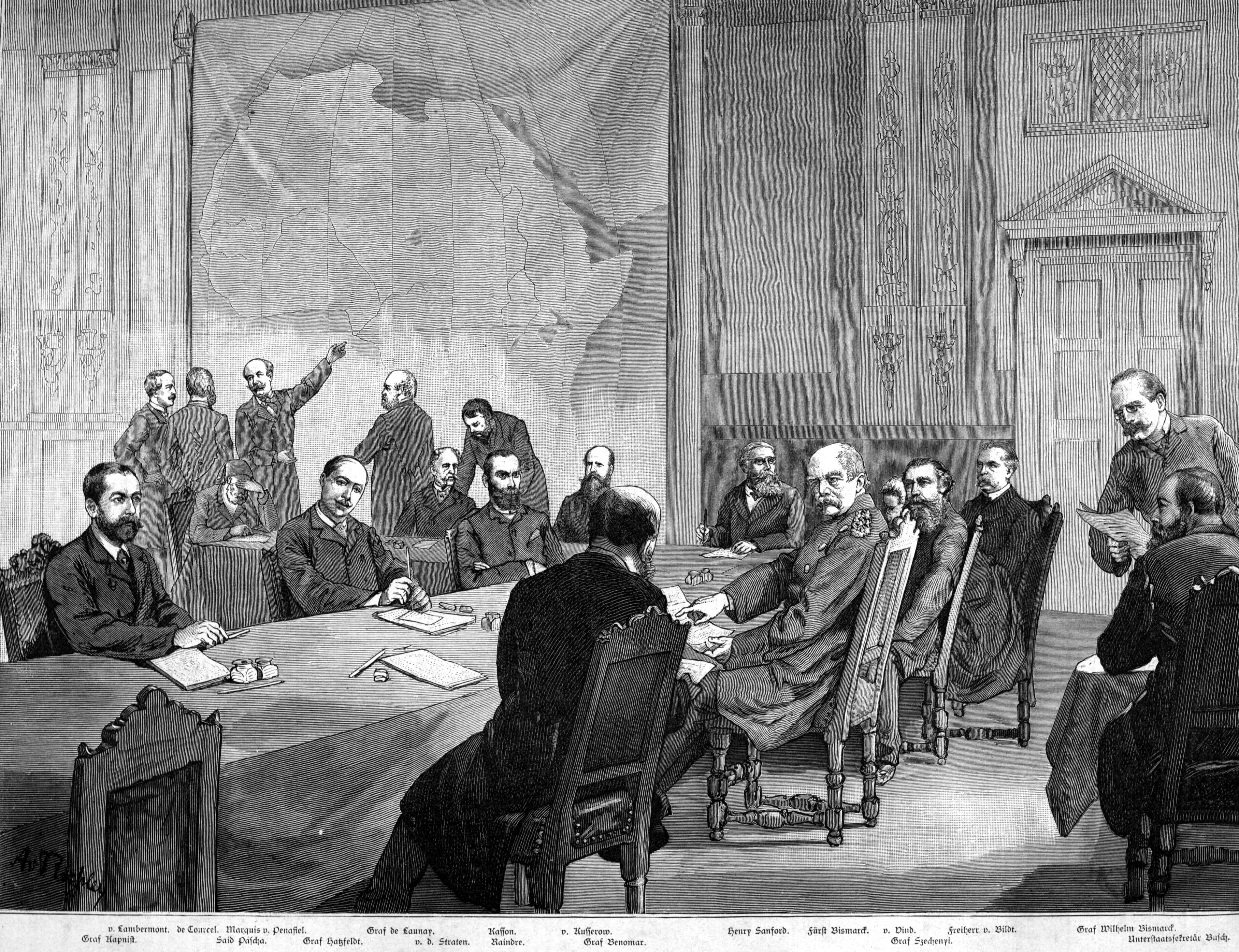
Inside the gates, the participants ascend a staircase and enter a large white hall with marble columns, red curtains, and a heavy crystal chandelier hanging from the ceiling. Through the windows, they can see the beautiful garden. They take their seats around a horseshoe-shaped table. An enormous map of Africa hangs on one wall. The continent’s fate is about to be decided.
The clock has just struck two when Otto von Bismarck, wearing a scarlet court uniform, rises and declares the meeting open. Speaking in French, he outlines the conference’s purpose: to promote Africa’s so-called civilization by opening the continent to trade.
The Continent Beyond the Coastal Forts
In the 15th century, the Portuguese led the way in exploring and mapping Africa’s coastlines, and over time, other European nations joined them. But during the more than four centuries of transatlantic slavery that followed, Europeans largely confined themselves to their small bases along the coasts. Exceptions existed, primarily in North Africa, where Europeans had maintained a presence for centuries, and at Africa’s southern tip, where European colonies had developed as early as the 17th century.


Europeans remained near the coast for many reasons. Africa’s interior was home to several powerful kingdoms, ready to resist any attempt at an outright invasion. Many African regions were also notoriously difficult to penetrate: dense jungles, dark swamps, merciless deserts, formidable mountain ranges, and raging rivers. In many places, animals posed an additional threat: lions, crocodiles, hippos, venomous snakes, and worst of all, mosquitoes carrying deadly diseases such as malaria and yellow fever.
Those who braved the dangers often died agonizing deaths. In the summer of 1816, for example, British naval captain James Hingston Tuckey set out to explore the Congo River. He and his expedition reached the port town of Boma, approximately 100 kilometers from the river’s mouth.
But farther upstream, the river narrowed considerably, and when they reached Yellala Falls – a series of rapids and waterfalls – they realized that the river was no longer navigable. Instead, they continued on foot, but soon fell ill with severe fevers and died one after another.
Some regions claimed so many lives and inspired such fear among Europeans that they became known as “the white man’s grave.”
The Scramble for Africa Begins
From the mid-19th century onward, however, technological and medical advances made European exploration of Africa’s interior increasingly feasible. Steamships, the telegraph, more effective firearms, and the growing use of quinine to combat malaria all made European expeditions and military conquests of the African interior considerably easier.
The so-called legitimate trade in raw materials was gradually replacing the declining transatlantic slave trade, and the desire to gain greater control over it prompted European nations to seek political and military domination over ever-larger parts of Africa.

Even during the second half of the 19th century, however, several European nations remained hesitant about whether they truly had the energy, money, manpower, and soldiers required to take control.
Yet there was also a fear of missing out. A fear that their rivals back home would instead enrich themselves with whatever might lie hidden in Africa’s interior. Dreams of goldfields and diamond mines drove the European states forward. Dreams of discovering the building blocks that would further strengthen their nations and make them invulnerable.
For many European nations, it became increasingly tempting – increasingly necessary – to carve out a piece of Africa for themselves. By the early 1880s, the so-called Scramble for Africa was in full swing.
The 18th century had been filled with European conflicts, culminating in the French Revolution and the brutal Napoleonic Wars of the early 19th century. In their aftermath, European powers sought to establish national borders and create a balance of power. The Congress of Vienna in 1814–1815 was the first in a series of congresses held during the 19th century to prevent further devastating conflicts. This system of meetings would continue, with varying degrees of success, until the outbreak of the First World War.
By the 1880s, Africa was increasingly emerging as a potential source of friction. As already noted, several European powers had begun competing for the continent, staking claims to various territories by declaring protectorates and what we would today call spheres of influence.
Great Britain and France were quarreling over both Egypt and West Africa. Portugal, which had enjoyed a considerable head start on the continent for centuries but had now been overtaken by its rivals, harbored ambitions of ruling an enormous colony stretching from the Atlantic Ocean and present-day Angola in the west to the Indian Ocean and present-day Mozambique in the east.
Meanwhile, acting on behalf of France, explorer Pierre de Brazza hurried through Central Africa and signed a controversial treaty with Iloo I, also known as Makoko de Mbé, a ruler of the Teke people. He then established a French outpost at the site that would later become Brazzaville, today’s capital of the Republic of the Congo.
With so many competing players involved, it seemed only a matter of time before the situation would explode. But one man had a plan to prevent it.
Bismarck’s Diplomatic Maneuvering
What is now Germany was unified in 1871 and became an empire: a new major power in the heart of Europe. Officially, Emperor Wilhelm I was in charge, but in practice, the country was governed by Chancellor Otto von Bismarck, a legendary statesman and one of the most influential figures of the 19th century.
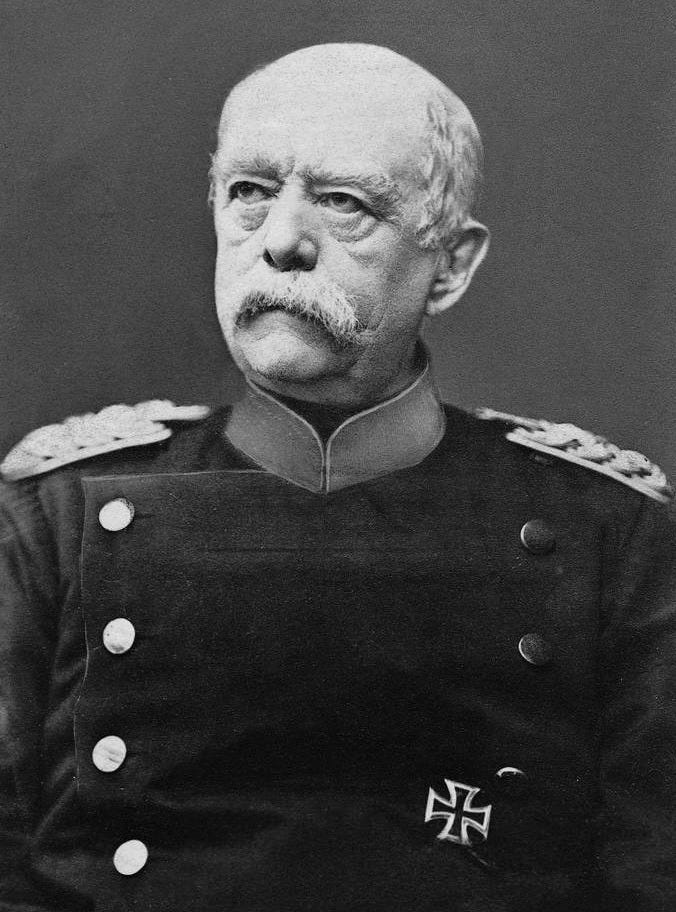
He had long been uninterested in colonization: colonies were too risky, complicated, and expensive. Instead, he had focused on building a strong Germany, avoiding war by keeping France, Great Britain, and Russia on their toes, and creating an intricate web of alliances. But surely German industries could benefit from African raw materials? And surely there was something to be gained from preventing Germany’s European rivals from acquiring too much influence in Africa?
In 1884, the Germans therefore raised their flag in what is today Togo, Cameroon, and Namibia. Later that year, Otto von Bismarck invited the European powers to the Berlin Conference, hoping to establish a system that would prevent bloodshed between European nations. In the process, he might even be able to stop his rivals’ colonial expansion.
What Was Actually Decided in Berlin?
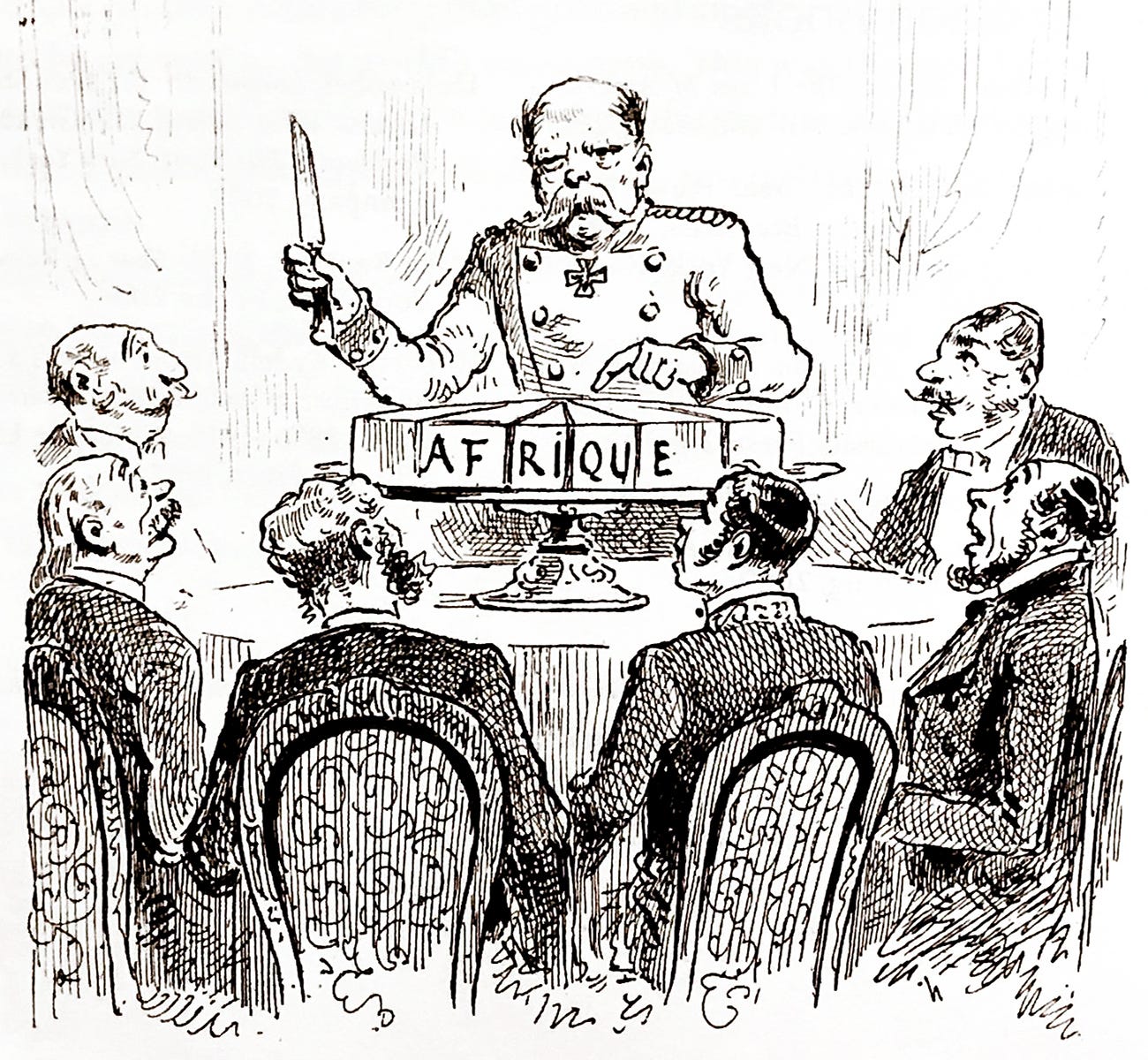
The Berlin Conference has often been portrayed as the moment when Europe’s great powers divided Africa among themselves. But this is a misleading account. Instead, the Berlin Conference sought to establish a framework for regulating certain aspects of Europe’s ongoing colonial expansion.
Following Bismarck’s brief opening address, the conference got underway. Central to the discussions was the idea of opening Africa to commerce and the belief that doing so would bring “civilization” to the continent.
In his speech, Bismarck drew on an idea that frequently appeared in the defense of colonialism: “the three Cs” – Commerce, Christianity, and Civilization.
During his address, Bismarck also emphasized that the conference would not address sovereignty. Once again, the primary purpose was not to draw new national borders during the meeting itself. Bismarck’s emphasis prompted some observers to wonder what the point of the conference actually was. One official at the British Foreign Office commented on the speech, wondering if it would do more than “register a few platitudes about freedom of commerce and navigation”.
After three months of negotiations, the conference concluded on February 26, 1885. And it had certainly produced more than mere platitudes. Among other things, the participating powers agreed to freedom of navigation along the Niger and Congo rivers, as well as free trade within the vast Congo Basin. The countries also pledged to notify one another when they laid claim to new territories. Furthermore, making such a claim now required so-called effective occupation: a European nation could no longer simply proclaim a territory its own, but had to establish an administrative and policing presence.
The participating powers also pledged to combat the slave trade. The transatlantic slave trade had, of course, already come to an end, but in East Africa and parts of Central Africa, large numbers of Africans continued to be abducted as part of slave-trading networks operating in other directions. People were enslaved in vast numbers along the East African Swahili coast, taken north across the Sahara, or transported east across the Red Sea and the Indian Ocean.
As part of the so-called civilizing process, the European powers now promised to put an end to this practice. But although the fight against the slave trade was used to legitimize colonization, forced labor would later prove to be a central feature of many European colonies.
A Historical Turning Point – or an Exaggerated Myth?
At the time, the conference was considered a success. But historians have long debated how much influence it actually had on colonization. Some argue, for example, that the agreements reached had a limited impact on what subsequently unfolded. As historian Thomas Pakenham writes in his book The Scramble for Africa: The White Man’s Conquest of the Dark Continent from 1876 to 1912:
“But what exactly had been achieved? There were thirty-eight clauses to the General Act, all as hollow as the pillars in the great saloon. In the years ahead people would come to believe that this Act had a decisive effect. It was Berlin that precipitated the Scramble. It was Berlin that set the rules of the game. It was Berlin that carved up Africa. So the myths would run. It was really the other way round. The Scramble had precipitated Berlin. The race to grab a slice of the African cake had started long before the first day of the conference. And none of the thirty-eight clauses of the General Act had any teeth. It had set no rules for dividing, let alone eating, the cake.”
Critics argue that the new rules were almost entirely ineffective. For example, European nations were only required to notify one another that they had taken possession of a territory after the fact, not beforehand. And the rules governing “effective occupation” applied only to new possessions, not existing ones. Furthermore, they applied only to coastal areas, most of which had already been occupied.
Others, however, maintain that the decisions reached at the conference were still highly significant. As Matthew Craven, professor of international law, writes in Between Law and History: The Berlin Conference of 1884–1885 and the Logic of Free Trade:
“As had been specified at the outset, the general purpose of Articles 34 and 35 was to ward off the possibility of open conflict between colonising powers by requiring mutual notification of the taking of new possessions (Article 34) and by insisting that occupation be effective rather than purely symbolic (Article 35). While these provisions did not, in themselves, provide the basis for partition, the language employed – ‘occupation’ or the ‘taking of possession’ – implied that African territory had a status equivalent to terra nullius (either in the strict sense of being ‘empty’ or as ‘ownerless’) and that European sovereignty could be established at will over territories not yet occupied.”
Craven’s point, then, is not that the participants in Berlin literally divided Africa among themselves. Rather, the conference helped establish an international legal system in which European powers granted themselves the right to claim African territory without having to account for the people and societies that already lived there.
Although the Berlin Conference was neither the starting point for the partition of Africa nor the moment when new colonies were born, it still had a major impact by legitimizing ongoing and future colonization of the continent.
The idea of “effective occupation” was intended to invalidate outdated or inactive territorial claims, but instead had the effect of encouraging European intervention. European nations could no longer be satisfied with a merely theoretical presence in Africa. What was now required was a more direct administrative apparatus, backed by a more tangible political and military presence.
By establishing the rules of the game, the conference confirmed Africa as a legitimate arena in which Western powers could carve up the continent. And through a series of other agreements, that is precisely what would happen over the following decades.
Not a single African country was consulted during the negotiations in Berlin. The participants were, of course, aware that Africa was already inhabited and that political borders already existed. But with their technological and military superiority, who could stop Europe from taking over?
To make matters worse, they were so convinced of their own cultural and humanitarian superiority that they assumed their presence would be beneficial. What was good for Europeans was automatically good for Africans – even if the latter were too “underdeveloped” to understand it themselves.
Although European leaders were eager to emphasize the conference’s humanitarian objectives – ending the slave trade and bringing Christianity and “civilization” to Africa – the underlying motives were political and economic. And in the aftermath of the conference, the process of colonization accelerated.
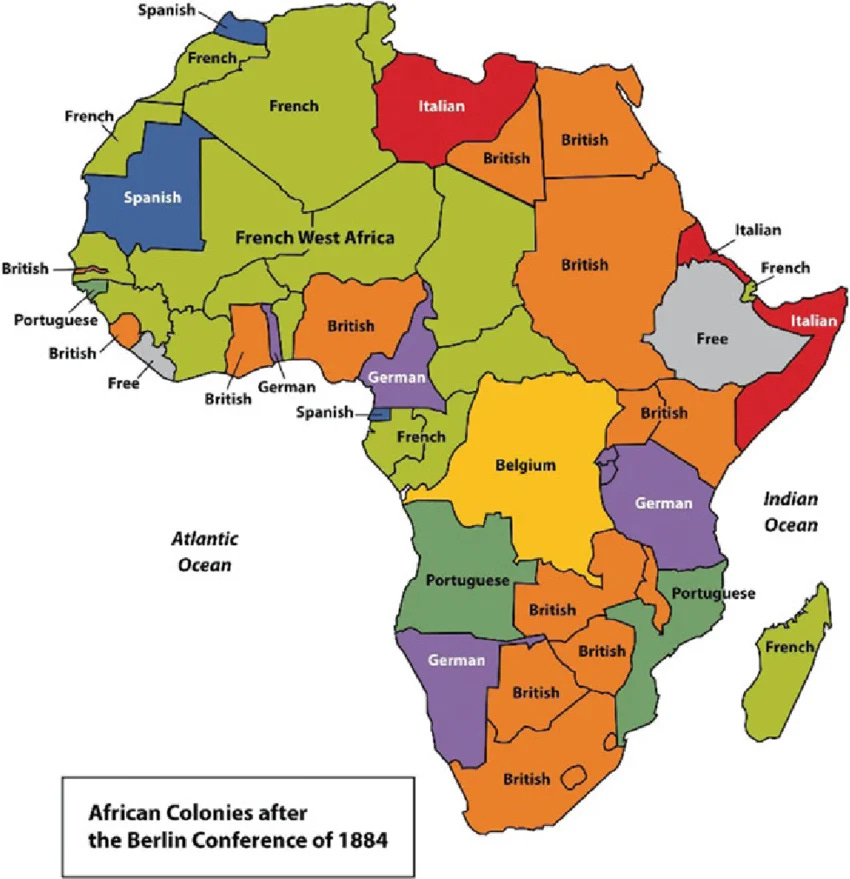
Until the 1880s, Europe had barely nibbled at Africa’s edges. But over the following years, almost the entire continent was swallowed up in a remarkably short period by just five European nations: Great Britain, France, Portugal, Germany, and Italy. A sixth country, Spain, had to settle for a few leftover scraps, while the vast territory in the heart of the continent, which became known as the Congo Free State, fell into the hands of Belgian King Leopold II.
African societies naturally resisted, both diplomatically and militarily, sometimes successfully. But by the outbreak of the First World War in 1914, only two independent states remained in Africa: Ethiopia, which had defeated Italian attempts at colonization, and Liberia, originally founded as a private colony by the American organization known as the American Colonization Society.
The Long Shadow of Colonial Borders
In many cases, the new national borders Europeans drew were arbitrary from the perspective of local populations and had far-reaching, sometimes devastating, consequences. Although colonial powers sometimes took existing political boundaries, geographical features, and local power structures into account, their own political and economic interests primarily determined how the continent was divided. In the process, they split ethnic groups apart while forcing others together within new political entities.
On the one hand, relatively unified regions were divided, and people who had lived together for generations suddenly found themselves on opposite sides of new, artificial borders.
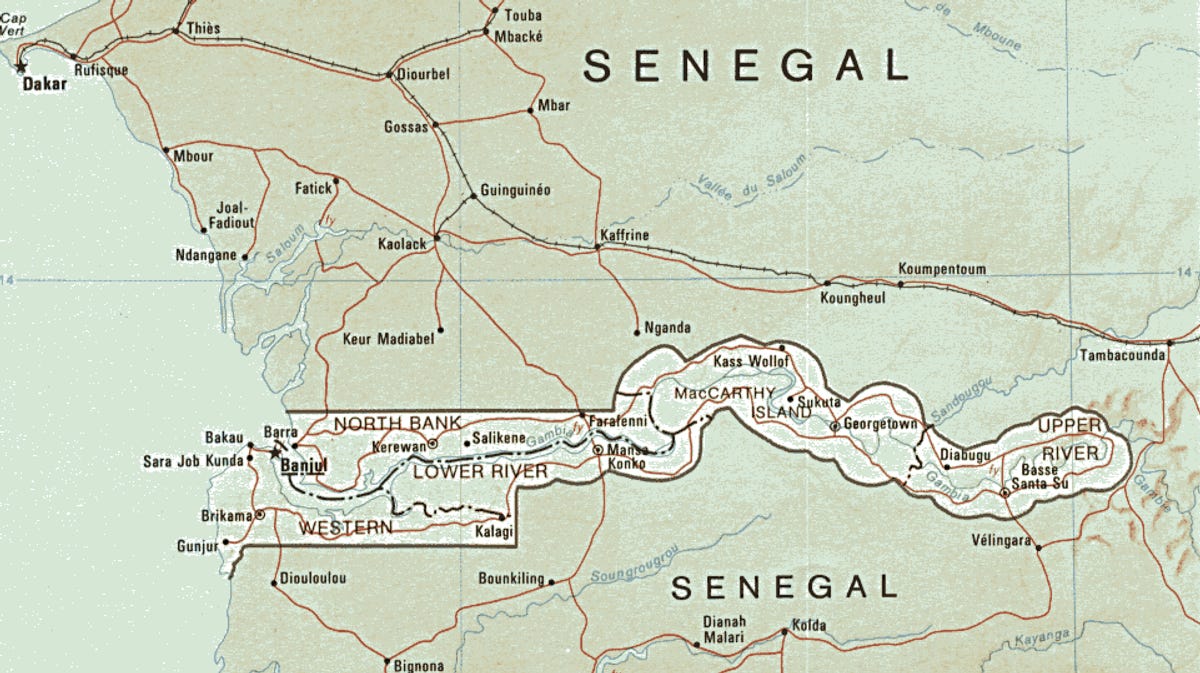
Bizarre colonial creations such as The Gambia emerged – a country extending little more than a few dozen kilometers on either side of a river and which, apart from its small Atlantic coastline, is surrounded by another country: Senegal. Following the colonial partition, ethnic groups in the region were divided between The Gambia, with English as its official language, and Senegal, with French as its official language.
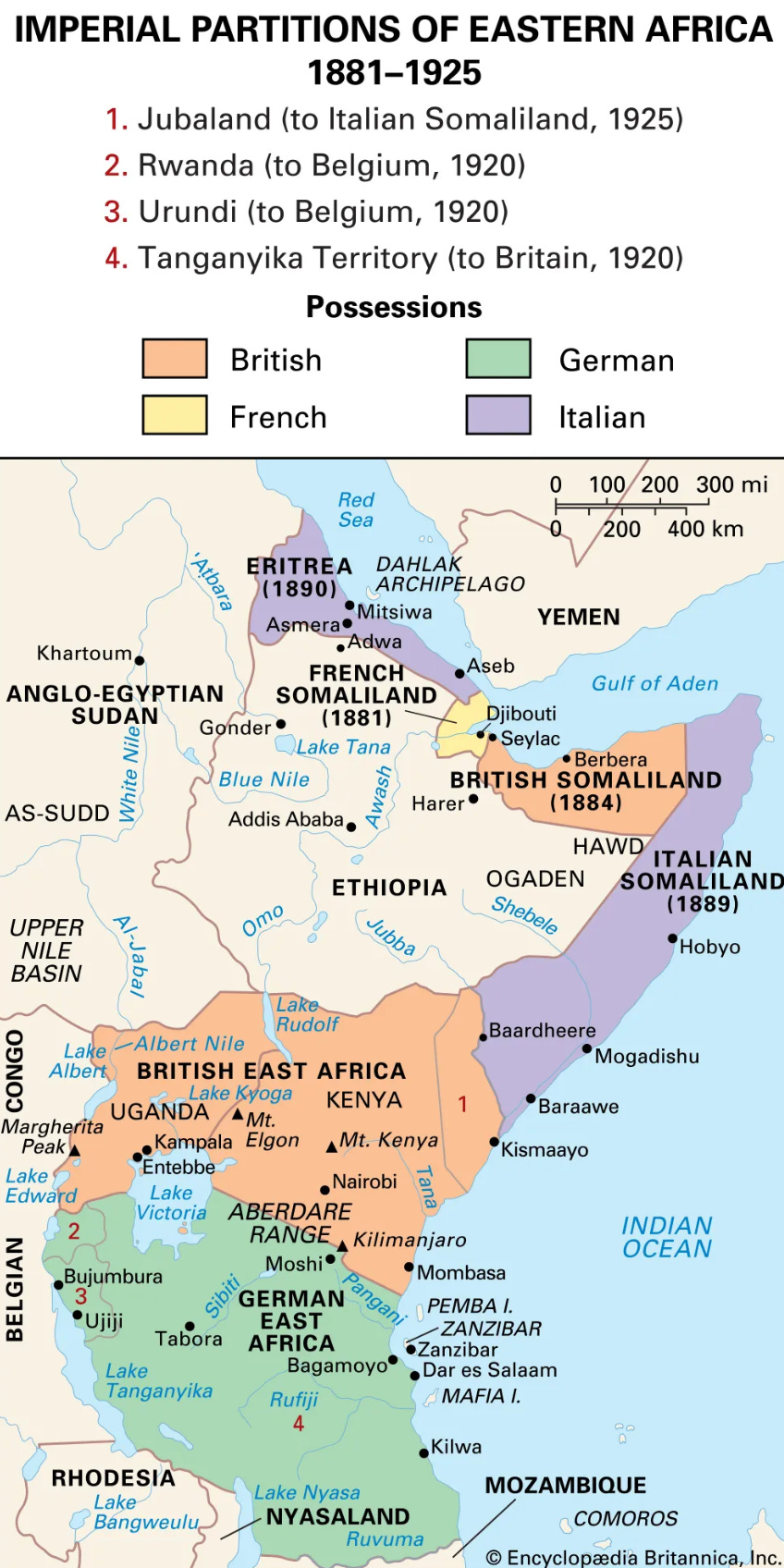
Another example appears in the east, where British, French, and Italian colonies divided the Somalis.
On the other hand, the opposite also occurred. Dozens, even hundreds, of ethnic groups with different religious, cultural, and linguistic traditions could be forced together within artificial nations such as Sudan, Nigeria, and Kenya. There, they were made to compete for the limited resources, jobs, land, hospitals, schools, and property that the colonial powers were willing to make available to them.
As Europeans sought to administer a continent of which they had extremely limited knowledge, they looked for ways to understand, categorize, and manage it. In many cases, they invented or reinforced distinctions between ethnic groups, while simplifying or misunderstanding their defining characteristics through colonial concepts such as “tribes.”
Furthermore, the colonizers often systematically treated different groups differently – holding some back while allowing others to gain an advantage, frequently based on an imagined proximity to the white race. This created or exacerbated bitter local rivalries, some of which had consequences relatively quickly, while others would emerge much later. In some respects, this legacy continues to influence certain conflicts in Africa today.
The consequences show up in other ways, too. Many African countries are either extremely small or unwieldy in size. Of Africa’s 54 internationally recognized states, 16 – almost a third – have no coastline of their own. Colonial-era borders shaped the geography of many of these countries. Lacking direct access to the sea creates significant economic challenges, as these countries depend on their neighbors’ ports and transport infrastructure for international trade.
Contrary to what is often claimed, the Berlin Conference was therefore not the occasion on which Europe’s powers redrew the map of Africa. But it became a symbol of the system that made the continent’s colonial conquest possible: an order in which European states granted themselves the right to determine the future of African societies. The political and economic structures that emerged from this system would continue to shape the continent long after the end of colonialism.
Further Reading
Books
Africa and the Victorians: The Official Mind of Imperialism by Ronald Robinson, John Andrew Gallagher, and Alice Denny (1961)
The Scramble for Africa: The White Man’s Conquest of the Dark Continent from 1876 to 1912 by Thomas Pakenham (1991)
King Leopold’s Ghost: A Story of Greed, Terror, and Heroism in Colonial Africa by Adam Hochschild (Swedish edition, 2001)
Imperialism, Sovereignty and the Making of International Law by Antony Anghie (2005)
The Fortunes of Africa: A 5000-Year History of Wealth, Greed, and Endeavor by Martin Meredith (2014)
The Scramble for Africa by Muriel Evelyn Chamberlain (2014)
King Leopold’s Ghostwriter: The Creation of Persons and States in the Nineteenth Century by Andrew Fitzmaurice (2021)
Academic Articles
“Heritage of Strife: The Effects of Colonialist ‘Divide and Rule’ Strategy upon the Colonized Peoples” by Richard Morrock, in Science & Society (vol. 37, no. 2, 1973)
“Reflections on the Berlin West Africa Conference, 1884–1885” by G. N. Uzoigwe, in Journal of the Historical Society of Nigeria (vol. 12, nos. 3/4, December 1984–June 1985)
“Review: ‘Blundering and Plundering’: The Scramble for Africa Relived” by A. G. Hopkins, in The Journal of African History (vol. 34, no. 3, 1993)
“Colonial Style and Post-Colonial Ethnic Conflict in Africa” by Robert Blanton, T. David Mason, and Brian Athow, in Journal of Peace Research (vol. 38, no. 4, 2001)
“Sweden-Norway at the Berlin Conference 1884–85: History, National Identity-making and Sweden’s Relations with Africa” by David Nilsson, in Current African Issues (no. 53, 2013)
“Between Law and History: The Berlin Conference of 1884–1885 and the Logic of Free Trade” by Matthew Craven, in London Review of International Law (vol. 3, no. 1, 2015)
“The Long-Run Effects of the Scramble for Africa” by Stelios Michalopoulos and Elias Papaioannou, in American Economic Review (vol. 106, no. 7, July 2016)
“Endogenous Colonial Borders: Precolonial States and Geography in the Partition of Africa” by Jack Paine, Xiaoyan Qiu, and Joan Ricart-Huguet, in American Political Science Review (2025)
Other Sources
“General Act of the Berlin Conference on West Africa, 26 February 1885” (1885)