


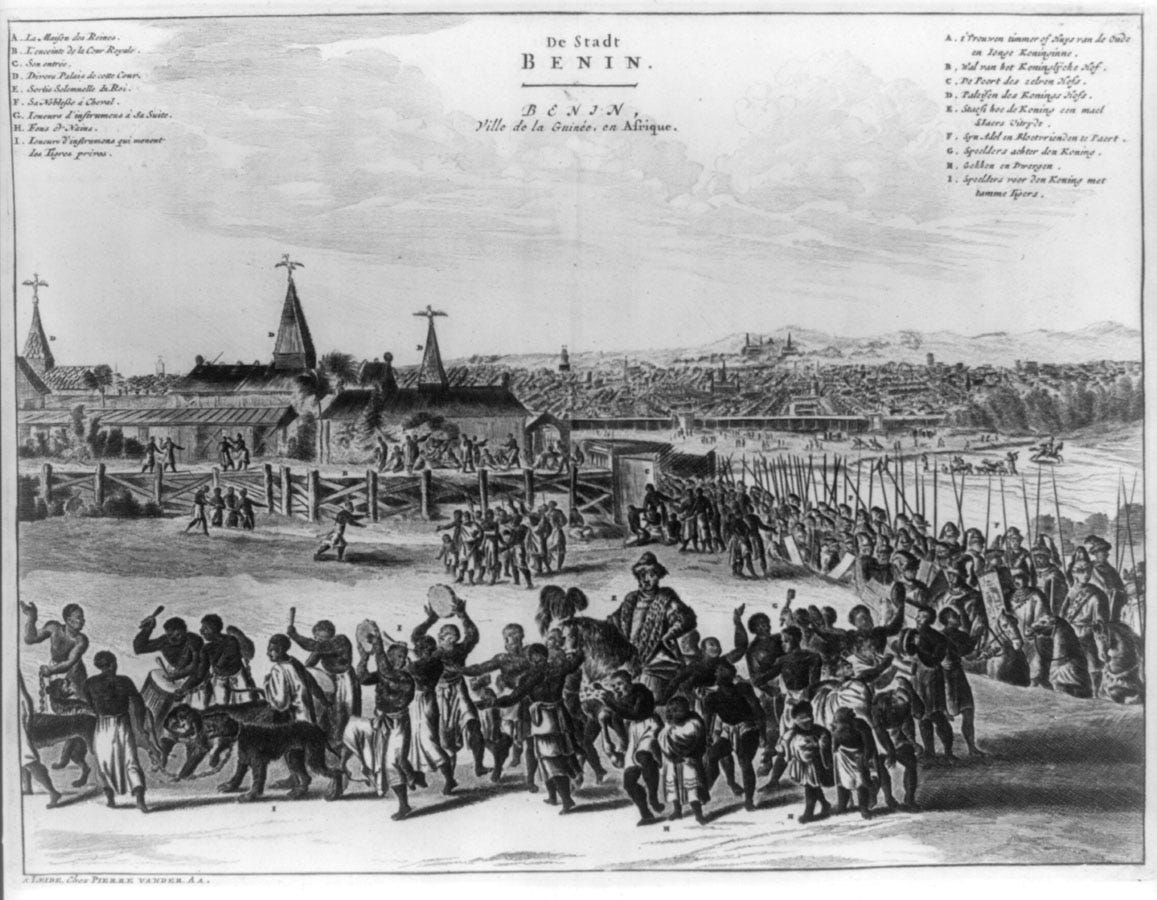
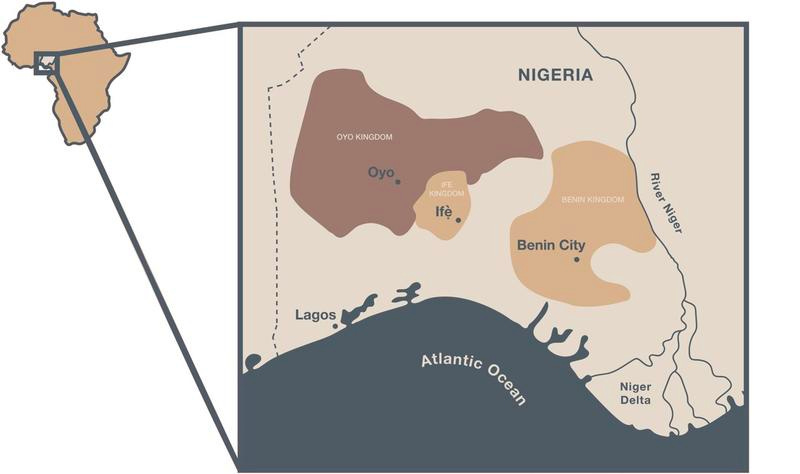
Deep in the rainforests of what is now southwestern Nigeria, increasingly organized societies developed during the tenth century. One of them called its kingdom Igodomigodo and was ruled by a king with the title ogiso, roughly meaning “ruler of the sky”. Beneath him sat a council of hereditary dignitaries: the uzama.
Metals, textiles, salt, and jewelry were exchanged with neighboring states, and trade routes stretched far afield. Agriculture and trade created the conditions for specialized crafts. A tradition of producing wooden and terracotta sculptures emerged, and over time, bronze and brass also came to occupy a prominent place in the kingdom’s art.
According to one version of the oral tradition, the kingdom entered a period of instability around the twelfth or thirteenth century. The ogiso’s influence waned, and the people are said to have asked the king of the nearby city-state of Ife to send someone capable of leading the nation.
The king sent his son, Prince Ọranyan, who had a son with a local woman from Igodomigodo. Their child, Eweka, became the first in a new dynasty of kings known as obas. The kingdom came to be called Edo, which was, and remains, the name of its people and their language. The city at the heart of the territory was also called Edo. Today, however, the realm is better known as the Kingdom of Benin, a state that should not be confused with the modern republic of the same name. The city of Edo is now known as Benin City.
Her name was Emotan, and she earned her living as a trader in Benin City’s market. Accounts place her life in the late fourteenth century and the first half of the fifteenth. After her husband’s death, she is said to have moved into a small hut beside the market, where she also looked after the children of other marketgoers. This has led later retellings to compare her work to the city’s first nursery.
One person she encountered at the market was Prince Ogun, a member of the royal family.
A few years earlier, his father Ohen – then oba of Benin – died, sparking a power struggle. Ogun was banished by his elder brother and forced to flee the country. Emotan met Ogun when he returned to Benin City to challenge his younger brother for the throne. In the intervening years, his elder brothers had died, and his younger brother, Uwaifiokun, had seized the title of oba.
According to oral tradition, Uwaifiokun’s soldiers swept through the streets searching for Ogun, who sheltered in Emotan’s hut. Having escaped detection, he slipped into the palace, killed his brother, and took power. In gratitude for her help, Emotan was appointed Iyeki, a title given to the person responsible for enforcing the market’s rules.
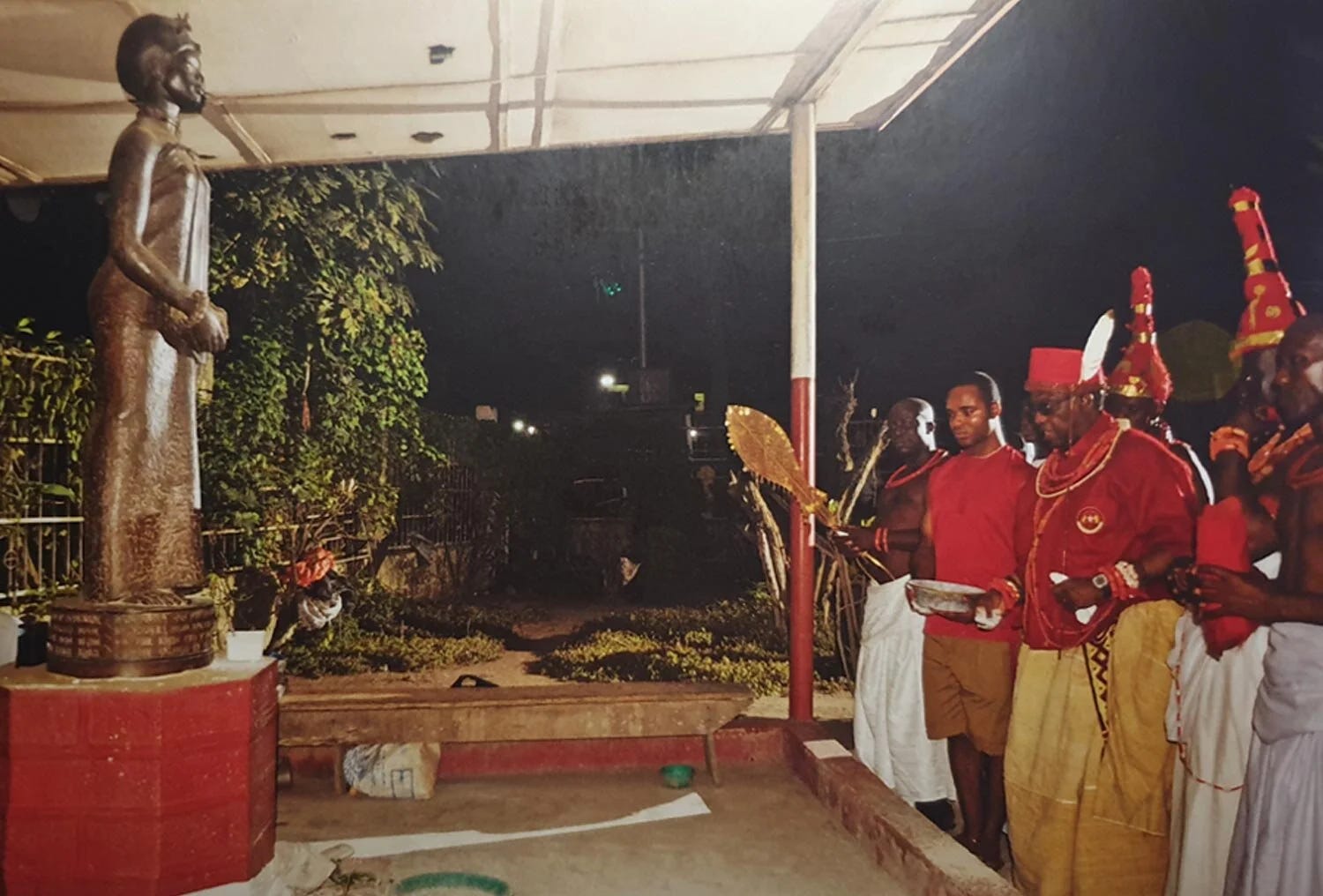
When Emotan died shortly after, Ogun had a sacred tree planted where she used to sell her goods. The tree fell in the nineteenth century, but in 1954 a bronze statue was erected on the spot where it had once stood.
According to tradition, then, it was partly thanks to Emotan’s protection that Prince Ogun was able to claim the title of oba of Benin around 1440. To mark his accession, he took the new name Ewuare, which translates roughly as “the trouble has ceased”.
Ewuare Consolidates His Power
Before Ewuare secured the throne, much of Benin’s power rested with the uzama council. Under his rule, its influence was gradually undermined.
He created new administrative positions beneath him, built a wall around the palace to separate it physically from the rest of Benin City, and cultivated his own mythology. Since the kingdom’s founding, Benin’s rulers had been considered to have a connection to the divine.
Ewuare reinforced this by introducing the annual Igue festival, a celebration intended to honor his supernatural powers. Over time, people believed he influenced everything from the weather and harvests to fertility.
Ewuare is also credited with changing the rules of succession in a way that strengthened the monarchy at the uzama council’s expense: the throne was to pass to the oba’s firstborn son, limiting the council’s influence over the choice of successor.
With his authority strengthened, Ewuare embarked on a series of conquests of neighboring communities. In the towns and villages he took over, he established administrative offices and filled them with his allies.
Every conquered region brought more people to tax, and the growing revenues allowed the military campaigns to continue. From Benin City, the kingdom’s heart, a network of smaller, partly autonomous communities was governed. Its borders expanded dramatically as a compact kingdom grew into a small empire.
One of the kingdom’s most distinctive features was the enormous system known as the Walls of Benin, or locally as iya. “Walls” is something of a misnomer: it was a vast network of earthen banks and ditches constructed both to protect the country and to separate areas of settlement and cultivation.
The earthworks around Benin City were particularly extensive, while those in the countryside were often smaller. Taken together, the network of banks and ditches has been estimated to extend some 16,000 kilometers. This was not a single continuous wall, but a large number of interconnected boundaries around towns, villages, and farmland.
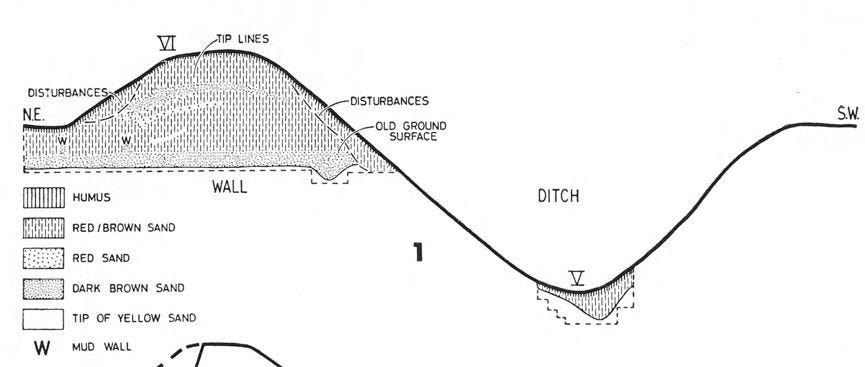
The dates of the different sections are uncertain, but the earthworks were developed over many centuries. Ewuare is credited with helping expand the capital’s defenses. Today, much of the network lies in ruins, the result of erosion and war. Since their decline, local people have also used material from the banks for building.
Benin’s flourishing trade supported the arts, and Ewuare encouraged more people to take part. Copper continued to be imported along the trade routes he had expanded and modernized. The kingdom’s craftspeople created intricate objects in wood and ivory, and used imported metal to cast works in brass and bronze.
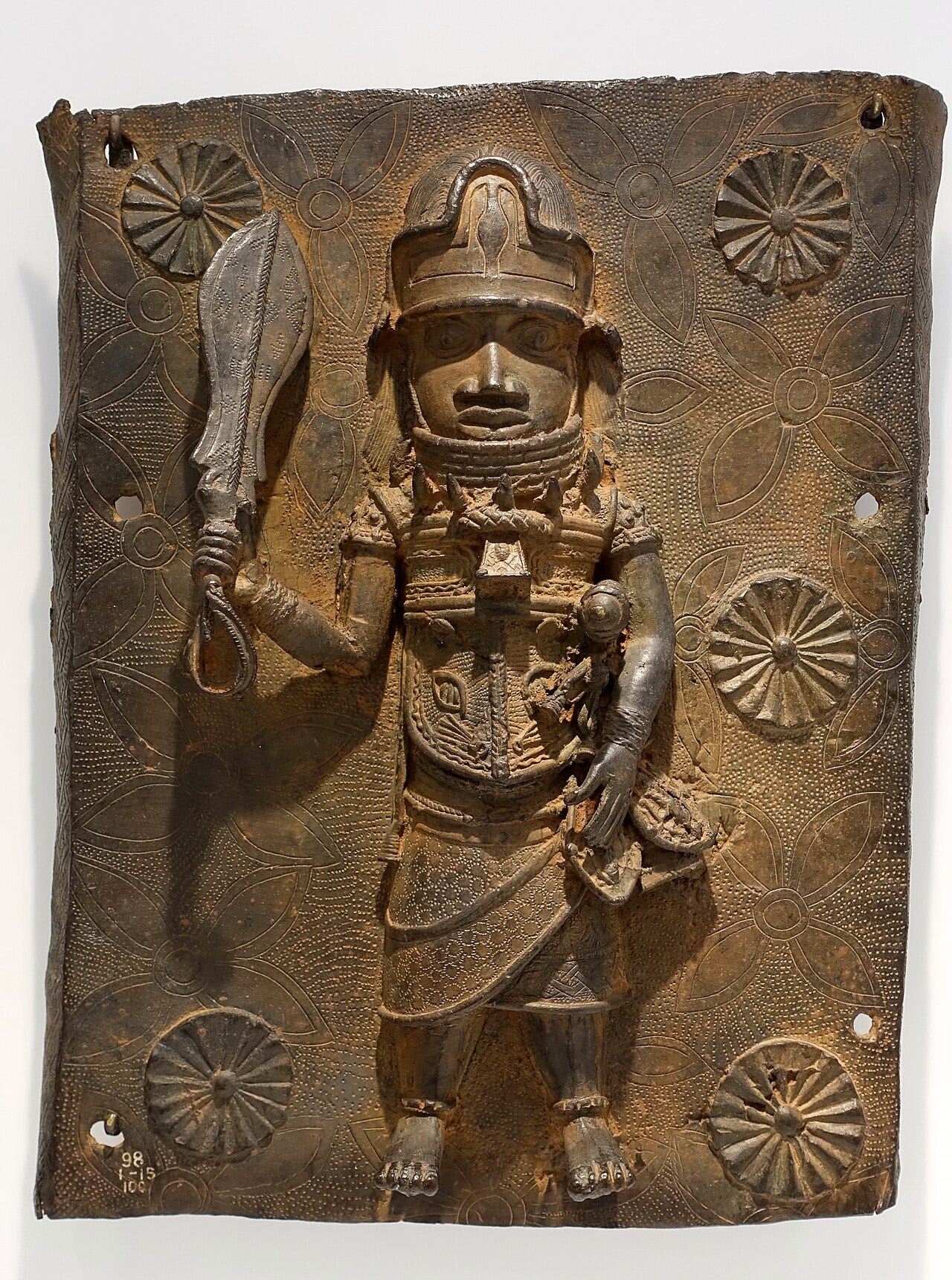
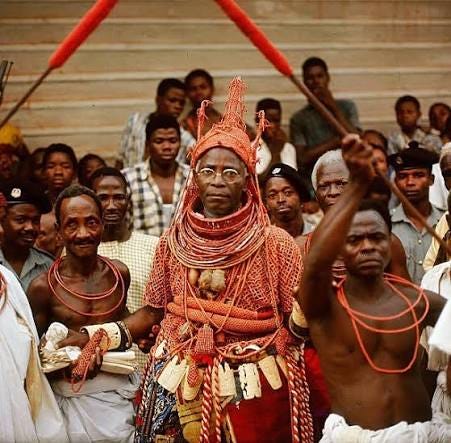
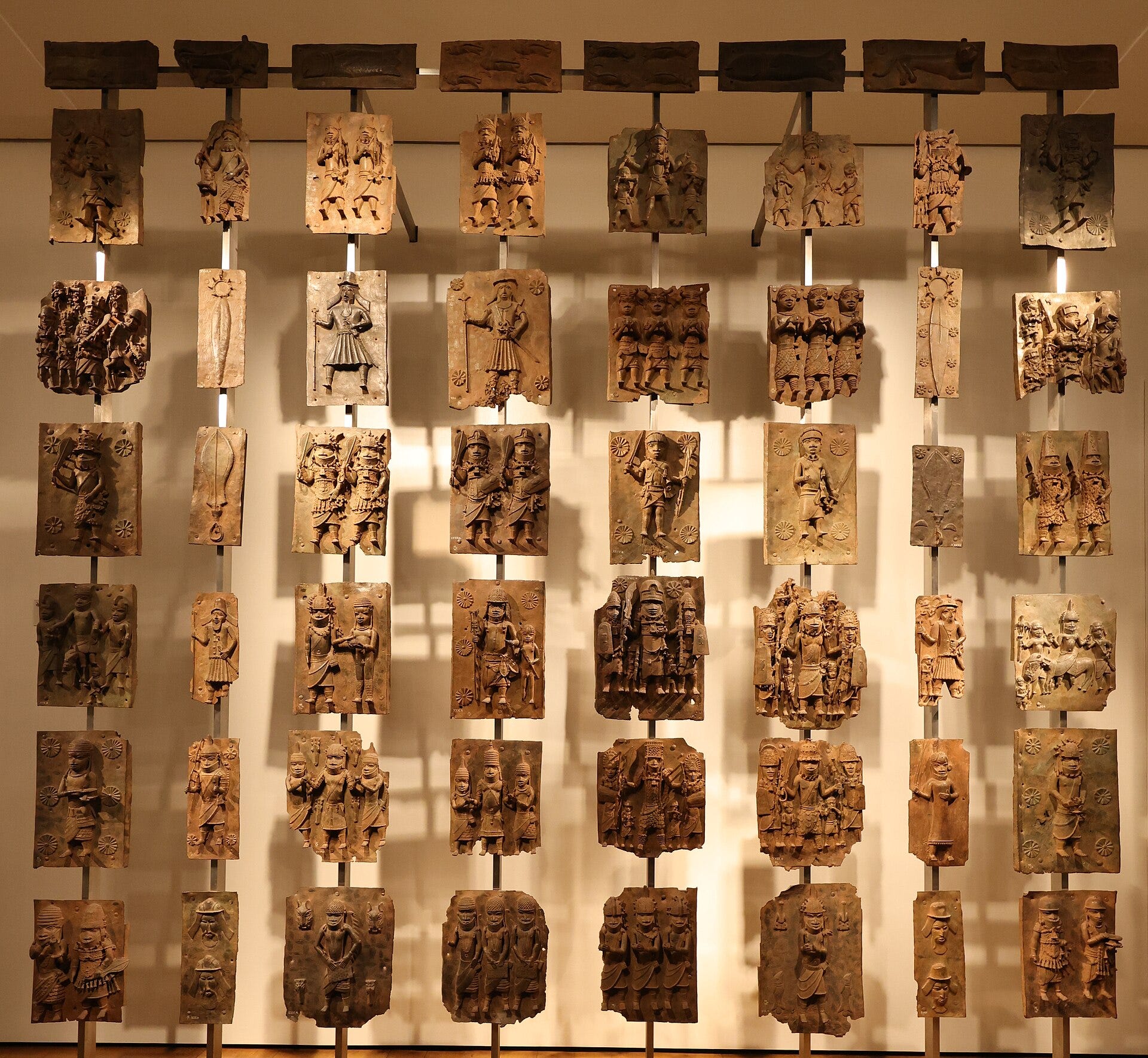
Some of the sculptures, now known as the Benin Bronzes, depicted animals or people in royal regalia and were used in ceremonies, as parts of altars, and as wall decorations. Ewuare is also credited with popularizing coral jewelry, which remains an important part of royal attire in southwestern Nigeria.
On Their Own Terms
Ewuare ruled until his death around 1473, and Europeans arrived a little over a decade later. In 1485, Portuguese explorers made their way inland from the coast through the rainforest and eventually came into contact with Benin. They quickly realized they were dealing with a proud and self-assured kingdom.
Trade in goods, including pepper, cotton cloth, and coral beads, followed. In 1514, two ambassadors from Benin were sent to Lisbon to request missionaries and firearms. The rules then in force, however, prohibited Portugal from selling firearms to non-Christians, for fear that they would fall into Muslim hands. In his article “The Benin Missions”, A.F.C. Ryder quotes a letter that King Manuel I of Portugal sent to his counterpart in Benin:
“For when we see that you have embraced the teachings of Christianity like a good and faithful Christian, there will be nothing in our realms with which we shall not be glad to favour you, whether it be arms or cannon and all other weapons of war for use against your enemies.”
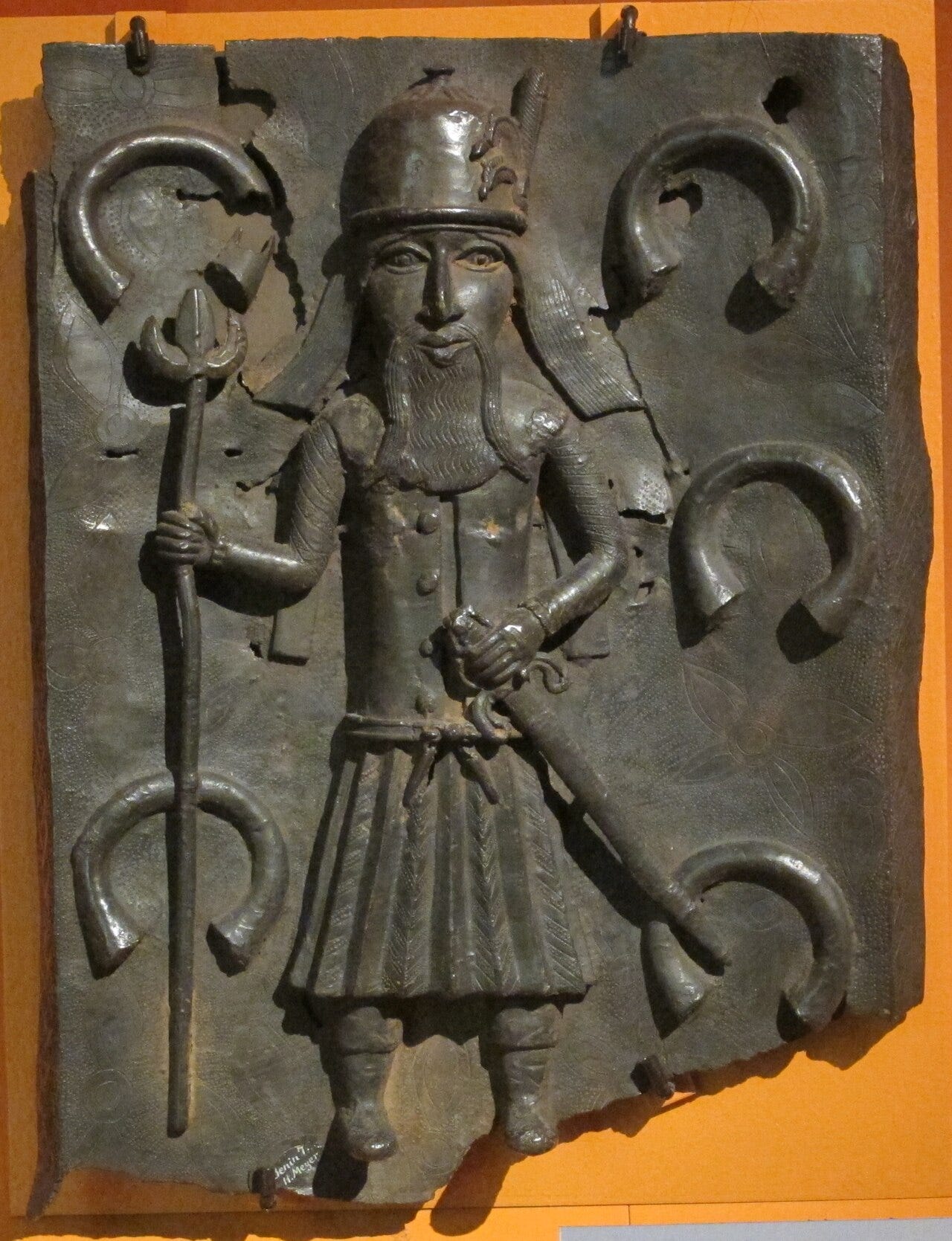
Manillas, horseshoe-shaped bracelets of bronze, brass, or copper, were manufactured in Europe and shipped down to the West African coast, where they came to serve as a means of payment for the goods the Portuguese bought.
The Africans with whom they traded valued the manillas differently and preferred different sizes and weights. Their uses also varied. In Benin, they were commonly melted down, feeding the kingdom’s production of bronze and brass sculptures. The arts flourished, and some of the statuettes came to depict Portuguese soldiers, complete with swords, steel helmets, and muskets.
There was also trade in human beings. Slavery existed in Benin long before the Europeans arrived and, according to the Nigerian historian Philip Igbafe, fell into two categories: enslaved people who belonged to the oba, or king, and those owned by other inhabitants of Benin.


In “Slavery and Emancipation in Benin, 1897–1945”, Igbafe also stresses that the expression “evien-oba”, literally “the oba’s slaves”, has historically caused misunderstandings and should not be confused with actual slavery. The expression referred to the monarchy’s subjects and emphasized the supremacy of royal power. Free inhabitants also used it to express their shared identity as subjects of the oba.
The slave trade with Europeans was initially small in scale. The Portuguese were primarily interested in buying enslaved people to exchange for gold farther west at their newly built fort, Castelo de São Jorge da Mina, or El Mina, in what is now Ghana.
But as new colonies were established in the Americas, demand for enslaved people grew. Around 1516, Benin began restricting the export of enslaved men, probably to retain labor and men who could be used in warfare. These restrictions developed into a long-lasting ban on the export of men, while the trade in enslaved women continued.
The kingdom also relied on sales of textiles, ivory, and pepper. In The Civilizations of Africa – A History to 1800, the American historian Christopher Ehret describes women as the principal producers of Benin’s cotton textiles and the main economic beneficiaries of their manufacture. The textile trade thus helped strengthen their economic and social standing.
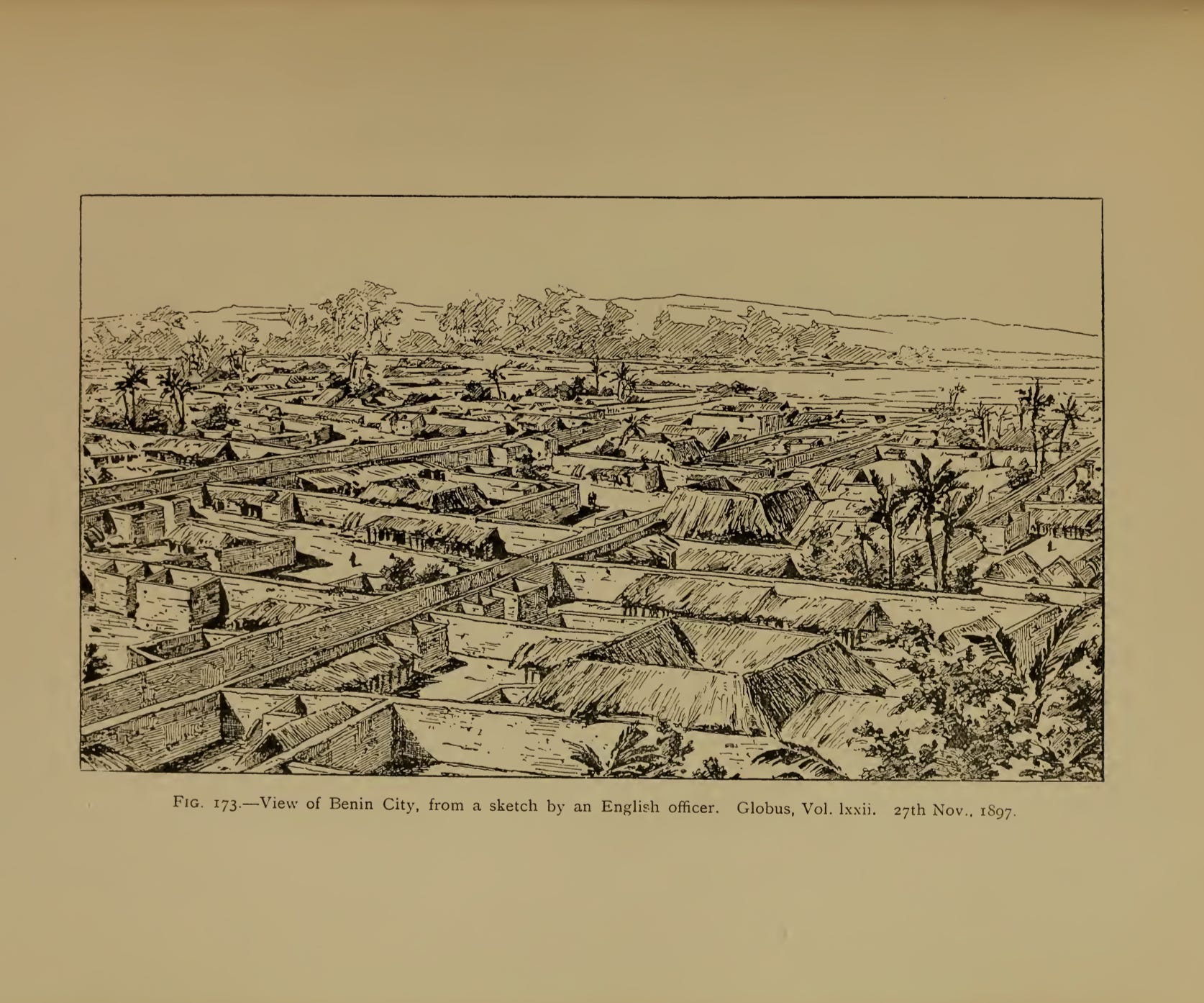
British merchants began arriving in the kingdom in the mid-sixteenth century, and Dutch seafarers joined them in the early seventeenth century. Numerous European accounts of Benin City’s size and character survive, but several contradict one another and rely on second-hand sources.
Some compare Benin City to cities such as Lisbon and Amsterdam, praising its straight streets running “as far as the eye could see” and claiming the city was so “well governed that theft is unknown and the people live in such security that they have no doors to their houses”. In other accounts, the observer seems largely indifferent to the city.
Britain and the Netherlands encountered a kingdom with little interest in pleasing them. Benin’s insistence that trade should take place on its own terms may, however, have contributed to the Europeans eventually turning toward other, more accommodating West African states.
Towards the end of the seventeenth century, internal power struggles weakened Benin’s monarchy, although the kingdom’s subsequent history would encompass both crises and recoveries.
Its participation in slave exports increased again, principally involving people enslaved abroad or on the kingdom’s fringes. Besides making Benin a more attractive trading partner, this was a way of securing access to the firearms and gunpowder deemed necessary to maintain its precarious position of power. Its borders were often fluid, expanding or contracting according to the king’s ability to demand loyalty from surrounding communities.
Compared with other West African kingdoms, such as Asante and Dahomey, however, Benin’s role in the slave trade never became particularly large.
Greater involvement in the international slave trade was a strategy that worked for a time, allowing the kingdom to avert a wider crisis. But in the nineteenth century, Britain’s insistence on dictating trade terms between the two countries would end Benin’s existence as an independent state.
Trade by Force
The kingdom of Benin remained a regional power well into the nineteenth century, but succession disputes, conflicts with its West African neighbors, and European encroachment placed it under pressure.
Britain made several attempts to exert influence over Benin. In the early 1860s, the British explorer and consul Richard Francis Burton visited the kingdom. His reports portrayed Benin as a society without morals, where “bloody customs” and “gratuitous barbarity which stinks of death” prevailed. He claimed to have seen bodies tied to trees, their eyes pecked out by vultures, and places where human skulls lay scattered like pebbles.
In this way, attempts to take control of Benin’s natural resources were given a moral justification, and the mission was presented as a noble endeavor to eradicate the slave trade and human sacrifice.

Human sacrifice did occur in Benin and, according to historian James D. Graham, formed part of religious rites, certain ceremonies, and funerals. The victims are thought to have often been enslaved people or criminals sentenced to death. Graham argues that these practices, brutal as they were, were generally more limited in scale than European accounts suggested. He maintains that misunderstandings, exaggeration, and rumor-based reports contributed to the image of Benin as an exceptionally bloodthirsty state.
Other historians have argued that human sacrifice became more common towards the middle of the nineteenth century because weak obas used religious ideas to strengthen their position, or in response to Christianity and Islam spreading closer and threatening local traditions.
In 1892, Ovonramwen, the oba of Benin, was pressured into signing a treaty that gave the British the right to trade freely within the country, required Benin to consult Britain before making certain decisions, and promised “general progress towards civilization”. Whether the king truly understood what he was signing can only be a matter of speculation. Perhaps he hoped to gain a powerful ally in the British; perhaps the treaty’s details were lost in translation.
For the British, the purpose was clear. In The Fall of Benin, the Nigerian historian Philip Igbafe quotes a letter that the British consul-general Claude Maxwell MacDonald sent to the Foreign Office:
“There is no doubt that the Benin territory is a very rich and most important one. Minerals, gum arabic, gum copal, palm oil, kernels et cetera exist in large quantities.”
But Ovonramwen was not convinced that the British were interested solely in economic exchange. The Itsekiri people had long acted as intermediaries between Benin’s merchants in the inland rainforests and the Europeans on the coast. Despite the treaty’s promise of free passage, Ovonramwen continued to levy duties on Itsekiri traders, resulting in higher prices for the British. It was also the king’s prerogative to close markets if his wishes were not respected, something he ordered from time to time.
The British repeatedly tried to persuade him to change his mind before the conflict culminated in Ovonramwen imposing a trade ban in 1896. Furious British merchants cursed both the king and Benin’s “uncivilized” culture.
A Devastating Defeat
In October 1896, James Phillips took over as consul-general. In a letter to the British Foreign Office, he wrote that he was convinced the only solution was to depose Benin’s king and install a council in his place that could “open up” the country.
On 2 January 1897, before the Foreign Office had time to respond, he set off for Benin City, despite protests from Itsekiri traders. He was accompanied by several colonial officials, representatives of British trading companies, and a few hundred West African porters, servants, and guides.
Such a large party was perceived as a threat. An envoy soon reached the group with a message: the king could not receive them because he was occupied with a ceremony, but Phillips would be welcome in a month. The Englishmen ignored the message and continued their march.
Two days later, they were attacked by soldiers from Benin who had concealed themselves nearby, hidden among the dense forest’s shrubs, leaves, and branches. Only two Europeans survived the ambush, which became known in the Western press as the “Benin Massacre”. In Sweden, for example, Eskilstuna-Kuriren reported that a British expedition with “entirely peaceful intentions” had been attacked and “killed to the last man”.
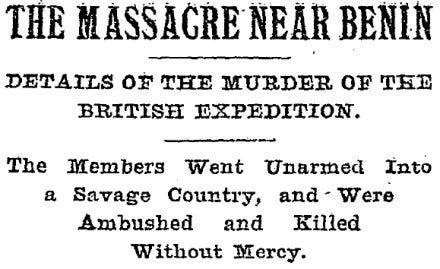
The story of Britons murdered in Africa’s dark jungles by soldiers sent by a “barbaric king” provoked horror in the European press. Sweden was not a major colonial power in Africa during the nineteenth and twentieth centuries. Yet its newspaper coverage shows how widely the subjugation of African societies was accepted in the West.
The Swedish newspaper Nya Norrlänningen, for example, wrote that “the king is a follower of the juju sect” and “approves of human sacrifice”. The paper considered it “most peculiar that experienced officials should have dared approach such barbarians without sufficient precautions”, and its demand was clear: “The king of Benin must now be punished.”
The Benin Punitive Expedition
Punishing Benin was exactly what Britain intended, and it now had a justification many Westerners could sympathize with. In February 1897, the so-called punitive expedition arrived with warships, Maxim guns, rockets, and around 1,200 men recruited from across the British Empire.
They advanced through jungles and swamps towards Benin City, burning villages along the way. Once in the city, they quickly defeated its defenders. In Sweden, Ölandsbladet declared that the British had “after a desperate battle, captured the capital of the savage and bloodthirsty Negro king of Benin”.
Reported losses on the British-led side were small. How many people were killed on Benin’s side, however, remains uncertain. The British used machine guns, artillery, and rockets, but the scale of the killing and how many of the victims were civilians are difficult to establish from the surviving sources.
In The Brutish Museums: The Benin Bronzes, Colonial Violence and Cultural Restitution, the British archaeologist Dan Hicks characterizes the invasion as a campaign of mass killing:
“This was a democidal campaign, involving massacres of civilians through the bombardment of towns and villages from the air and thus women and children across the whole of the Benin Kingdom, scorching the earth with rockets, fire, and mines.”
Hicks’s accounts have, however, been criticized, including by the Swedish archaeologist Staffan Lundén. In his article “Distorting history in the restitution debate”, Lundén questions the evidence for Hicks’s claims about the scale of the killing and civilian massacres through bombardment.
The Supposed “City of Blood”
During the capture of Benin City, the British encountered what they described as “horrifying sights”. According to their accounts, large numbers of the city’s enslaved people and captives had been sacrificed in a religious rite intended to repel the invasion. Successive British reports described that the entire city was filled with skulls and bodies in varying stages of decomposition. In Sweden, these accounts were quoted in several newspapers, whose descriptions of the “City of Blood” must have terrified readers and reinforced their prejudices about an uncivilized Africa. Varbergsposten wrote:
“Once inside the walls of the sacrificial grounds, the sight was even more dreadful. We found seven large sacrificial grounds enclosed by walls 14 to 16 feet high. Inside were sacrificial altars 50 feet long; along the walls stood idols carved in ivory, to which sacrifices were offered. In front of each idol was a small raised platform, where the victim presumably had to lay his head. The altars were completely covered in clotted and dried human blood. The stench was unbearable.”
In Loot: Britain and the Benin Bronzes, the author Barnaby Phillips, who interviewed residents of present-day Benin City while researching the book, writes that it was difficult to get people to discuss these events.
He speculates that this may be because acknowledging them would somehow legitimize the wrongs the British committed against Benin. Several residents he spoke to dismissed the accounts as fabrications or felt that life in nineteenth-century Benin could not be understood through the lens of modern values and understandings of human life.
Others maintained that the bloodshed occurred in a state of panic. If so, the extensive human sacrifice would not have been the reason for the British attack, but a consequence of the invasion itself. Dan Hicks points out that some of the bodies the British encountered may have been those of people killed by the British themselves during the invasion.
Whatever the circumstances surrounding the widespread killing, Britain could now further justify its attack. In the West, the narrative became one of Britain defeating a sadistic, devil-worshiping regime.
Shameless Plunder
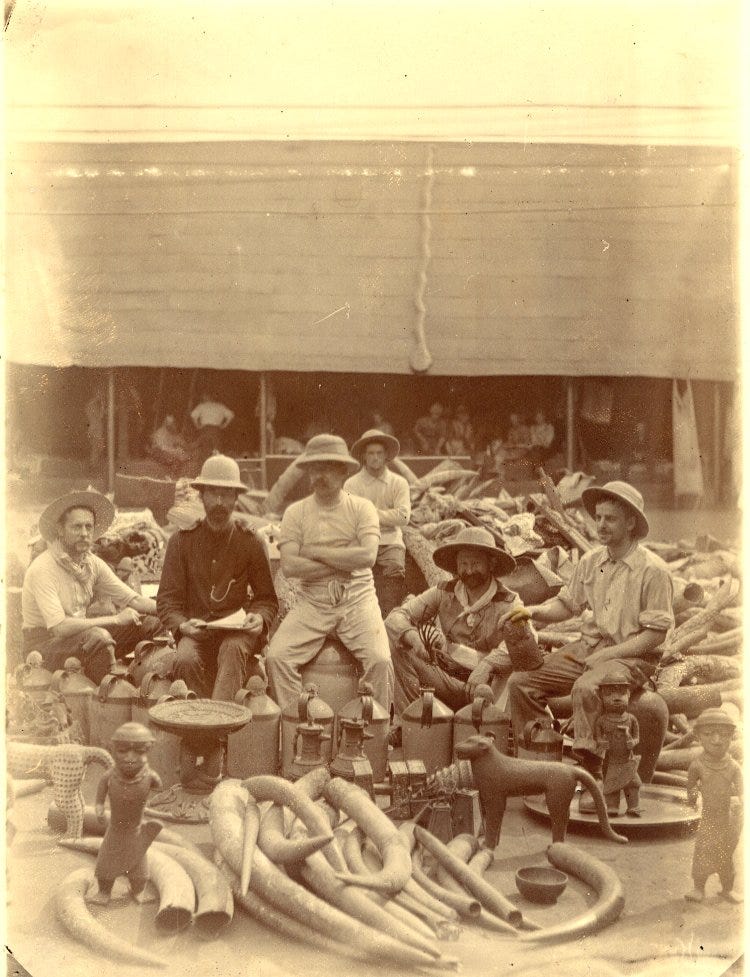
While the British were praised for bringing “civilization”, they began plundering Benin’s cultural heritage. Searching through Benin City, soldiers found thousands of objects of historical, artistic, and religious significance, including the Benin Bronzes: the objects in brass, bronze, wood, and ivory that the city’s metalworkers and craftspeople had created over centuries.
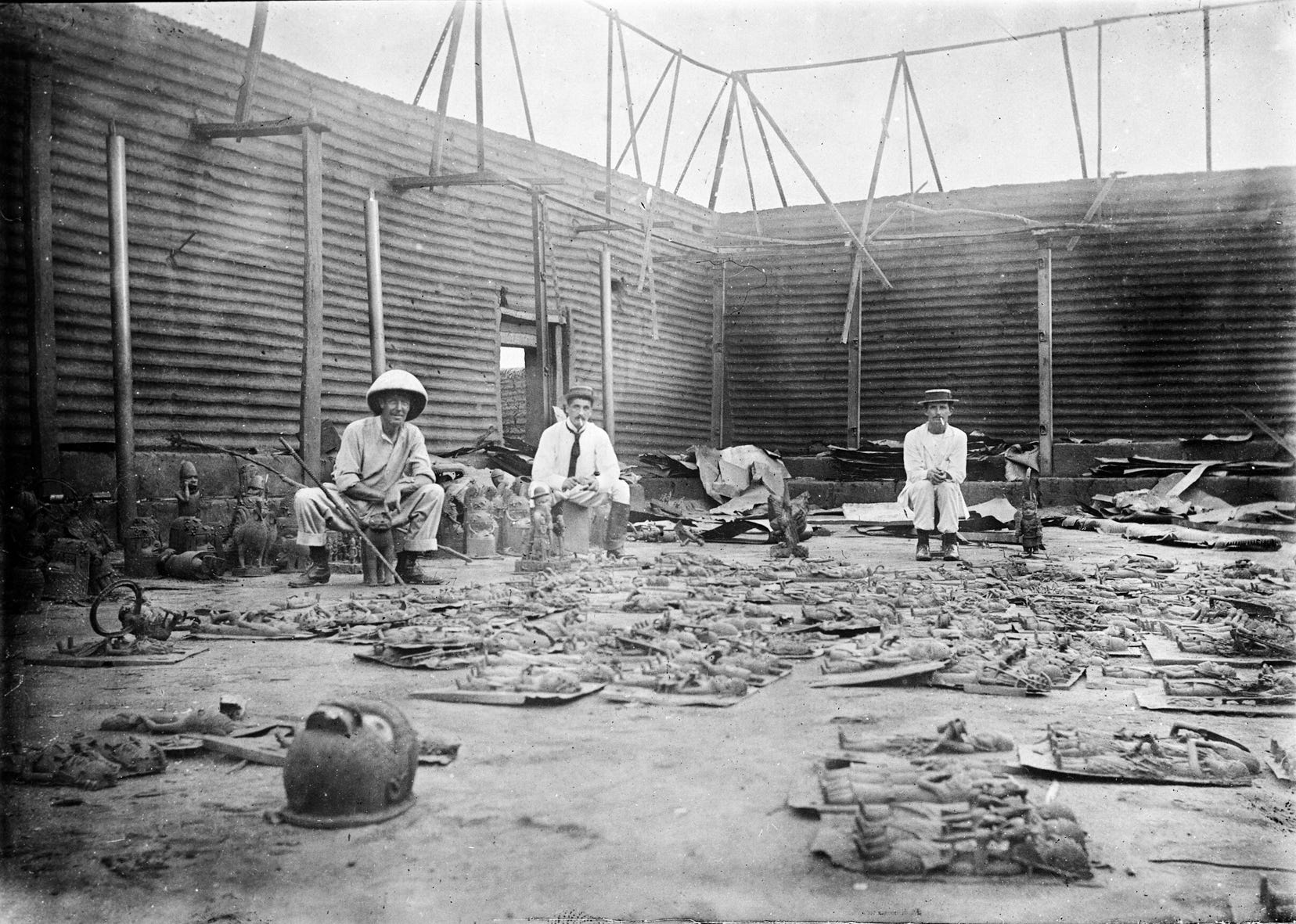
Some were kept by soldiers as war trophies, but most were sold at auction to help cover the costs of the invasion. Buyers included many Western museums and private collectors. The British Museum still holds more than nine hundred objects from the historic kingdom of Benin.
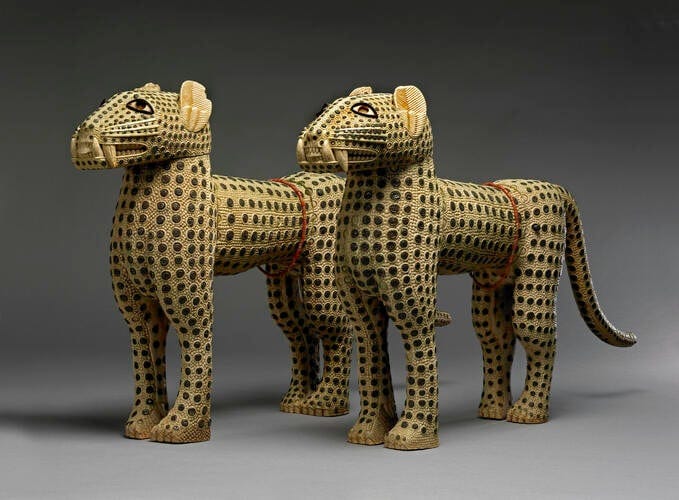
When the objects were exhibited in Britain, a debate arose over whether craftspeople from Benin had really made them or whether they were gifts from the Portuguese, who visited the kingdom as early as the fifteenth century. And if the people of Benin had made them themselves, surely the Portuguese must at least have shown them how?
Another theory was that they had been produced by people considered somewhat closer to the white “race”, such as Egyptians or Ethiopians. The discussion reflected the contemporary view of sub-Saharan Africans as culturally inferior. Later studies, however, have established that the sculptures began to be made before the first contact with Europeans and are unquestionably of indigenous origin.
Among the most striking stolen artworks are the ivory masks depicting Queen Idià, mother of Oba Esigie, who ruled Benin from around 1514 to 1550. Two almost identical examples are held by the Metropolitan Museum of Art in New York and the British Museum in London. Smaller versions are held by the Seattle Art Museum and a private collector. An example previously held at the Linden-Museum in Germany was returned in 2022.
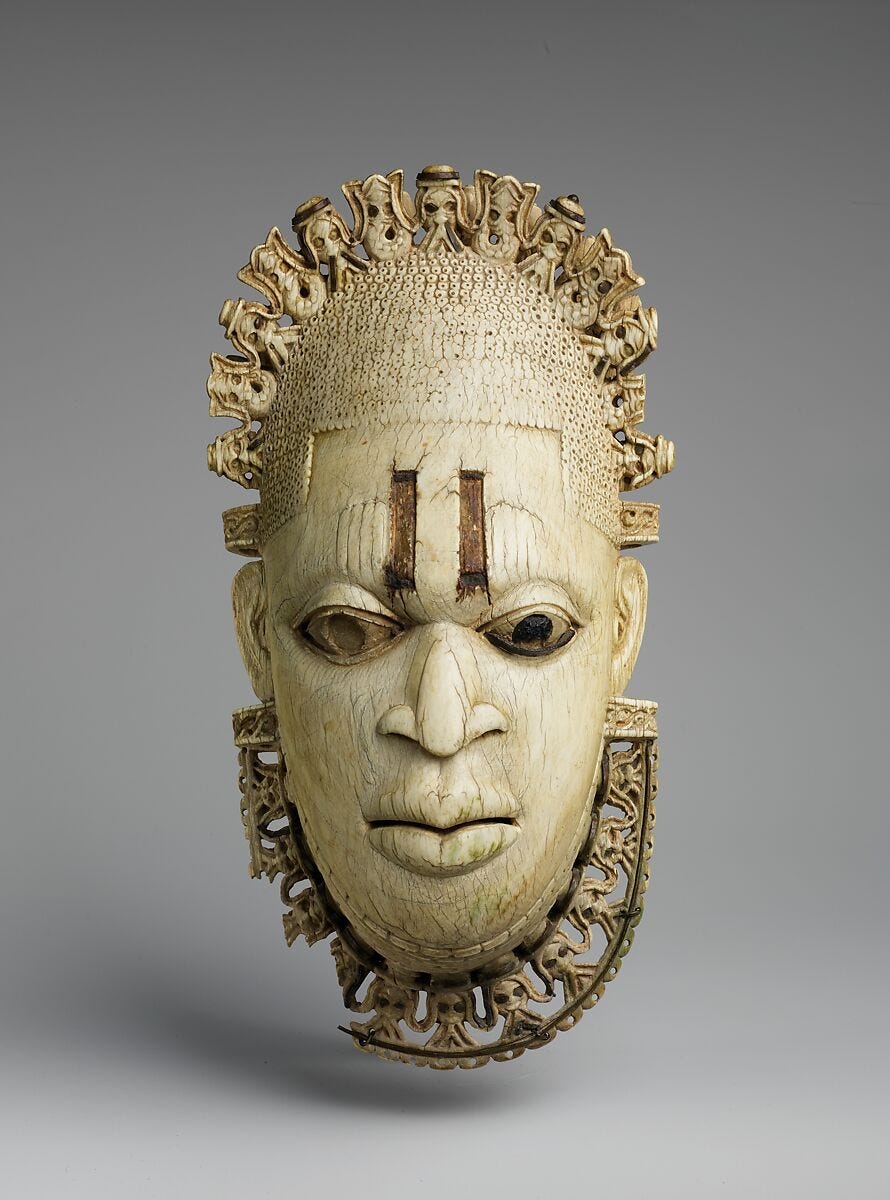
Exactly how many objects were stolen is impossible to know because no inventory was kept, but common estimates put the number in the thousands. Alongside the crafted objects, vast quantities of elephant tusks were also stolen.
Accounts differ on the precise sequence of events, but what is clear is that Oba Ovonramwen’s palace, along with various monuments and religious sites, was soon in flames. The fire spread, destroying civilian homes, trees, and undergrowth. According to some sources, parts of the vast Walls of Benin were destroyed during the British invasion.
Realizing that the battle was lost, Ovonramwen and his nobles had fled the city, as had many ordinary inhabitants who had survived the invasion. To avoid ruling over a city in ruins, and to lure the oba back so that he could be arrested, the British declared, according to Philip Igbafe, that any of Benin City’s enslaved people who returned before their masters would be granted freedom.
Several seized the opportunity, weakening the oba’s power, and after six months on the run, he too returned. Ovonramwen knelt before a crowd and formally surrendered.
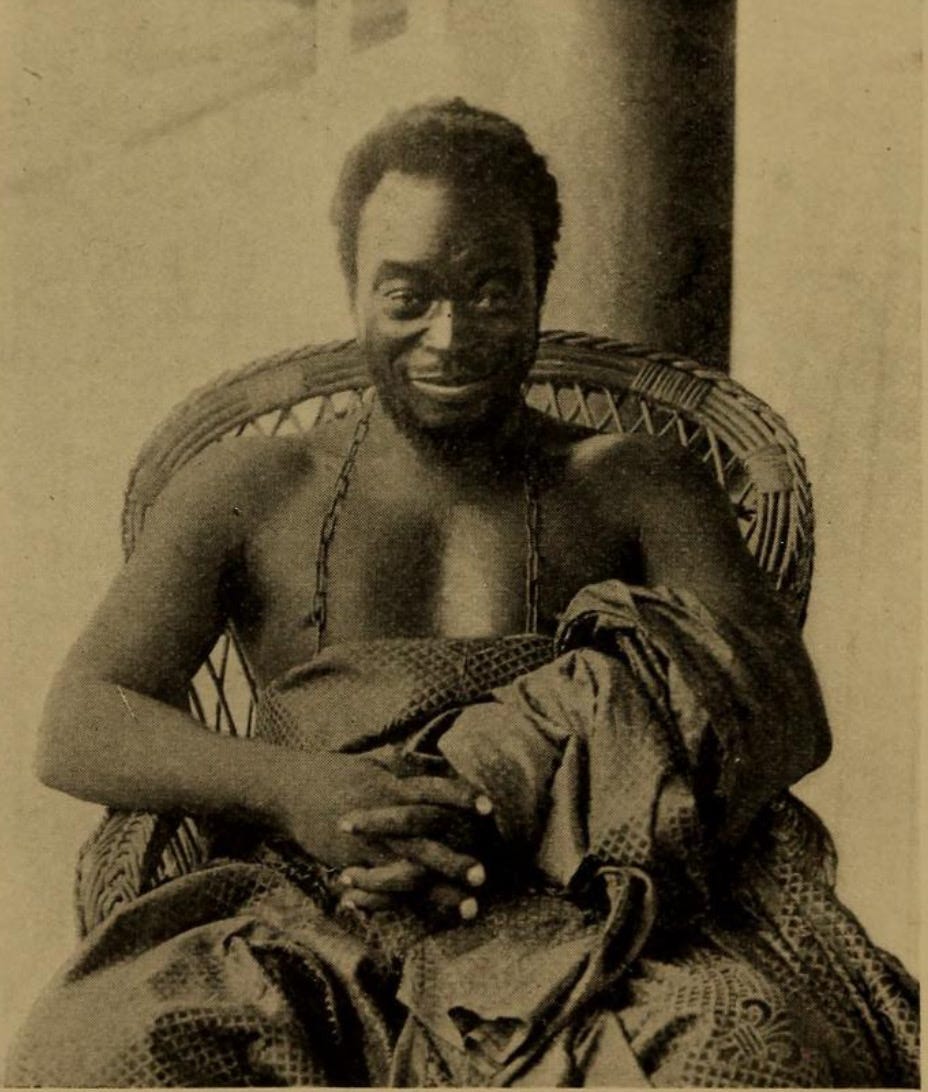
The trial began in September. Two of Ovonramwen’s advisers were sentenced to death and executed by firing squad, while the British installed a new, more compliant council. Ovonramwen was spared, but dragged out of Benin City and sent into exile in the port city of Calabar in present-day south-east Nigeria.
The Fight to Bring the Objects Home
After Benin’s fall, the state became part of Britain’s expanding Nigerian colony. Since Nigeria gained independence in 1960, demands for the return of the stolen objects have grown. In 1976, for example, the country asked to borrow one of the ivory masks for Festac ’77, the major African arts and culture festival. The British Museum refused, arguing that the mask was too fragile to transport.
Nigeria is not alone in demanding the return of precolonial treasures from a Western world that has responded with creative arguments for keeping them. These explanations have ranged from claims that the countries of origin cannot care for the objects adequately to suggestions that more people can see them if they are exhibited in major cities such as New York, London, and Berlin.
The restitution debate has been uncomfortable for American and European museums because it raises the natural follow-up question of why the objects are in the West in the first place – a question that cannot be answered without addressing the atrocities committed in colonialism’s name.
Under pressure, some Western museums have agreed to lend the objects for a limited period, which, unsurprisingly, has done little to appease their countries of origin. In recent years, however, a shift has begun to emerge. In 2018, a French report estimated that vast amounts of Africa’s material cultural heritage were held outside the continent and recommended that France return all objects acquired unethically.
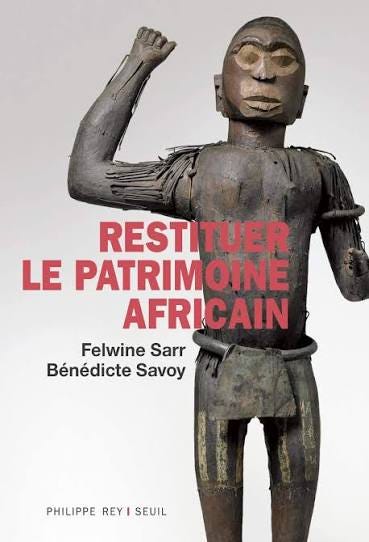
In autumn 2020, France’s National Assembly also voted to return a small collection of objects permanently to the country’s former African colonies. In autumn 2021, Paris exhibited twenty-six objects stolen from Dahomey, now part of the modern Republic of Benin, one last time before returning them. Senegal has also received a nineteenth-century sword belonging to the anticolonial leader Omar Tall.
France is not alone. In spring 2021, the University of Aberdeen in Scotland and the Humboldt Forum art museum in Berlin pledged to return their Benin Bronzes. That summer, they were joined by the Metropolitan Museum of Art in New York, which announced that it would hand over two bronzes.
During 2022, further pledges to return bronzes came from institutions including England’s Great North Museum, Hancock and Horniman Museum, the National Museum of African Art, and the National Gallery of Art in the United States, as well as the German state.
Several of these promises have also been put into practice. In 2022, the Smithsonian transferred ownership of 29 Benin objects to Nigeria, and in 2025, the Netherlands returned 119 objects.
The complete repatriation of the Benin Bronzes and other African cultural heritage remains a distant prospect. The discussion has instead focused on rebalancing, with Nigeria and other African countries concerned taking ownership of a larger share of the objects. Yet as more museums and states choose to return them, pressure is growing on those that have so far been lukewarm towards the idea.
Who Should Care for the Returned Treasures?
In spring 2023, the debate took a new turn when Nigeria’s then-president, Muhammadu Buhari, declared that the looted Benin objects belonged to the Oba of Benin, whose role is now ceremonial. The declaration made Ewuare II responsible for their custody and management, giving him a central role in the objects’ future. It also included provisions for secure storage and cooperation with recognized institutions to preserve them.
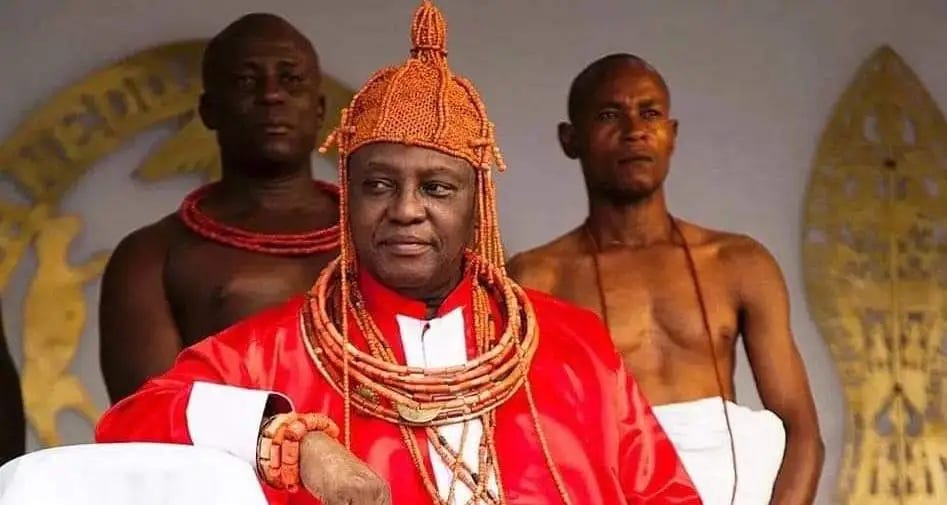
Critics, both in the West and in Nigeria, have since argued that the Benin Bronzes, as treasures of global significance, should be publicly displayed, and that the restitution campaign has been naive.
Defenders of Buhari’s decision, meanwhile, maintain that this is a Nigerian matter and that foreign parties have no right to dictate how the country manages its property. Some also argue that it is only right for Ewuare II to be responsible for the sculptures, since many were originally stolen from the royal palace. They point out that Benin’s royal family ruled at the time, and that the Nigerian state did not yet exist when the looting took place.
Ewuare II has advocated for a royal museum to display the returned bronzes. Earlier plans for the separate Edo Museum of West African Art project, now the Museum of West African Art (MOWAA), to house returned objects have, however, been set aside. The conflict over the museum’s role became clear in November 2025, when supporters of the oba disrupted a preview, and the planned opening was postponed indefinitely.

Meanwhile, the National Museum in Benin City has displayed some returned bronzes. Restitution has thus been followed by a continuing struggle over who should care for this cultural heritage and where it will be displayed.
Further reading:
Books
The Benin Massacre by Alan Boisragon (1897)
A Short History of Benin by Jacob Egharevba (1960)
Benin and the Europeans, 1485–1897 by A.F.C. Ryder (1969)
Africa and the Development of International Law by Taslim Olawale Elias (1972)
The Return of Cultural Treasures by Janette Greenfield (1989)
The Art of Benin by Paula Girshick Ben-Amos (1995)
History of Africa by Kevin Shillington (1995)
Dawn to Dusk: Folktales from Benin by Iro Eweka (1998)
The Civilizations of Africa – A History to 1800 by Christopher Ehret (2002)
Forgotten Africa: An Introduction to its Archaeology by Graham Connah (2004)
Encyclopedia of African History, edited by Kevin Shillington (2004)
A History of Nigeria by Toyin Falola and Matthew M. Heaton (2008)
Heroic Africans: Legendary Leaders, Iconic Sculptures by Alisa LaGamma (2011)
Nigerian Women of Distinction, Honour and Exemplary Presidential Qualities by Jubril Olabode (2012)
Discovering the Kingdom of Benin by Amie Jane Leavitt (2013)
Britain’s Forgotten Wars: Colonial Campaigns of the 19th Century by Ian Hernon (2016)
The Brutish Museums: The Benin Bronzes, Colonial Violence and Cultural Restitution by Dan Hicks (2020)
Loot: Britain and the Benin Bronzes by Barnaby Phillips (2021)
Academic Articles
“The Benin Missions” by A.F.C. Ryder, in Journal of the Historical Society of Nigeria (vol. 2, no. 2, 1961)
“The Slave Trade, Depopulation and Human Sacrifice in Benin History: The General Approach” by James D. Graham, in Cahiers d’Études Africaines (vol. 5, no. 18, 1965)
“The Fall of Benin: A Reassessment” by Philip A. Igbafe, in The Journal of African History (vol. 11, no. 3, 1970)
“Slavery and Emancipation in Benin, 1897–1945” by Philip A. Igbafe, in The Journal of African History (vol. 16, no. 3, 1975)
“The Origin of the Eweka Dynasty of Benin: A Study in the Use and Abuse of Oral Traditions” by Gbemisola Ajoke Akinola, in Journal of the Historical Society of Nigeria (vol. 8, no. 3, 1976)
“The Annexation of Benin” by Thomas Uwadiale Obinyan, in Journal of Black Studies (vol. 19, no. 1, 1988)
“The Origins of the Benin Kingship in the Works of Jacob Egharevba” by Stefan Eisenhofer, in History in Africa (vol. 22, 1995)
“A Study of the Portuguese-Benin Trade Relations: Ughoton as a Benin Port, 1485–1506” by Michael Ediagbonya, in International Journal of Humanities and Social Sciences (vol. 2, no. 2, 2015)
“Distorting history in the restitution debate. Dan Hicks’ The Brutish Museums and fact and fiction in Benin historiography” by Staffan Lundén, in International Journal of Cultural Property (vol. 31, no. 2, May 2024)
Articles
“Engelsk expedition nedhuggen” [“English Expedition Cut Down”], in Eskilstuna-Kuriren (13 January 1897)
“England och konungen af Benin” [“England and the King of Benin”], in Nya Norrlänningen (16 January 1897)
“Beninstaden eröfrad efter en vild strid” [“Benin City Captured After a Fierce Battle”], in Ölandsbladet (3 March 1897)
“Människooffren i Benin” [“Human Sacrifices in Benin”], in Varbergsposten (31 August 1897)
“The Controversial Mask of Benin” by Alma Robinson, for The Washington Post (11 February 1977)
“British Museum to Return Benin Bronzes to Nigeria” by Kieron Monks, for CNN (14 December 2018)
“University of Aberdeen to Return Pillaged Benin Bronze to Nigeria” by Lanre Bakare, for The Guardian (25 March 2021)
“Benin Bronzes: Germany to Return Looted Artefacts to Nigeria”, BBC (30 April 2021)
“Ownership of the Benin Bronzes is Transferred from the Nigerian Government to Oba of Benin” by Francesca Aton, for ARTnews (27 April 2023)
“Who Owns the Benin Bronzes? The Answer Just Got More Complicated” by Alex Marshall, for The New York Times (4 June 2023)
“Where Does Repatriated African Artwork Really End Up?” by Ralph Leonard, for UnHerd (27 January 2024)
“Nigeria’s New Museum of West African Art Calls Into Question the Future of Encyclopedic Museums” by Chidinma Iwu, for ARTnews (22 February 2024)
“Nigeria Debates the Fate of Returning Benin Bronzes” by Noah Anthony Enahoro, for New Lines Magazine (2 April 2024)
“Protesters in Nigeria disrupt opening of major West African art museum” by Ope Adetayo, for Associated Press (10 November 2025)
“Political row delays opening of Nigeria’s Museum of West African Art” by Geraldine Kendall Adams, for Museums Association (13 November 2025)