



They arrived on Monday: the first white South Africans to be granted refugee status in the United States. The reason? The Trump administration claims they are the victims of discrimination and even genocide in South Africa.
Their arrival at Dulles International Airport in Virginia on May 12 was met with fanfare that bordered on surreal. Around fifty South Africans, men, women, and children, were greeted by a waiting press corps and U.S. Deputy Secretary of State Christopher Landau, who declared it an "honor" to welcome them.
Perhaps it needs to be emphasized: nothing suggests that white South Africans are being subjected to genocide. The group these "refugees" belong to, formally identified as "Afrikaners", are descendants of primarily Dutch settlers who arrived in southern Africa from the 1600s onward. Far from being persecuted, they remain among the most economically privileged populations on the continent.
Multiple studies show that although white South Africans make up just 7-8 percent of the population, they still own more than 70 percent of the country's commercial farmland. On average, they possess 20 times more wealth than their Black compatriots and continue to dominate the upper echelons of business and finance.
Some voices, often from the far right, try to paint this economic disparity as the reward for hard work. But the truth is, of course, primarily rooted in centuries of racial subjugation.
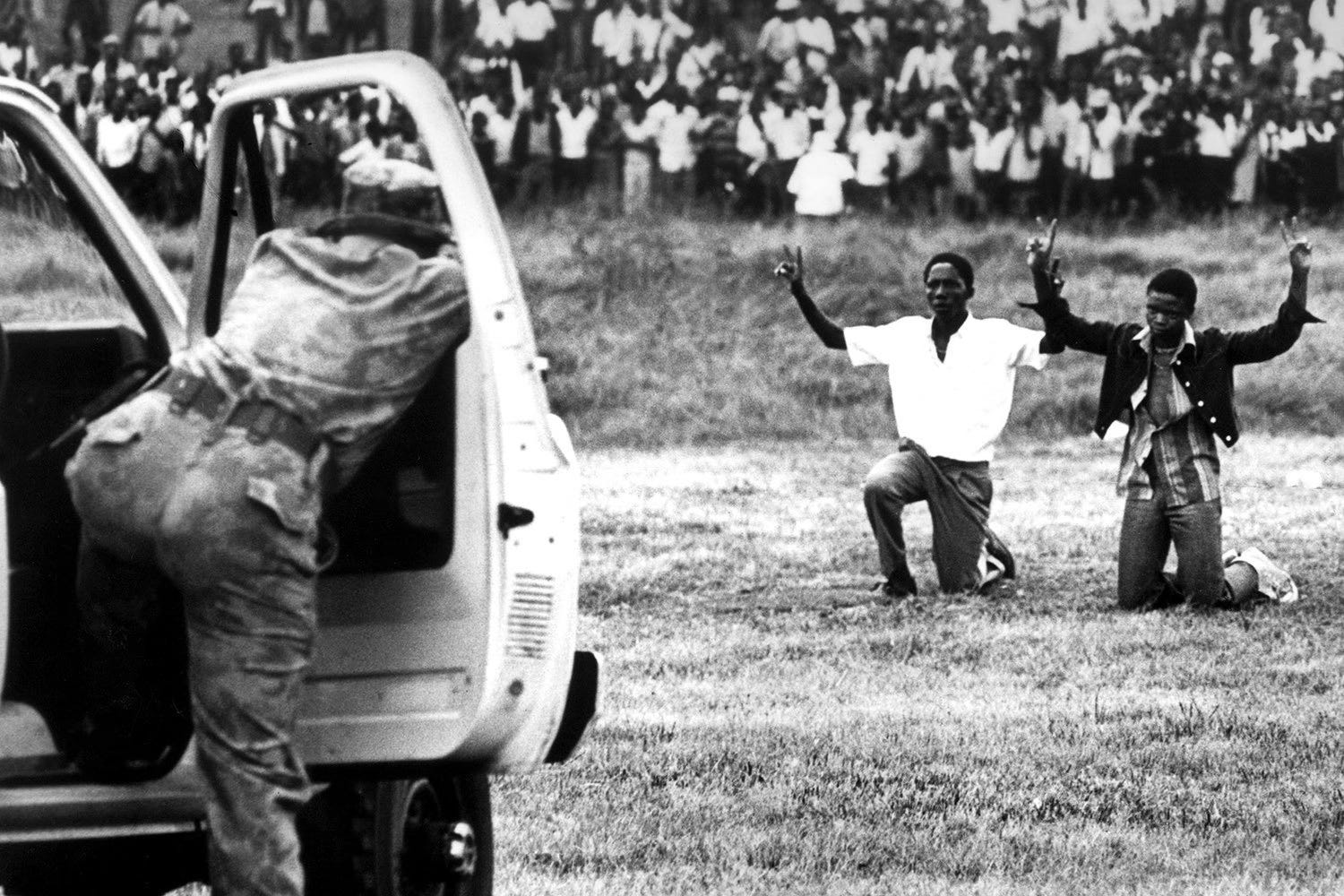
For hundreds of years, Black South Africans were stripped of basic rights: denied the vote, restricted in their movements, exiled to barren and unproductive lands, and legally forbidden from owning property. Their access to education was deliberately limited, and they were relentlessly surveilled and suppressed by a violent state security apparatus. The list goes on.
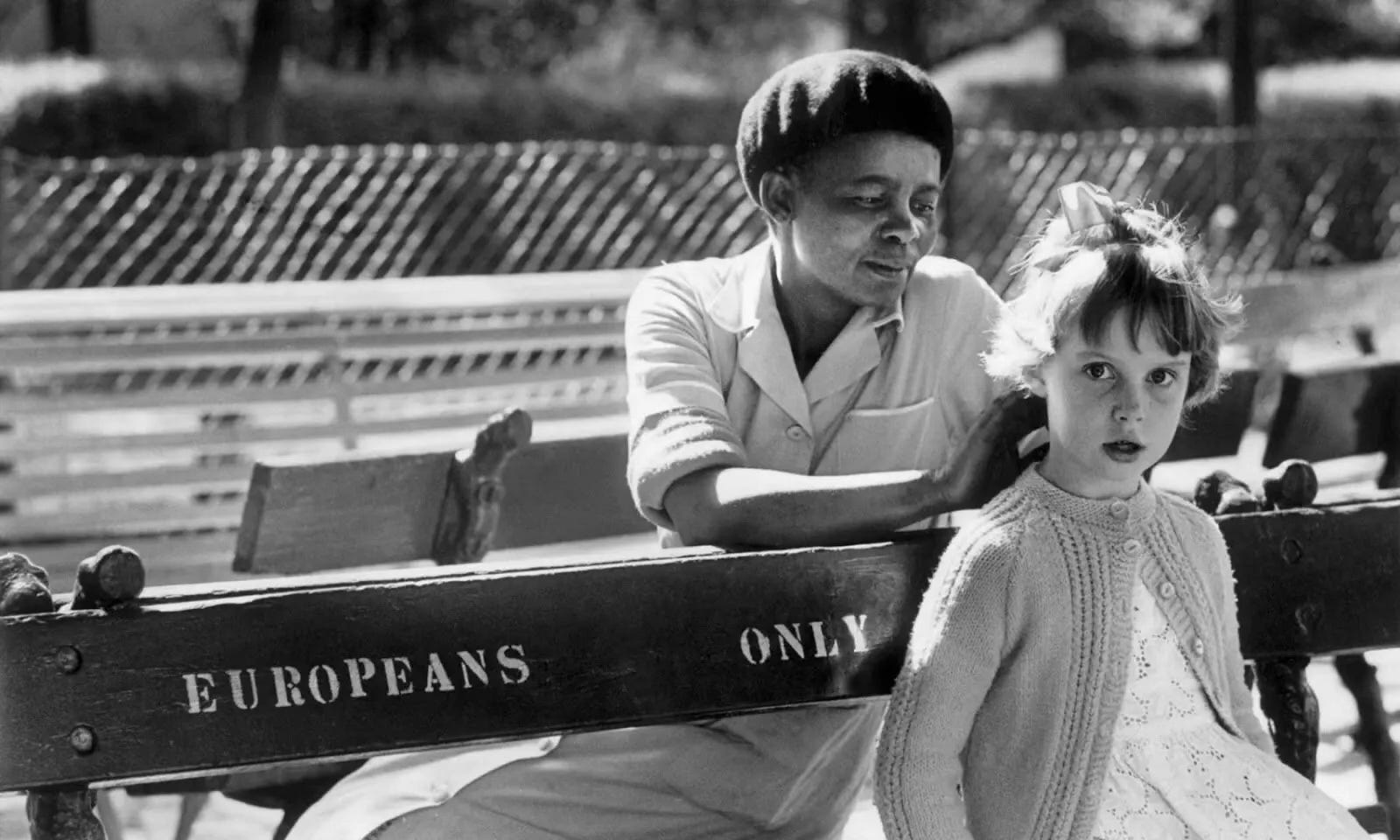
The tyranny took many forms over the years. Eventually, it evolved into the formal policy of apartheid, which lasted until the early 1990s. Although apartheid was officially dismantled in 1994, the deeply rooted economic inequalities it fostered have persisted.
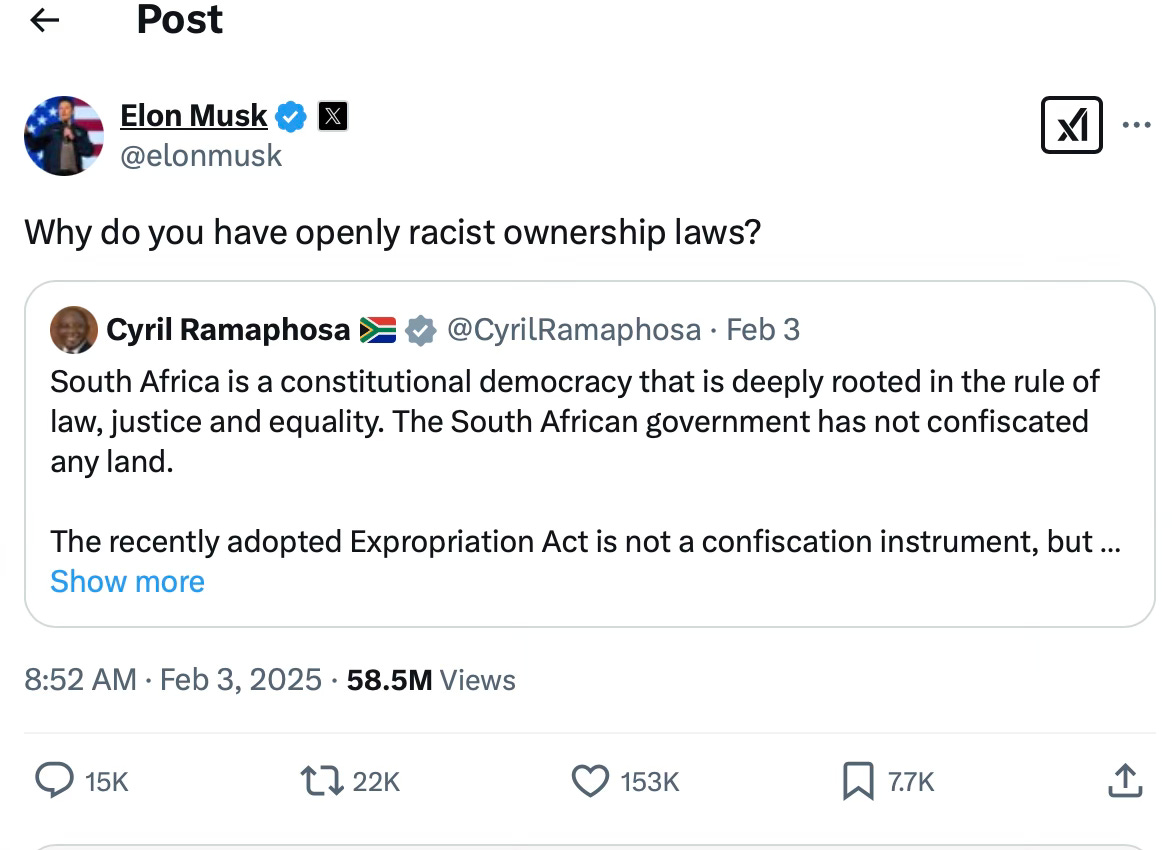
In response to these ongoing imbalances, South Africa passed an expropriation law in January 2025. The law allows the government to reclaim land without compensation, but only under strict conditions: the land must be unused and no existing development plans must exist.
The process is governed by transparent legal proceedings and oversight to ensure that expropriations are fair and not arbitrary. Notably, the law contains no racial provisions – simply being white does not make one a target. And so far, not a single parcel of land has been seized.
The parodic spectacle of the South African "refugees" takes place shortly after the Trump administration shut down all other refugee admissions. People fleeing war and devastation in places like Sudan, Afghanistan, and the Democratic Republic of Congo are being turned away. Thousands who had already endured years-long vetting processes and received approval suddenly had their cases frozen or revoked, stranded in bureaucratic limbo.
It's obviously about race. That this special pathway is suddenly extended to white South Africans is no accident. Historically, Black Africans have faced steeper hurdles than others when seeking asylum in the U.S., including longer processing times and dramatically higher denial rates.
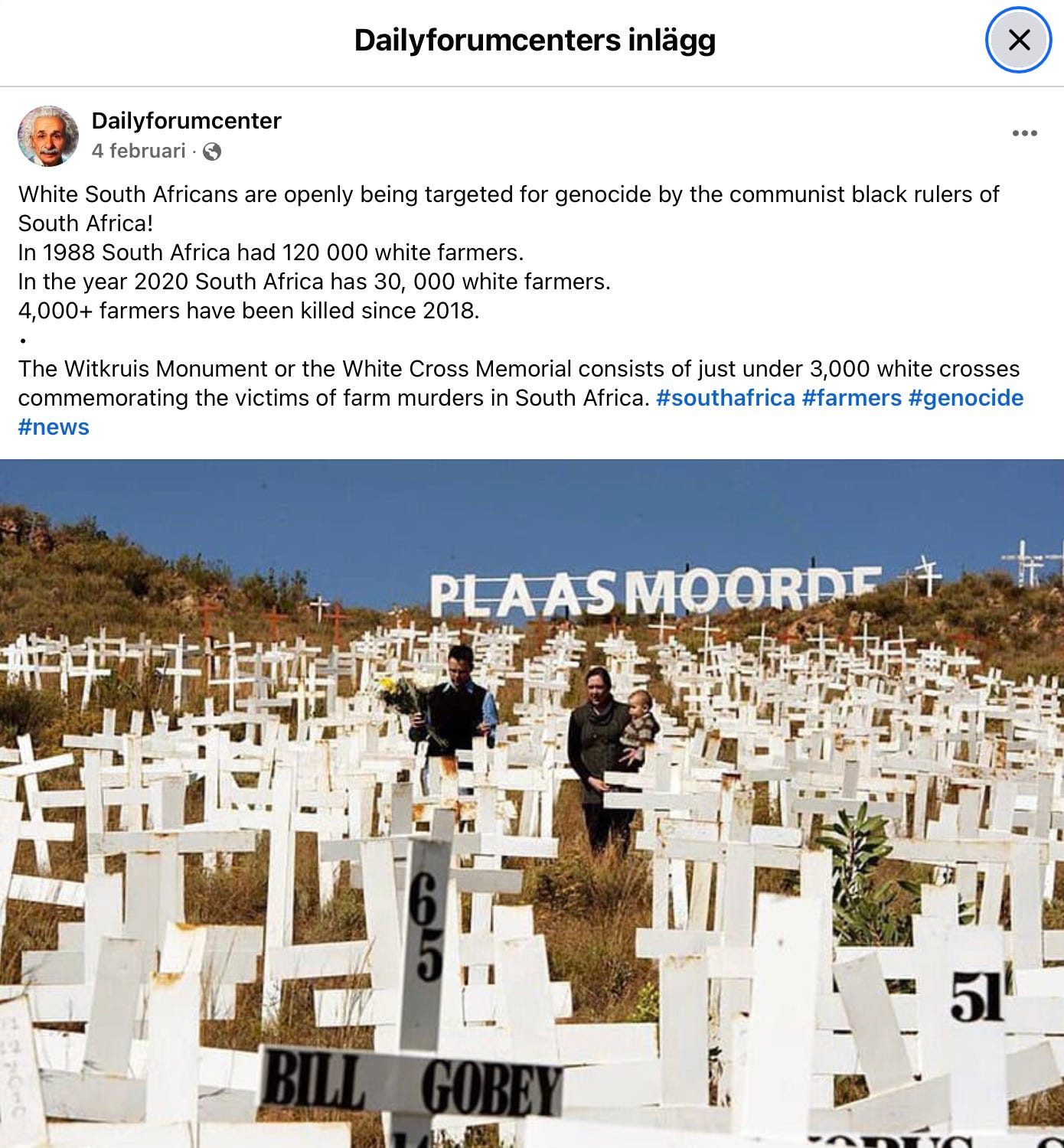
As is customary in today's digital echo chambers – fueled by propaganda, low standards of fact-checking, and an avalanche of AI-generated misinformation – the myth of a white genocide in South Africa is flourishing on social media.
Many posts spread fabricated claims: that 60 white farmers are murdered each day, or that 4,000 have been killed since 2018. Not least on Twitter, where the South African owner and billionaire Elon Musk has amplified them
Official crime data tells a different story. South Africa is undeniably plagued by high levels of violence, but there is no statistical basis to suggest that white farmers are being targeted disproportionately. Even when measured by percentages, Black farmers face a significantly higher risk of being killed.
The narrative of white victimhood in South Africa isn't new. It is part of a broader myth-making tradition aimed at shielding white economic dominance and sanitizing the legacy of colonialism and apartheid.
Alongside the genocide myth, there's the long-debunked "Empty Land Myth," which falsely claims that European colonizers found South Africa uninhabited. Or the narrative that apartheid wasn't as brutal as commonly believed.
The difference is that those spreading the myth now include the world's richest man. And that he has influence over the leader of the world's most powerful country.
Further reading:
Reports:
Land Audit Report – Phase II: Private Land Ownership by Race, Gender and Nationality (November 2017, version 2)
Policy & Advocacy Report (vol. 4, nr. 15) by U.S. Committee for Refugees and Immigrants (May, 2021)
Scholarly articles:
"The Racial Wealth Gap in South Africa and the United States" by Grieve Chelwa, Mashekwa Maboshe & Darrick Hamilton in Review of Political Economy (vol. 36, nr. 2, 2024)
Articles:
"African asylum seekers afraid ahead of US election" by Kaine Pieri for BBC News (October 30, 2024)
"False data distort complex picture of South African farm murders" by AFP Fact Check (March 10, 2025)
"Trump administration cancels travel for refugees already cleared to come to America" by Farnoush Amiri, Rebecca Santana & Gisela Salomon for Associated Press (January 22, 2025)
This is devastating. Part of me wants to say, “Trump should visit a township and see if he still feels the Afrikaners are oppressed,” and yet I suspect he would persist in delusion. This is heartbreaking for the generations of hidden, justified, unacknowledged suffering and oppression of black Africans.