


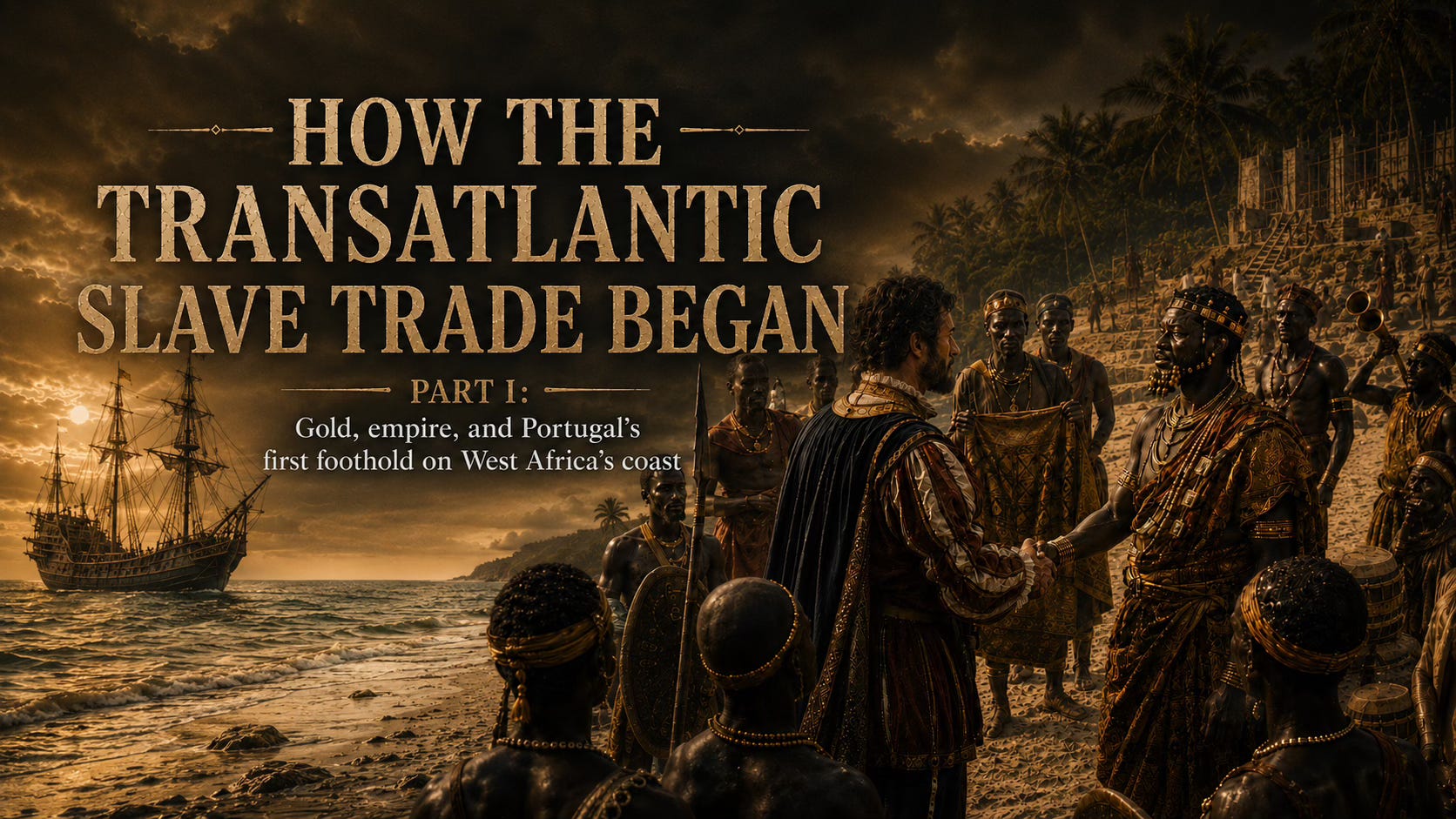
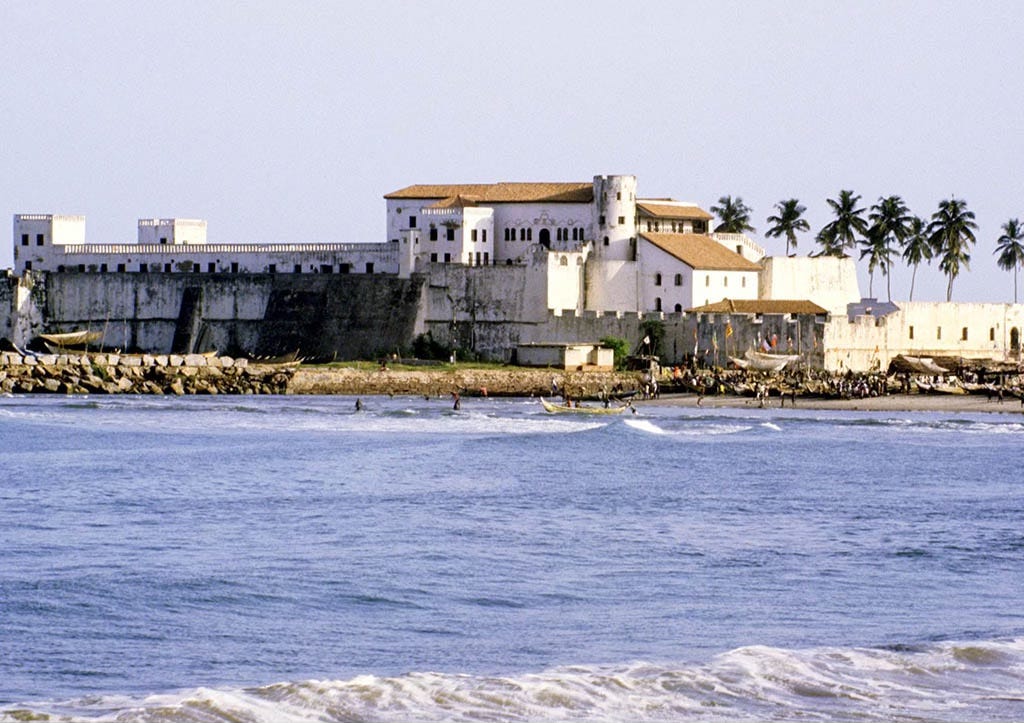
In January 1482, a Portuguese fleet arrived off the coast of what is now Ghana. On board were hundreds of soldiers, several cannons, masons, and building materials ranging from small nails to large structural frames. The fleet dropped anchor in a calm bay where the green-blue waters were relatively still, and the waves were small. When the crew came ashore, they were met by a broad sandy beach lined with tall swaying palm trees.
Beside the beach stood a village divided in two by a small river. The Portuguese settled on an elevated area at the mouth of the bay, a location that gave them a view both out toward the sea and inland. There, they raised a flag that fluttered in the warm breeze. Diogo de Azambuja, the captain and leader of the expedition, donned his finest clothes and took his place on a makeshift throne under the shade of a tree, awaiting the arrival of their hosts.
Soon, the Portuguese were greeted by a local procession. An orchestra led the parade, their drums and trumpets producing a roaring sound. A group of nobles followed them, their young servants carrying delicate fabrics for the aristocrats to sit on. A contingent of soldiers armed with spears, shields, and bows followed.
Finally, the man Azambuja had been waiting for: Kwamena Ansa, a local ruler, a so-called omanhene. His body was adorned with gold jewelry, and even his hair and beard were braided with gold.
Azambuja and Ansa shared greetings and gifts before beginning negotiations. Azambuja’s primary request was permission to build a permanent fortress. If the Portuguese were allowed to do so, he promised lucrative trading opportunities. Ansa would even be given the chance to convert to Catholicism, something that would make him a brother in the eyes of the Portuguese king.
Ansa was at first dismissive. He had encountered Portuguese traders before and was unimpressed.
“The Christians who have come here until now have been very few, dirty and base,” he told Azambuja.
Perhaps that’s why Azambuja had dressed so elegantly. The mission was too important to fail because of a poor first impression. What the Portuguese were now attempting was bold and unprecedented: to establish a permanent base this far south of the Sahara.
Despite his initial hesitation, Ansa was eventually persuaded by the Portuguese promises. The following day, they laid the first stone of what would become the first permanent European fort in tropical sub-Saharan Africa.
The Portuguese named both the area and the fort El Mina – “The Mine.” It was gold that had drawn them there. But it would be trade in another kind of “commodity” that would have devastating consequences and help lay the foundations of the modern Atlantic world.
Gold Fever
For over a millennium, the Silk Road was a key artery of global trade, connecting China to Europe via Central Asia, India, and the Middle East. A persistent theory holds that the Ottoman Empire’s conquest of Constantinople in 1453 interrupted this trade, prompting Europeans to seek a sea route to China and India and thereby sparking what Europeans later called the Age of Discovery.
Theories that clearly establish a cause-and-effect relationship between two famous events in world history often become popular. But they also risk being overly simplistic. In this case, the theory is deeply misleading because it ignores Africa’s major role in early European expansion. Portuguese exploration along the African coast had begun decades before the fall of Constantinople.
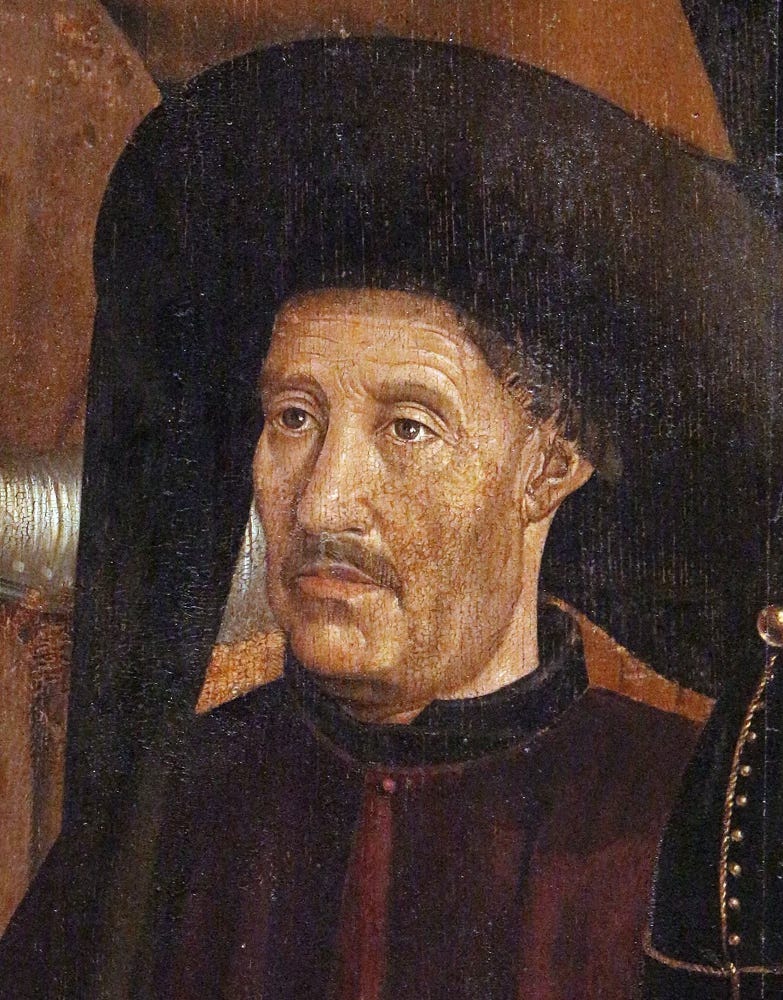
A major turning point for Europe’s voyages of discovery was in 1415, when Portugal, under the leadership of Prince Henry, targeted the trading city of Ceuta. Located in the northernmost parts of present-day Morocco, the town is today a Spanish territory.
Before the conquest, Ceuta served as a terminal for the immensely lucrative trans-Saharan gold trade from West Africa. In the mid-1300s, the Mali Empire played a decisive role in ensuring that large and regular shipments of gold dust reached Europe. But by the early 1400s, as Mali entered a period of decline, those shipments became less frequent.

This was one of the factors behind the coinage shortage that struck Europe during the fifteenth century. Europe’s domestic gold production was low, and the devastation caused by the Black Death in the previous century had negatively affected silver mining.
With the plague over and Europe recovering, the precious metals needed to mint the coins they had become accustomed to were suddenly lacking. In some places, the shortage became so severe that barter and alternative forms of payment once again became more common.
In his book A Financial History of Western Europe, American economic historian Charles P. Kindleberger writes that in Germany, it became so common to use pepper as a currency that the country’s bankers became known as “peppermen.” Kindleberger also argues that the shortage of coinage, or precious metals more broadly, was one reason Europeans began increasingly to strive to cross seas they had previously failed to navigate.
The Portuguese attack on Ceuta happened swiftly on an August day in 1415. A large fleet carried the Portuguese army across the Mediterranean, and onboard one of the ships was Prince Henry himself, then only 21 years old. He was eager not only to gain a foothold in Africa and seize the valuable trade but also to win the favor of the Church by conquering a city from the Muslims, with whom Christendom was in constant conflict.
The conquest of Ceuta took only thirteen hours, and afterward the Portuguese were convinced that by seizing the fortress, they had found the key to the rest of Africa.
But Portugal’s dreams of reaping riches from Ceuta quickly crumbled. The city, now just a Christian outpost in an otherwise Muslim North Africa, was cut off from the rest of the region.
The Muslim traders simply rerouted their caravans. Instead of the goods traveling to Ceuta, they were redirected further west to the port city of Tangier. Rather than becoming a golden goose for the Portuguese, Ceuta became a financial black hole since the city demanded constant fortification and a steady supply of troops to guard its walls.
The Portuguese eventually realized this setback and instead set their sights on the unexplored waters to the west. In the ensuing decades, they claimed and colonized islands such as the Azores and Madeira, starting to expand their maritime empire.
The Perilous Sea Route to Africa
The concept of exploring the western coast of Africa is ancient. Around 500 BCE, a man known as Hanno the Navigator set out on a daring seafaring expedition. Hailing from the ancient kingdom of Carthage, located in modern-day Tunisia, Hanno was a man of stature, possibly an aristocrat or a military officer.
Our knowledge of his voyage comes from a single document he left behind, translated into Greek from the original language. The text paints a picture of Hanno’s journey down the West African coast, his establishment of settlements, and his potential encounters with gorillas.
The extent of Hanno’s journey is a matter of debate. Some believe he ventured as far as present-day Senegal or even Cameroon. Others argue he only reached the shores of Morocco. The sources are open to interpretation, leaving us with no clear answer.
But if Hanno reached Senegal or Cameroon, he was centuries ahead of his time. In the 15th century CE, when the Portuguese turned their gaze towards Africa, voyages on the open seas were fraught with peril. Furious currents, violent storms, and treacherous coastlines could spell doom for even the most veteran sailors. Departing was a gamble, with no guarantee of a safe return.
For European sailors, Cape Bojador represented a major psychological and navigational barrier. It’s a headland in what is today Western Sahara, where heavy fog, powerful currents, and fierce winds made the area notoriously difficult to navigate.
Over time, the cape became surrounded by myth. Sailors claimed that the seas farther south boiled from the heat, that the sun could set ships ablaze, and that monstrous sea creatures stalked beneath the waves. Ships that tried to round the cape and continue south never returned. Arab sailors were also wary of the area, naming it roughly Abū Khaṭar, or “the father of danger.”
Prince Henry, later known as Henry the Navigator, never became famous for sailing himself, but for sponsoring and organizing voyages that dramatically improved Portuguese navigation and shipbuilding. During this period, the caravel, a small, easily maneuvered ship ideal for coastal exploration, came into frequent use.
The Portuguese had clear financial motives for their voyages. They sought to open up trade and find their own sources of gold. But there was also a religious motive. In a time when Christian and Muslim kingdoms were in constant conflict, the Portuguese believed that beyond North Africa, further south on the African continent, there were people who were not Muslims and could therefore be potential converts to Christianity.
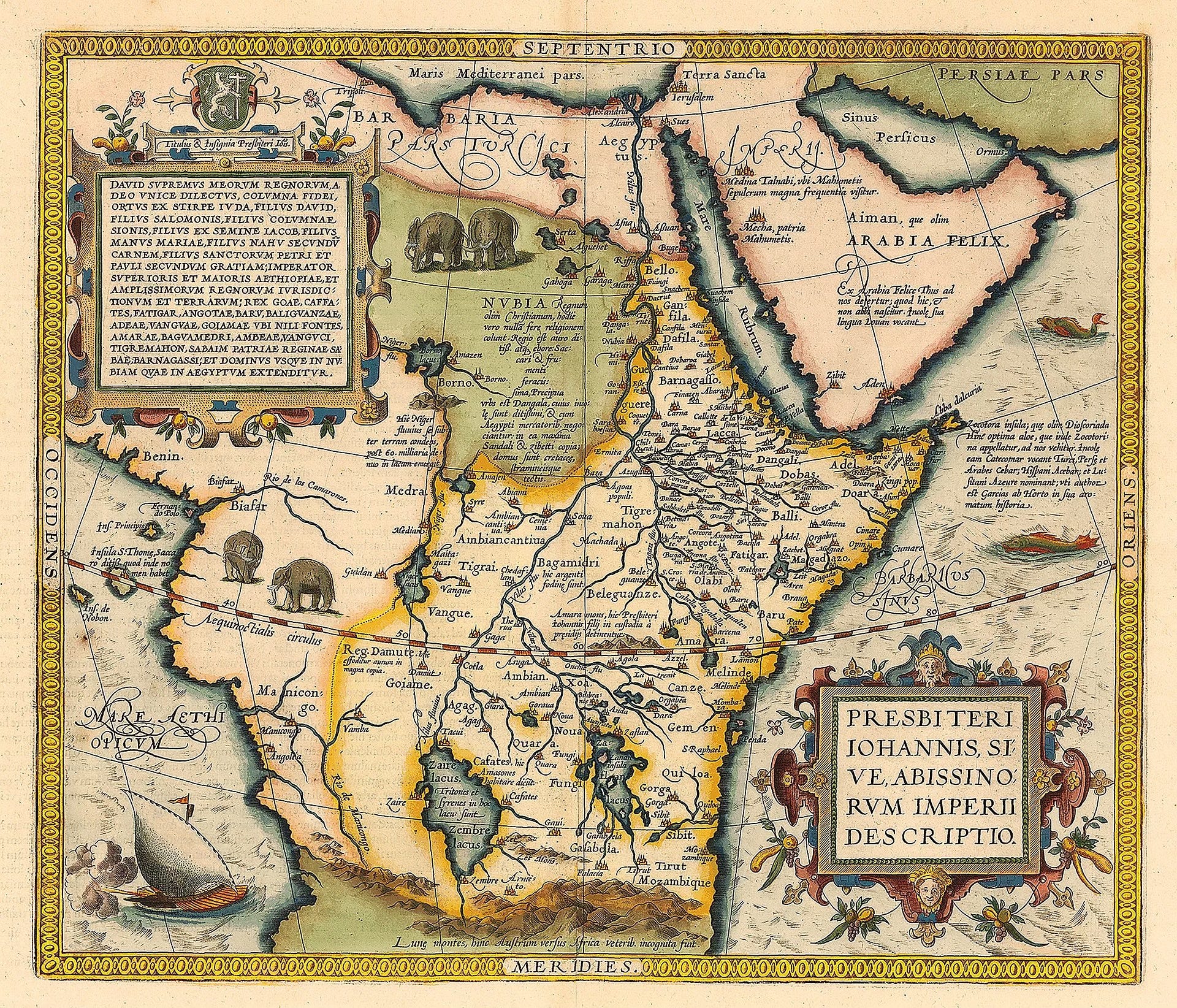
They also sought the mythical figure Prester John, who, according to medieval European legends, was a king who ruled a prominent Christian kingdom surrounded by Muslims and pagans. Prester John’s kingdom was believed to be located somewhere in Africa, perhaps in Ethiopia. He was considered an essential potential ally in the eternal struggle against the Muslims.
Year after year, Portuguese expeditions proceeded further south. In 1433, Portuguese navigator Gil Eanes attempted to pass Cape Bojador, but fear overcame him, and he turned back.
The following year, under Prince Henry’s orders, Eanes tried again. This time, he not only managed to pass Cape Bojador but also returned safely. He didn’t find any gold, but he brought back something valuable – the knowledge that neither terrible sea monsters nor enormous whirlpools existed in the area.
With fresh inspiration, the expeditions continued. In 1441, the Portuguese reached Ras Nouadhibou in present-day Western Sahara and Mauritania.
Initially, there was small-scale trade with the local Imazighen, the indigenous people of North Africa. They bartered fabrics, clothing, animal skins, wheat, and small amounts of gold dust. But at the same time, spontaneous slave raids took place, revealing the immense potential of the slave trade.
Experimenting with Slavery
Southern Europeans weren’t new to the tradition of enslaving newly encountered groups under the banner of Christianity. In the 14th century, the Spanish and Portuguese launched sea raids against the Canary Islands, often kidnapping the indigenous population and selling them in European slave markets. By the 15th century, the Spanish had brutally colonized the islands, leading to an even more significant number of people being enslaved.
Gomes Eanes de Zurara, a Portuguese royal librarian and court chronicler, penned one of the earliest written accounts of Portuguese slave raids in Africa in his 1453 work, The Chronicle of Discovery and Conquest of Guinea.
The book recounts the chilling tale of merchant Lançarote de Freitas, who led a fleet of six caravels to the Gulf of Arguin in present-day Mauritania in 1444. Their mission wasn’t trade but the express purpose of enslaving people.
They attacked small coastal communities of impoverished fishermen, kidnapping men, women, and children. After six weeks of confinement in the cramped, fetid holds of the ships, the fleet reached Lagos in southern Portugal. The so-called ”catch” consisted of 235 people, exhausted and terrified. De Zurara’s text paints a haunting picture:
“Some held their heads low, their faces bathed in tears as they looked at each other; some groaned very piteously, looking towards the heavens fixedly and crying out aloud, as if they were calling on the father of the universe to help them.”
A large crowd, keen to witness the spectacle, gathered to meet the crew and captives. Among those present was Prince Henry himself, who observed the scene from horseback. He must have been pleased, for 46 of the “best slaves” had been reserved for him. To distribute the remaining captives, they were divided into different groups:
“This made it necessary to separate sons from their fathers and wives from their husbands and brother from brother. No account was taken of friendship or relationship, but each one ending up where chance placed him.”
He continues:
“As soon as the children who had been assigned to one group saw the parents in another, they jumped up and ran towards them; mothers clasped their other children in their arms and lay face down on the ground, accepting wounds with contempt for the suffering of their flesh rather than let their children be torn from them.”
De Zurara’s account reveals that the enslaved had diverse racial backgrounds: he describes them as white, Black, and mixed-race. This underlines that skin color had not yet begun to play the decisive role it later would in the transatlantic slave trade. In the first half of the 15th century, you were enslaved not because you were Black but because you were a non-Christian, a heathen.
The desire to convert pagans to Christianity was the primary justification for the raids, alongside the apparent economic gain. Prince Henry believed the cruelties the enslaved endured in this life would be offset by their redemption as Christians in the afterlife.
Even though de Zurara seemed to testify to the diversity of the captives, his account also reveals an early example of associating skin color with attributes. It’s clear he valued the Black captives the least, and he consistently describes them as less intelligent, more uncivilized, and physically inferior.
His document can therefore be seen as a very early example of linking skin color to character. This fusion would later become one of the central features of the transatlantic slave trade: the belief that Black people were naturally inferior and therefore especially – or uniquely – suited to enslavement.
As the Portuguese began incorporating enslavement into their Atlantic expansion, the voyages continued, and in 1444, they reached the Senegal River.
However, while they ventured further south, the slave raids became more dangerous. Rumors of the raids spread, allowing local populations to evade them. Moreover, these populations were well-organized and resilient. Several Portuguese units hoping to enslave West Africans were chased away by local villagers and warriors armed with throwing spears and poisoned arrows.
Nuno Tristão, the sea captain who had conducted earlier slave raids along the northwest African coast, met this fate himself. In the mid-1440s, he and over 20 men landed in what is now Senegal, just south of the country’s current capital, Dakar. They planned to kidnap and sell people into slavery, but were ambushed. Several local soldiers in quick war canoes surrounded them. Nuno Tristão and almost all of his men were killed on the spot.
Other similarly disastrous landings prompted Prince Henry to order an end to the West African slave raids in 1448. It became clear that a different tactic was needed, one that relied on diplomacy and trade rather than violence.
At this time, much of what is today Senegal was part of the Jolof, or Wolof, Empire. It stretched roughly from the Senegal River in the north to the Gambia River in the south, rendering it particularly well-suited for trade. It had previously been the westernmost province of the Mali Empire, but during the second half of the fourteenth century, as Mali was shaken by a series of succession conflicts, the Wolof people broke away and established their own kingdom.
Both “empire” and “kingdom” are somewhat misleading terms, however, because it did not function as a unified state but rather as a confederation of several kingdoms. Nevertheless, it became one of the earliest West African states to agree to a peaceful trading relationship when the Portuguese exchanged their swords for goods. The trade included gold and ivory – and eventually enslaved people as well.
Slavery as Human History
Slavery is mentioned in some of humanity’s oldest written sources and has been part of our history for thousands of years, from the cradles of civilization in Mesopotamia and Egypt to ancient Rome and Greece, from the Maya civilization of Central America to medieval Japan. Up until just 100–150 years ago, slavery was a common feature of societies around the world. It is the age we live in now that is unusual in its near-universal condemnation of slavery. Unfortunately, it still exists in several parts of the world today.
Although most people have a specific image of what slavery is, there are many different forms and definitions, which can create confusion. Modern broad definitions include forced laborers who work under threats of violence, extreme poverty, or imprisonment, even if they are not legally considered someone else’s property.
Another form involves people forced to work to repay debts, or individuals dependent on starvation wages to survive. Serfdom refers to systems in which workers are tied to the land where they live, forced to pay taxes, and rarely allowed to move or marry freely, while sexual slavery is yet another form – likely the most widespread in the Western world today.
Viewed through a narrower historical lens, a slave is a person usually enslaved through some form of violence, subjected to another human being, deprived of autonomy, treated as property, bought and sold, forced to perform labor or services, and denied control over their own sexuality or reproduction.
During the fifteenth century, when Portugal began exploring Africa, slavery remained common in both Europe and the Middle East. In the many recurring wars between Christian and Muslim kingdoms, both sides enslaved one another. By the sixteenth century, prisoners of war often became galley slaves – people chained to the oars of large ships and forced to row under threat of violence.
And from the seventeenth century onward, the North African coast west of Egypt became known as the infamous Barbary Coast. Muslim pirates based there sailed the seas, kidnapping Europeans. Most victims became prisoners ransomed back to their families, while others were enslaved and put to work.
Like the rest of the world, sub-Saharan Africa has a long history of slavery, practiced in many different ways. As a vast continent defined by enormous diversity in peoples, cultures, languages, religions, and traditions, it makes little sense to speak of one single African form of slavery.
Generally speaking, however, African systems differed from the later transatlantic model. In some societies, enslaved people could marry, own property, and eventually become members of a family. In such societies, enslaved people possessed a degree of mobility that later enslaved people in places such as the United States did not have, where they were treated like livestock. In the United States, enslaved people had virtually no possibility of social advancement, and their children – born and unborn – were condemned to the same fate.
That’s not to say that there weren’t societies in Africa where the lives of the enslaved were also particularly hard: where they were subjected to backbreaking work, not allowed to mingle with free inhabitants, could lose their lives as victims in a funeral ritual, or retained lower social status even after no longer being considered a slave.
Of course, there were also plenty of societies that rejected slavery altogether.
Another obvious difference from the transatlantic trade was that indigenous African systems of slavery were not based on race or skin color, since both victims and perpetrators were what we today would call Black. This has sometimes contributed to an image of Africa as especially uncivilized, as though Africans “sold their own people” and were therefore somehow worse than Europeans, who at least had the decency not to inflict such horrors on “their own.” But this image is deeply misleading.
Perhaps the most common way to become enslaved in Africa was to be on the losing side of a war. And just as the joint identity as Europeans has never stopped the English, French, Swedes, or Germans from going to war with each other, so too the relatively modern identity as Africans has not prevented African societies from fighting wars of conquest against each other.
Other, less common paths into slavery included punishment for crimes or temporarily selling oneself into slavery as a way of repaying debts. Africans involved in the trade of enslaved people generally did not see themselves as selling “their own people” or their “African brothers.” They saw themselves as selling enemies, foreigners, criminals, or unwanted people.
Overall, African systems of slavery were often more closely tied to status, power, and influence than to money and production. What changed with the European presence in Africa was the scale of slavery. It was under European flags that the African slave trade transformed from a relatively limited phenomenon into a vast machine, an entire industry, whose consequences are still felt today.
While there were highly organized hierarchical societies that practiced slavery before Europeans arrived – such as the previously mentioned Mali Empire – these were the exceptions. Many of the West and Central African states most closely associated with large-scale slave trading, such as Dahomey and Asante, rose or expanded after the Atlantic trade had already begun, and they tapped into it to procure firearms and luxury goods to strengthen their grip on power.
Before that, it was more common for slavery to play a smaller role in most West and Central African societies. Especially compared to many of the new colonies Europeans formed on the other side of the Atlantic, where the whole economy revolved around slavery. These colonies became true slave societies – societies where slavery wasn’t only present, but central to the economy and social order.
Pointing out some of the differences between the transatlantic slave trade and indigenous African slavery should not be misunderstood as suggesting that the latter was somehow benign. Slavery, in all its forms, is by definition reprehensible.
Portugal in the Lead
In the mid-15th century, the Portuguese were still primarily after gold, and the potential of trade with West African kingdoms was so promising that the Portuguese crown struck a deal with the renowned Portuguese merchant Fernão Gomes. In return for a monopoly on all trade south of the Cape Verde Islands, Gomes agreed to pay an annual fee, sell all the ivory he acquired to the Portuguese crown at a favorable price, and commit his fleet to explore a further 480 to 640 kilometers of the African coastline each year.
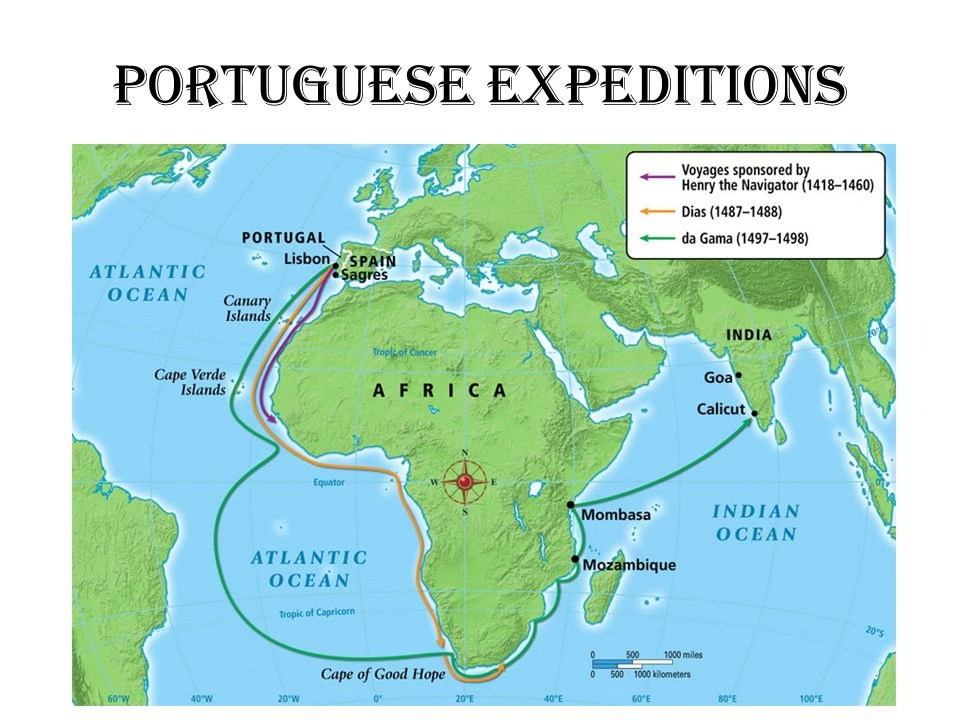
This agreement triggered a series of so-called discoveries. In present-day Liberia, trade in malagueta pepper, also known as grains of paradise, flourished, earning the region the name Pepper Coast.
Further east, the Portuguese found an abundant supply of ivory in the forests that stretched to the shores, leading to the region being named the Ivory Coast.
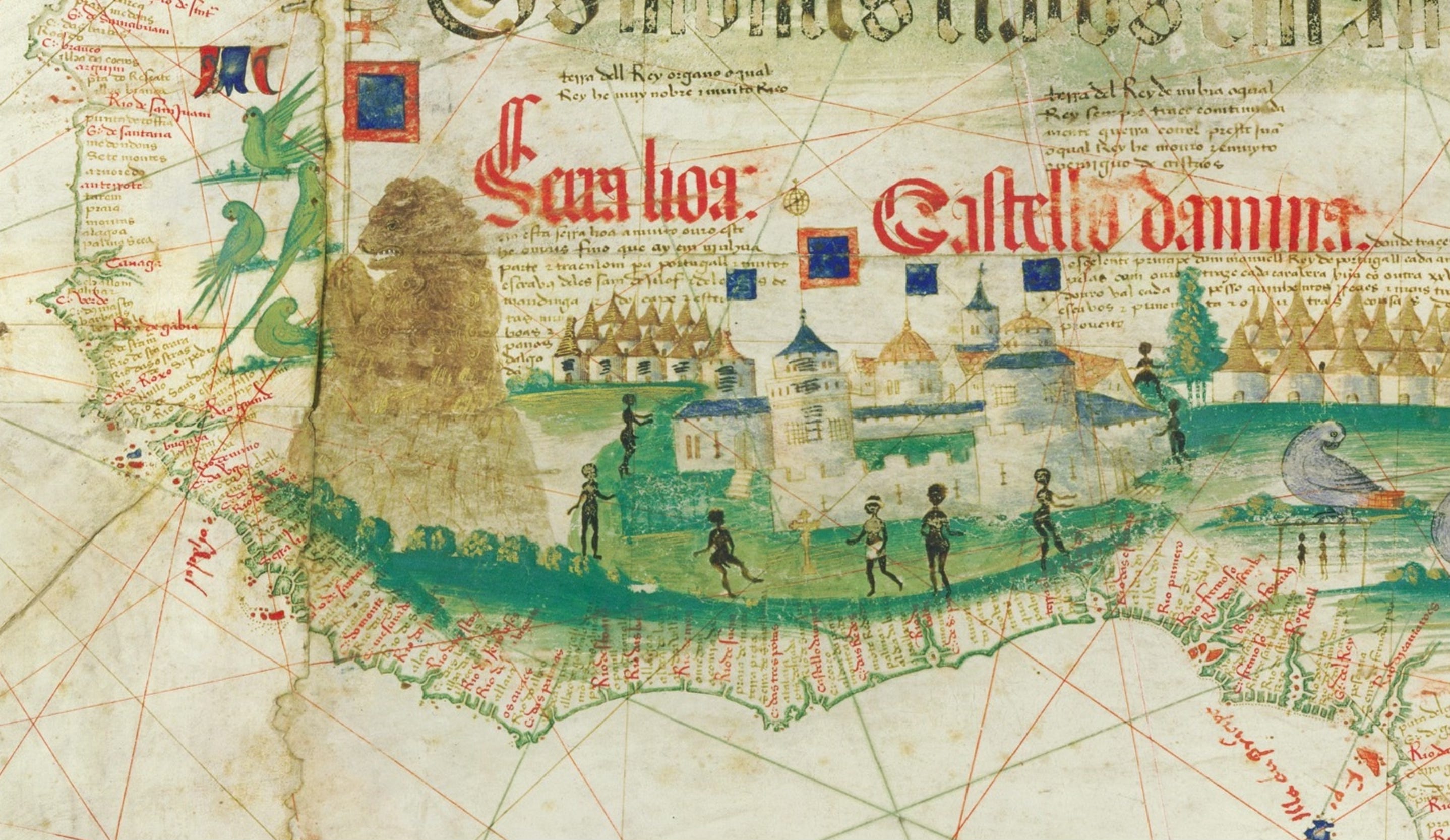
And in 1471, when the Portuguese landed in what is now Ghana, they finally found what they had been seeking for almost six decades: gold. The abundance of gold was evident from the jewelry worn by the locals. The entire region would later become known as the Gold Coast.
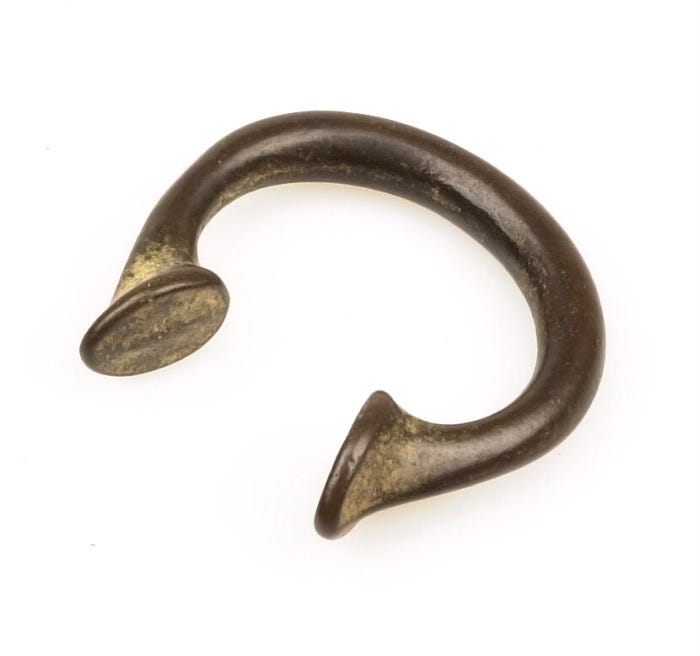
The Portuguese traded clothing and various types of metals for gold. Manillas, horseshoe-shaped bracelets made of bronze, brass, or copper, were produced in Europe and shipped to the West African coast, where they served as payment for the goods the Portuguese purchased.
West and Central African societies had a long tradition of working with iron. The African societies with which the Portuguese came into contact had access to both iron tools and weapons. But as innovations in the European iron industry increased production rates, it became more attractive for African kingdoms to import iron from Europe.

The manillas were not a new phenomenon. Previously, they had been imported from North Africa. Other forms of currency used in the region included cloth and cowrie shells, which Muslim traders brought with them from the Indian Ocean.
The Competition Intensifies
Portugal had long been at the forefront of African exploration, but other European countries were catching up. Dutch, French, Italian, and Spanish ships now sailed along the Ghanaian coast, each anxious to stake its claim in the gold trade.
In 1478, the rivalry between Portugal and the Spanish Kingdom of Castile resulted in a naval battle off the coast of Ghana, which Portugal won convincingly. This led to peace negotiations, mediated by the Pope, resulting in the Treaty of Alcáçovas.
Portugal agreed to relinquish its claim to the Castilian throne and recognize Spanish control over the Canary Islands. In return, Portugal was granted the right to all lands discovered, or to be discovered, south of the Canary Islands, effectively claiming all of Africa south of the Sahara.
Over the next two decades, the Portuguese gold trade in West Africa continued to amass immense wealth. American journalist Howard W. French, in his acclaimed book Born in Blackness, argues that this new wealth had unexpected consequences:
“Lisbon’s new monopoly over West Africa’s tremendous supplies of gold then left the Spanish with little choice but to venture out far beyond the Pillars of Hercules and push new exploration efforts into the westward extremities of the Atlantic Ocean.”
The “Pillars of Hercules” refers to the ancient name for the headlands that guard the entrance to the Strait of Gibraltar. Howard W. French suggests that Portugal’s African exploits accelerated Spain’s oceanic exploration. And the allure of gold played a big part in driving Christopher Columbus, under the Spanish flag, to inadvertently stumble upon America in the fall of 1492.
The fort of El Mina, or Elmina, was the strategic foothold the Portuguese had long sought on the African continent. For centuries, traders had procured gold from this region, transporting it north via West African empires like Mali, across the Sahara, and finally to North Africa and beyond.
But now, a larger portion of the gold began to flow south toward the Portuguese fort on the coast. From Elmina, the Portuguese could regularly send gold cargoes back to their homeland, transforming Portugal from a poor and insignificant corner of Europe into a burgeoning colonial superpower.
As gold continued to invigorate the Portuguese economy, their African exploration persisted, now with fewer monetary constraints. In 1483, they encountered the Kingdom of Kongo, a strong Central African state, and two years later, the Kingdom of Benin in the rainforests of present-day Nigeria.

Upon landing in several of these locations, they erected padrãos, wooden or stone pillars often topped with a cross and inscribed with details of their discoveries.
In 1488, the Portuguese finally rounded the southernmost tip of Africa. They didn’t linger; instead, they continued up the East African coast and, a decade later, through Vasco Da Gama, opened a sea route to India for the Portuguese.
While gold shipments continued to Portugal, the Portuguese steadily realized the profitability of the slave trade. It would be some time before Elmina would become a slave fort, but along the West and Central African coast, many other areas were identified where the slave trade began its exponential growth.
Sugar and Blood
One of the critical factors in understanding how the slave trade could become so extensive and lucrative was the cultivation of sugarcane. This plant, native to Southeast Asia, had slowly spread westward via traders and was now being introduced to even newer regions and continents during the European voyages of discovery.
The Madeira archipelago off the coast of Morocco became one of Portugal’s first colonies in the 1420s. Here, they introduced sugar cane, and a few decades later, production was in full swing, increasingly powered by African slaves. For a brief period at the start of the 16th century, Madeira was one of the world’s leading sugar producers.

However, by this time, Europeans had reached the Americas, opening vast commercial opportunities. Instead of small islands in the Atlantic or off the coast of Africa, they had now found entire continents to conquer, with seemingly limitless land to cultivate and incalculable quantities of metals to extract.
But to make this doable and as quickly and profitably as possible, a colossal workforce of a rarely seen kind was required. The slave trade was now set to enter a new phase defined by immeasurable wealth, violence, and suffering.

In the next part of my series about the transatlantic slave trade, I’ll focus more on what life was like for those enslaved. I will also, among many other things, outline how the trade grew to such enormous proportions, compare the differences among the slave societies of the Americas, and examine how Europeans built the foundations of these nations on the backs of enslaved people.
Further reading:
Books:
The Chronicle of Discovery and Conquest of Guinea by Gomes Eanes de Zurara (1453)
Indian Freedom: The Cause of Bartolomé de las Casas by Bartolomé de las Casas and Francis Patrick Sullivan (1995)
Africa and Africans in the Making of the Atlantic World, 1400-1800 by John Thornton (1998)
Prince Henry ”the Navigator”: A Life by Peter Russell (2000)
Pawnship, Slavery, and Colonialism in Africa by Toyin Falola and Paul E. Lovejoy (editors) (2003)
A History of Indigenous Slavery in Ghana: From the 15th to the 19th Century by Akosua Adoma Perbi (2004)
The Atlantic Slave Trade by Herbert S. Klein (2010)
Transformations in Slavery: A History of Slavery in Africa by Paul E. Lovejoy (2012)
A History of Modern Africa: 1800 to the Present by Richard J. Reid (2012)
The Fortunes of Africa: A 5000-Year History of Wealth, Greed, and Endeavor by Martin Meredith (2014)
What is Slavery? by Brenda E. Stevenson (2015)
A Fistful of Shells: West Africa from the Rise of the Slave Trade to the Age of Revolution by Toby Green (2019)
Born in Blackness by Howard W. French (2021)
Scholarly articles:
”Slavery and the Slave Trade in the Context of West African History” by J.D. Fage in The Journal of African History (vol. 10, nr 3, 1969)
”Slavery in Africa – Historical and Anthropological Perspectives” by Igor Kopytoff and Suzanne Miers (1979)
”What Africans Got for Their Slaves: A Master List of European Trade Goods” by Stanley B. Alpern in History in Africa (vol. 22, 1995)
”The Demographic Cost of Sugar: Debates on Slave Societies and Natural Increase in the Americas” by Michael Tadman in The American Historical Review (vol. 103, nr 5, 2000)
”Madeira, Sugar, and the Conquest of Nature in the ’First’ Sixteenth Century, Part II: From Regional Crisis to Commodity Frontier, 1506–1530” by Jason W. Moore in Review (vol. 33, nr 1, 2010)
”‘Voyage Iron’: An Atlantic Slave Trade Currency, its European Origins, and West African Impact” by Chris Evans and Göran Rydén in Past & Present (vol. 239, nr 1, 2018)