


A few weeks ago, there was an unexpected breakthrough in the case of one of the most shocking and closely watched political murders of the twentieth century. A Belgian court ruled that Belgian diplomat and former European Commissioner Étienne Davignon, now 93, is to stand trial for his alleged role in the murder of Patrice Lumumba, Congo’s first prime minister.
But who was Lumumba? Why was he killed? And what did his death set in motion?
This is the story of Congo’s derailed liberation.
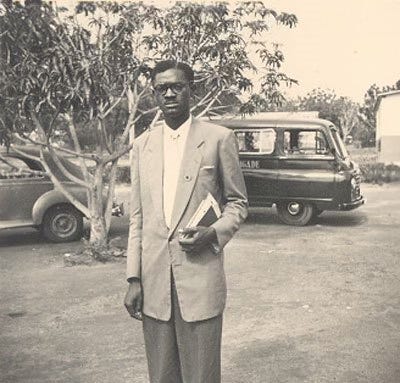
Patrice Lumumba was born in 1925 in Kasai Province, then part of the Belgian Congo. Like most Congolese under colonial rule, he received only a few years of formal schooling; the Belgian colonial state placed strict limits on African education. Yet even as a young man, he was regarded as intelligent and ambitious. Largely through his own efforts, he continued his studies and learned to speak fluent French.
He spent his early adult years working as a beer salesman and postal clerk before serving a one-year prison sentence for embezzlement in the mid-1950s. In 1958, he joined forces with other young Congolese men to found the Mouvement National Congolais, or MNC. Through his writing and his extraordinary gift for oratory, Lumumba – tall, lean, handsome, charismatic – soon emerged as one of the most influential voices in the struggle for independence.
Demands for freedom had been voiced before, but in the 1950s, the anti-colonial spirit sweeping the world gave fresh force to resistance in the Congo. In January 1959, protests flared up in Léopoldville, today’s Kinshasa, and their intensity stunned the Belgians, who were forced to promise a vague reform package.
It marked a moment of intense political mobilization. By the beginning of 1960, more than a hundred political groupings had been formed in the Belgian Congo. Almost all were rooted in ethnic affiliation – understandably so, in a deeply heterogeneous society whose peoples had been enclosed within artificial colonial borders. Lumumba’s party was different. It spoke in the language of national unity. It appealed not to one region or ethnic bloc, but to all Congolese.
As unrest spread, the Belgians realized they were losing their grip. In some provinces, people had already stopped paying taxes and no longer recognized the authority of the colonial administration, only that of their local political movements.
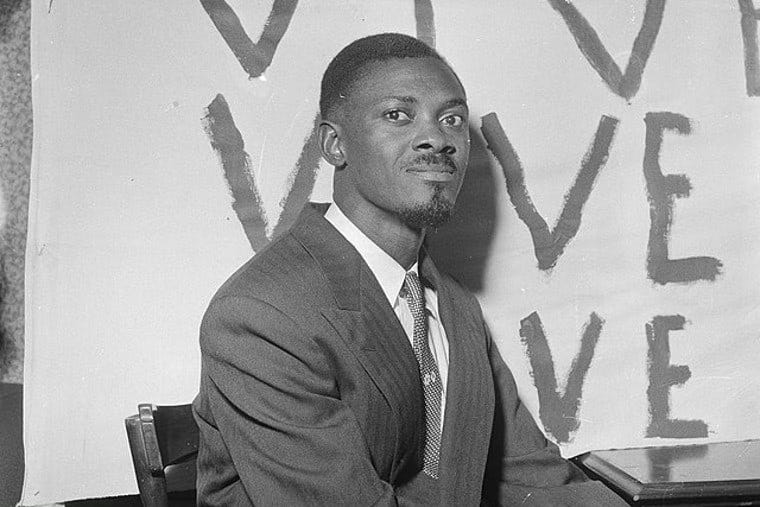
In January 1960, Belgium invited the leaders of thirteen of these new Congolese parties to a historic conference in Brussels. Lumumba, who had once again been jailed only days earlier – this time on charges of incitement – was released and allowed to attend. His influence was simply too great to ignore. It was the first time Belgium had formally involved Congolese leaders in political decision-making.
The Belgians hoped to persuade the Congolese to accept a gradual road to independence. Instead, they were met by a united front demanding independence as early as June of that same year.
Belgium gave in. Elections were scheduled for May, and the colonial authorities hoped to preserve their influence by backing moderate, Belgium-friendly parties.
But Lumumba had a rare ability to electrify crowds, and the MNC emerged as the largest party in the elections, though without an outright majority. A political compromise followed: Joseph Kasavubu of the Abako party became president, and Lumumba became prime minister. The new state took the name the Republic of the Congo.
A Tumultuous Independence Day
Belgian and Congolese dignitaries gathered on June 30 for the independence ceremony, a day that marked the formal end of colonial rule and seventy-five years of oppression, segregation, economic plunder, and mass killing. King Baudouin of Belgium was among those present.
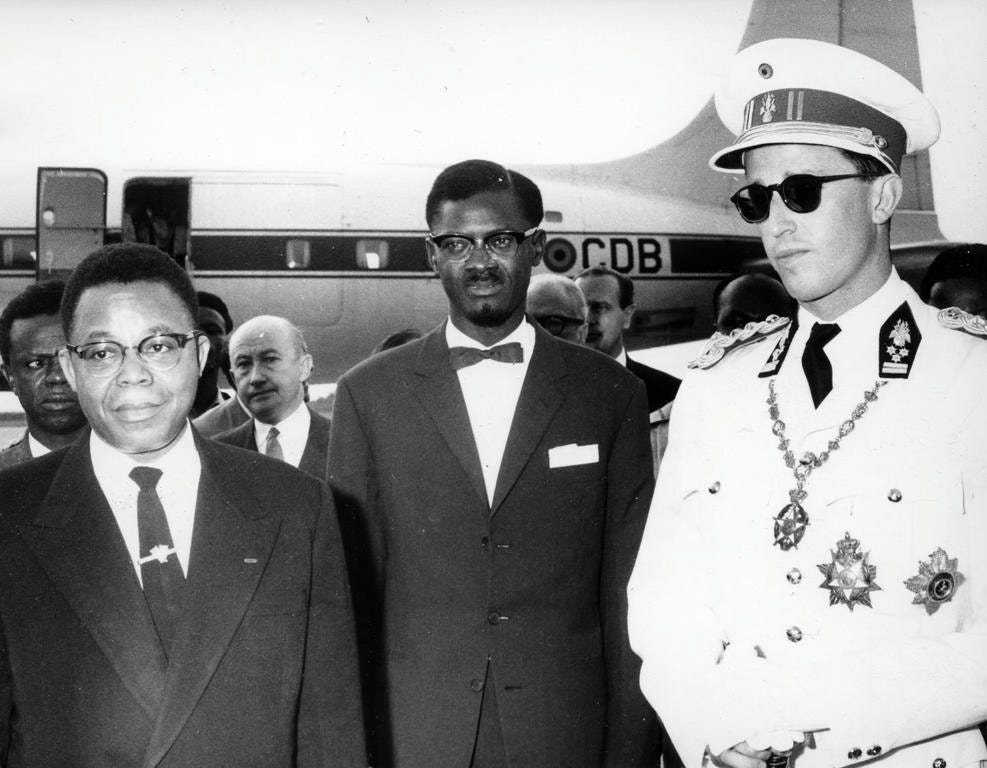
In his speech, Baudouin congratulated Congo on achieving freedom thanks to Belgian “civilization.” Dressed in a gleaming white uniform adorned with medals, he described Congolese independence as the culmination of the work begun by his ancestor, Leopold II, in the late nineteenth century – the same Leopold II responsible for the deaths of up to ten million Congolese. Baudouin even praised Leopold as a genius and warned the Congolese not to dismantle the systems Belgium had put in place until they were sure they could govern better themselves.
Lumumba had not been scheduled to speak. But as he listened, he decided to break protocol.
At the end of the ceremony, he rose and delivered one of the most famous speeches in African history. Calm but unsparing, he confronted the king’s version of events head-on, laying out the realities of colonial rule: systematic racism, ruthless exploitation, and the degrading, inhuman treatment of the Congolese people.
His speech brought the Congolese audience to their feet in applause. It also enraged the Belgians and badly damaged his relations with the former colonial power. In the Belgian press, he was cast as a dangerous fanatic.
The Challenges Pile Up
Congo was in a diplomatic crisis. But at least it was free.
The trouble was that freedom arrived atop a landscape that colonialism had systematically hollowed out. Congo had almost no trained doctors, almost no secondary-school teachers, and scarcely any university-educated citizens. In 1960, there were only thirty Congolese university graduates in a country nearly as large as Western Europe. The principal sphere in which Congolese had been allowed to advance was the Church, and by independence, roughly five hundred Congolese priests had been trained.
Belgium had also engineered something close to an economic coup. After the January 1960 conference that set the date for independence, a second meeting was held to settle crucial economic questions. But it took place in April and May, when Congolese leaders were absorbed in election campaigning. Their interests were therefore represented by less qualified delegates.
On one side sat newly graduated Congolese university students. On the other side sat seasoned Belgian politicians, who used the negotiations to secure control over key economic assets. Companies in which the Belgian state had previously held shares were privatized, while the accumulated debts of the colonial order were transferred to the new Congolese state.
Congo’s new leadership, unsurprisingly, had little experience governing a nation. Many politicians saw, at last, the chance to enjoy the privileges which had long been reserved for European colonizers. The first measure passed by parliament was an increase in legislators’ annual pay from one hundred thousand francs to half a million. Lumumba, acutely aware of what such a move would signal, was one of the few to oppose it.
The Congo Crisis
Another serious problem was the lack of highly trained Congolese personnel. Many top positions remained in the hands of white Europeans. The Force Publique, the old colonial army, was no exception. Twenty thousand men strong, it was still commanded by the Belgian general Émile Janssens. Congo was independent, but its Black army was still led by a white officer.
On July 4, less than a week after independence, soldiers in Léopoldville refused to obey orders and demanded higher pay. The next day, Janssens summoned them to the army headquarters and announced that Congo’s independence would change nothing for them: there would be no promotions, and they would remain under white command. Then he took a piece of chalk and wrote on a blackboard: before independence = after independence.
The reaction was instant. That same night, Congolese soldiers mutinied.
Lumumba accused Belgium of provoking the unrest and dismissed Janssens. In an effort to calm the soldiers, he renamed the army the Armée Nationale Congolaise, promoted all Congolese soldiers, and replaced European officers with Congolese ones.
But the revolt did not end there. Many Congolese – not only within the army – had expected independence to bring swift and visible improvements to everyday life. Instead, change came slowly. The sight of politicians showing off swollen wallets and new cars deepened popular anger.
Soon, that anger turned against European civilians as well. The army splintered into rival factions, some loyal only to themselves, others to particular parties or ethnic interests. Looting, murder, and rape spread as thousands of whites fled the country.
On July 10, Belgium sent in troops, officially to protect its nationals. But they also moved to seize strategic positions across the country, which Lumumba viewed as an act of war.
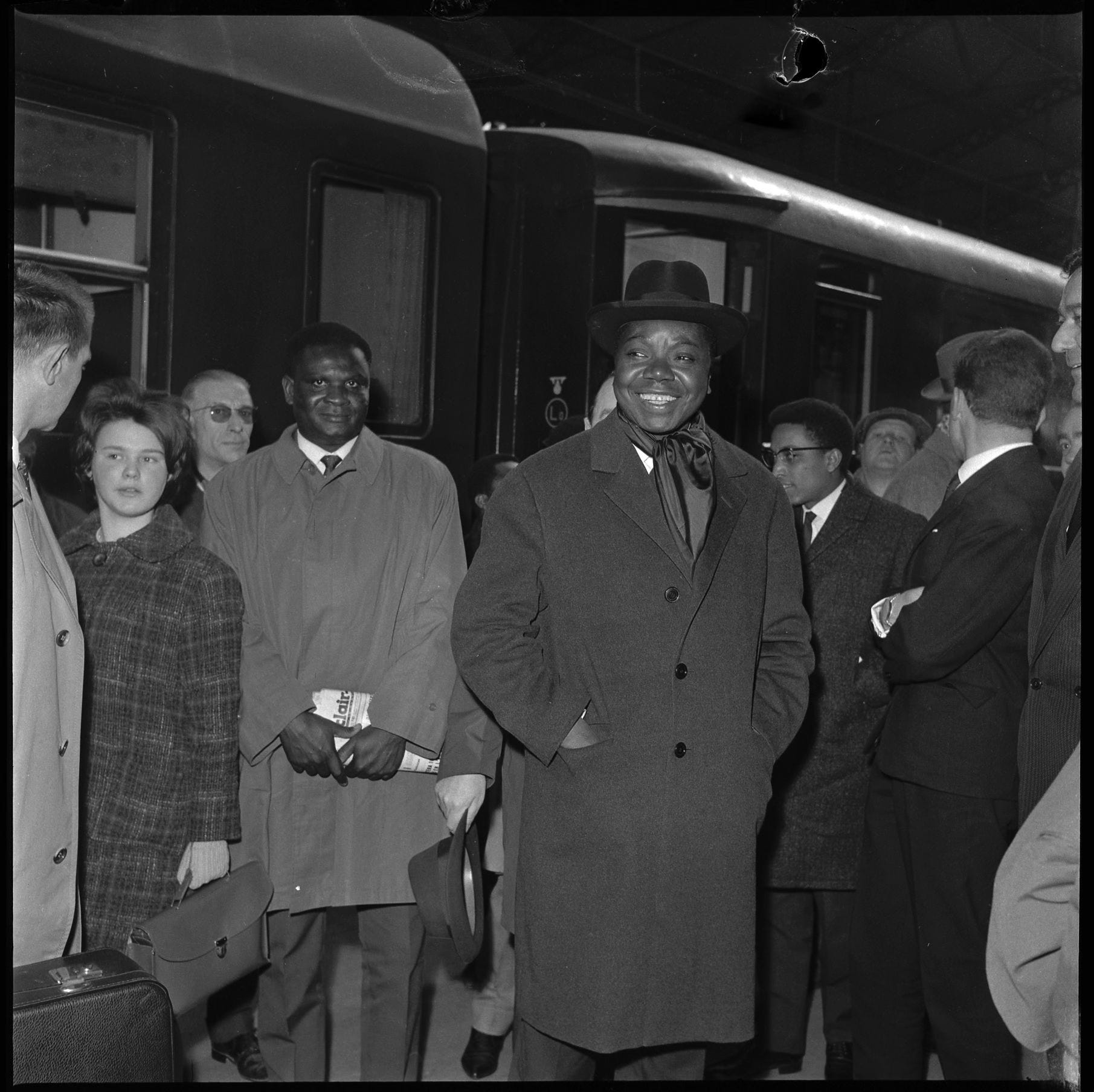
The following day, the crisis deepened further. Moïse Tshombe, the leader of Katanga – a province whose copper mines generated roughly a third of Congo’s revenue – declared it an independent state. Behind him stood Belgian military advisers and mining companies, above all Union Minière du Haut-Katanga, the world’s third-largest copper producer. The company stopped paying taxes to Congo, urged Belgium to recognize Katanga, and helped finance Tshombe’s project.
Less than two weeks after independence, Congo was already on the brink of collapse. How Lumumba responded to this crisis would determine not only the country’s future, but his own fate.
He turned to the United Nations. Under Dag Hammarskjöld, the UN saw the Congo crisis as an opportunity to demonstrate what peacekeeping could be. Within days, UN troops were flown in.
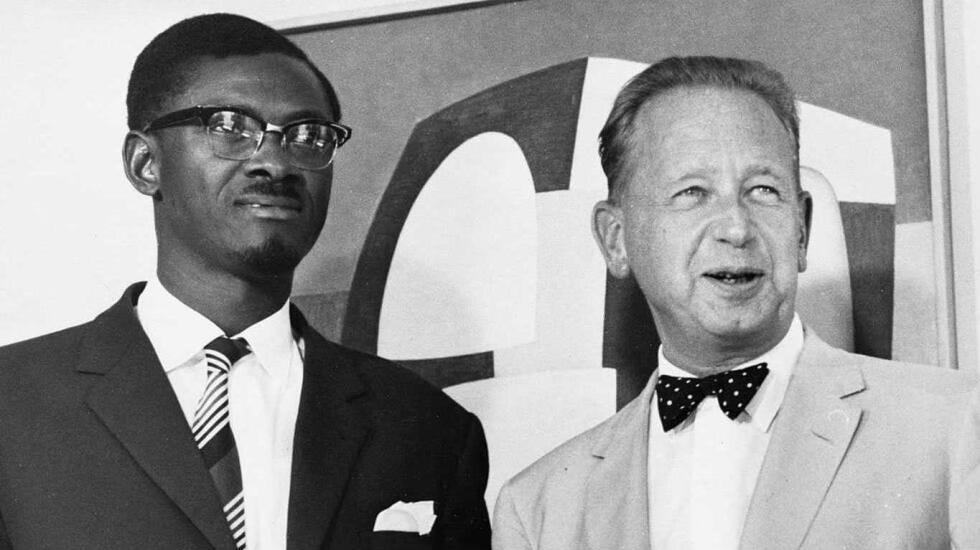
Lumumba insisted that the UN must also expel the Belgian troops that had dug in across the country. On July 14, 1960, the Security Council passed a resolution calling for Belgium’s withdrawal.
But Lumumba wanted more. Perhaps without completely grasping how narrow the UN mandate was, he asked the organization to help Congo retake Katanga. The UN refused, arguing that it had no right to intervene in Congo’s internal political affairs. Lumumba, enraged, accused it of serving Belgian interests. The United States likewise refused to intervene militarily.
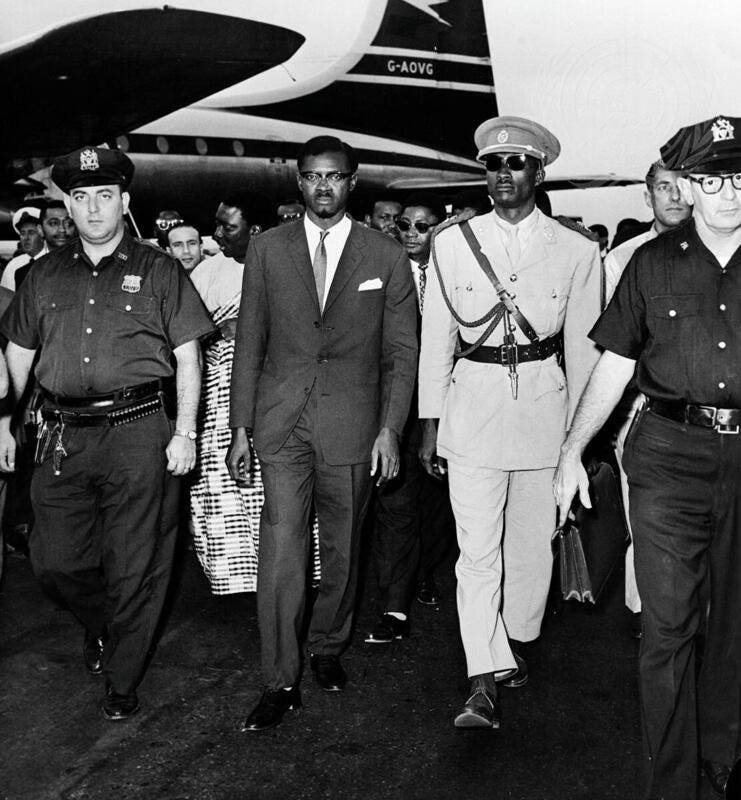
At the same time, Kasai – Congo’s richest diamond-producing province – declared independence on August 9, 1960. Desperate, Lumumba turned to the Soviet Union, which responded by sending military vehicles.
With great difficulty, the Congolese army managed to crush the revolt in Kasai. But the cost was catastrophic. Some 250,000 people were displaced, and international reports that Congolese troops had massacred civilians inflicted devastating damage on the government’s standing.
Worse still, Lumumba’s appeal to Moscow formally dragged Congo into the Cold War. He had already alienated Belgium; now he also alarmed the United States, the United Nations, and members of his own government, many of whom favored a more cautious strategy.
In Washington and other Western capitals, fear grew that a communist state might emerge in the heart of Africa. That summer, CIA director Allen Dulles reportedly warned that Lumumba was another Fidel Castro, “or worse”.
On the evening of September 5, 1960, President Joseph Kasavubu came on the radio and, awkwardly reading from a prepared text, announced that Lumumba had been dismissed with immediate effect. The massacres in Kasai – described in much of the Western press as genocide – combined with accusations of communism, had created the perfect opening to remove the increasingly volatile prime minister.
A few hours later, Lumumba himself was on the air, declaring that it was he who had dismissed the president.
The political situation descended into total confusion.
In the West, Lumumba was increasingly viewed as unstable and erratic. In parallel, the CIA and Belgium began developing plans for his “permanent elimination”.
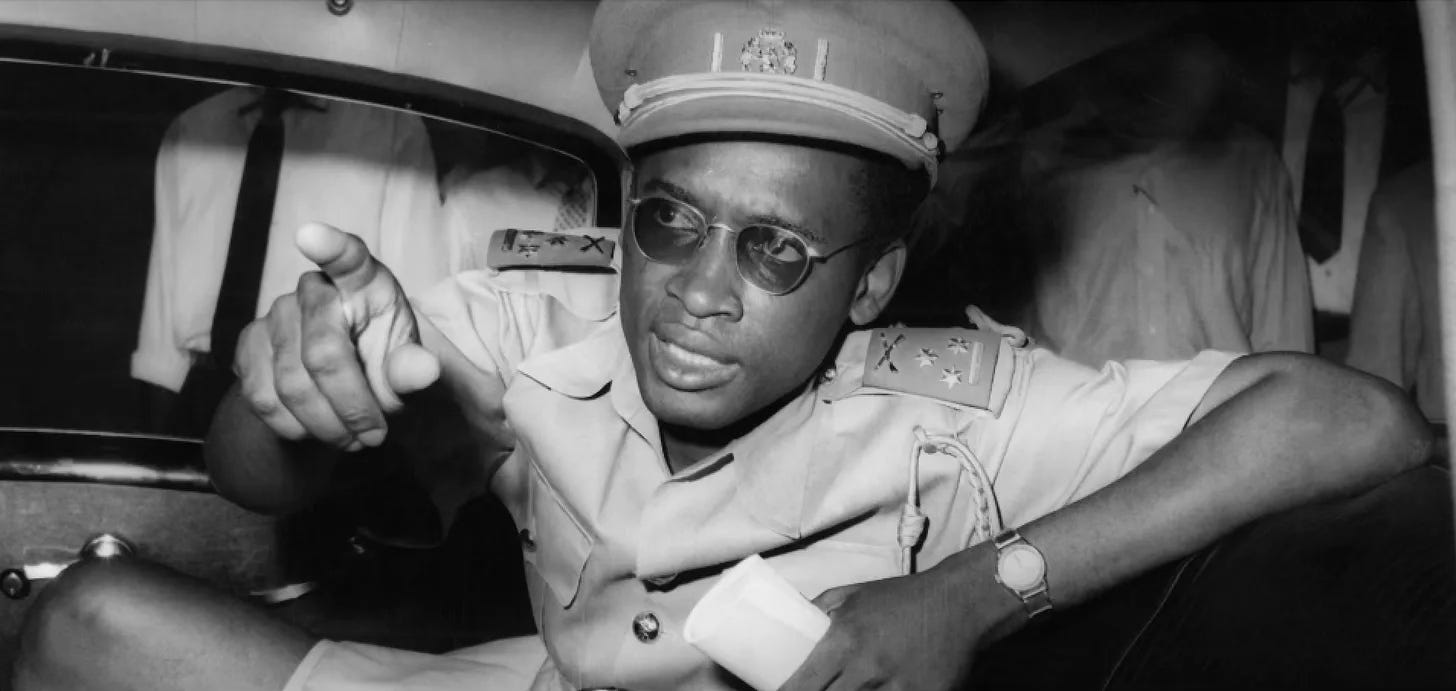
Then Joseph-Désiré Mobutu intervened. He announced that he had temporarily “neutralized” the rival camps of Kasavubu and Lumumba.
Mobutu had served in the Force Publique, worked as a journalist, joined the MNC early, and acted as Lumumba’s personal assistant and one of his closest aides. During the summer mutiny, he had been promoted to colonel and made army chief of staff. What Lumumba either did not know or chose not to believe were the rumors that Mobutu had already been recruited as an informant for American and Belgian intelligence.
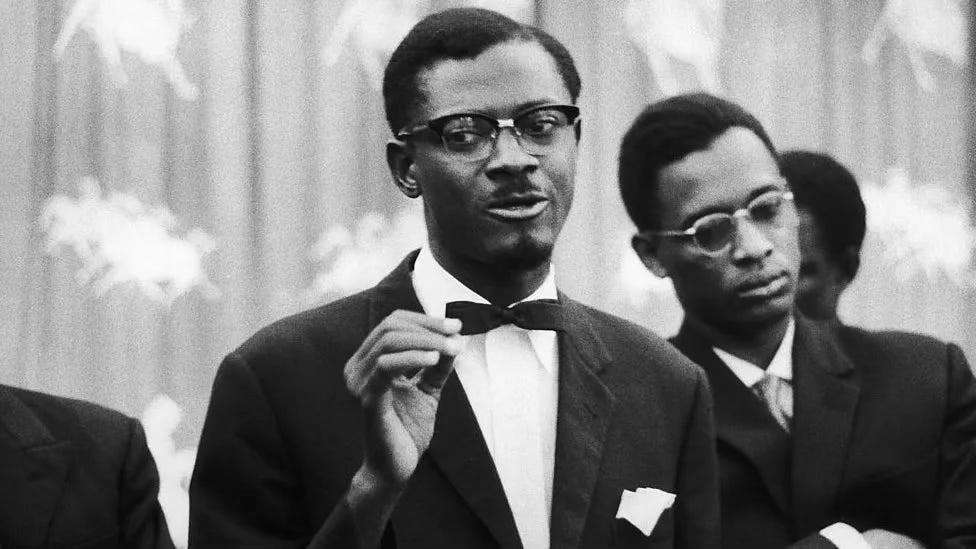
Mobutu now effectively seized power. The coup was enabled by CIA support, including weapons and money to secure the army’s loyalty. An interim government was installed, staffed by Congolese who had only just left university. Kasavubu remained president, while the Soviet advisers Lumumba had invited were expelled.
Lumumba himself was placed under house arrest. UN soldiers kept his enemies from entering the house, while Mobutu’s troops made sure he could not leave it. Even so, Lumumba continued insisting that he was still the lawful prime minister.
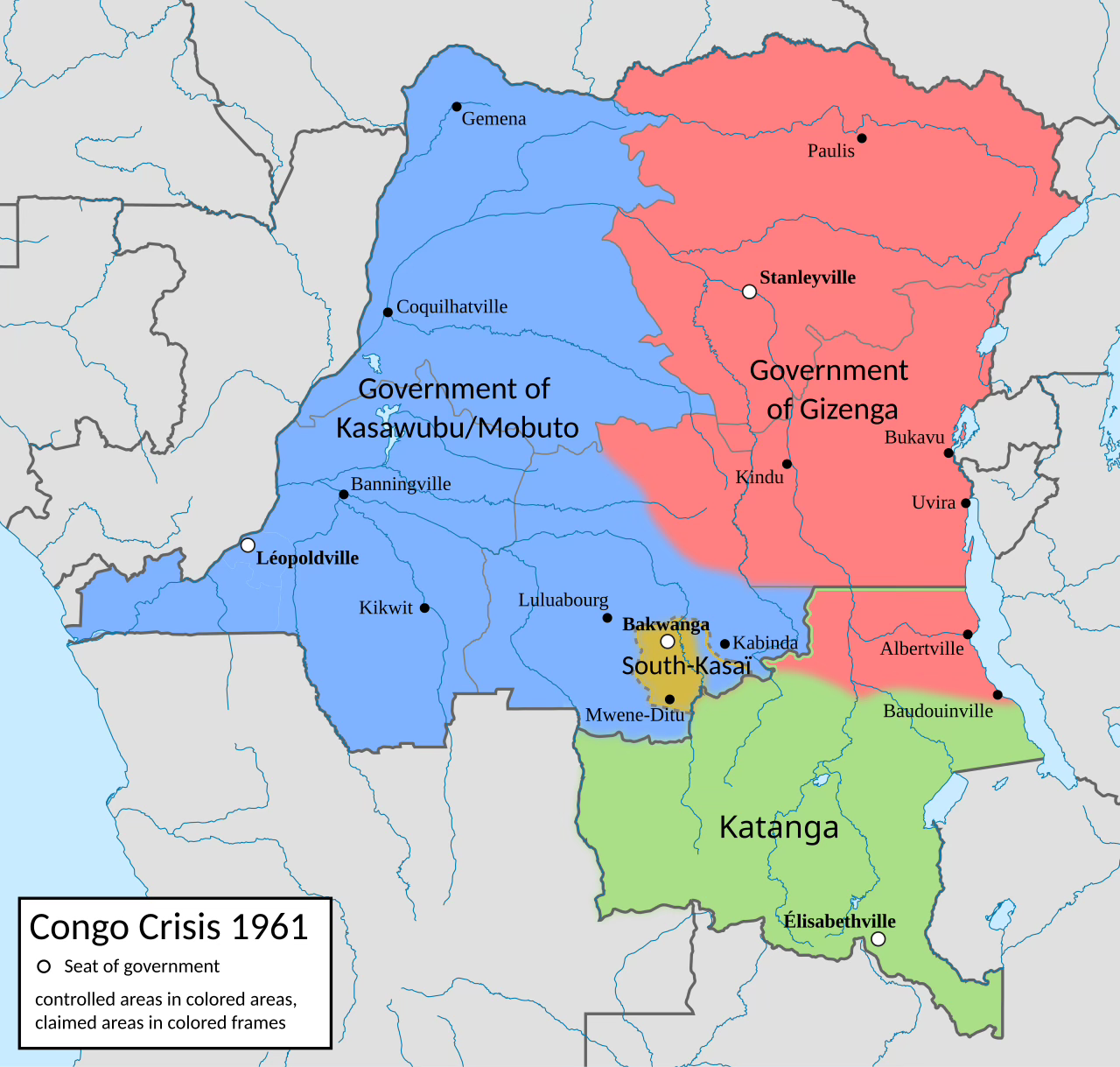
By now, Congo had broken into four political zones: Kasavubu’s and Mobutu’s government in the west, backed by the western powers; Lumumba’s supporters in the east, backed by the Soviet Union; and the two economically crucial secessionist states of Katanga and South Kasai in the south, both supported by Belgian business interests.
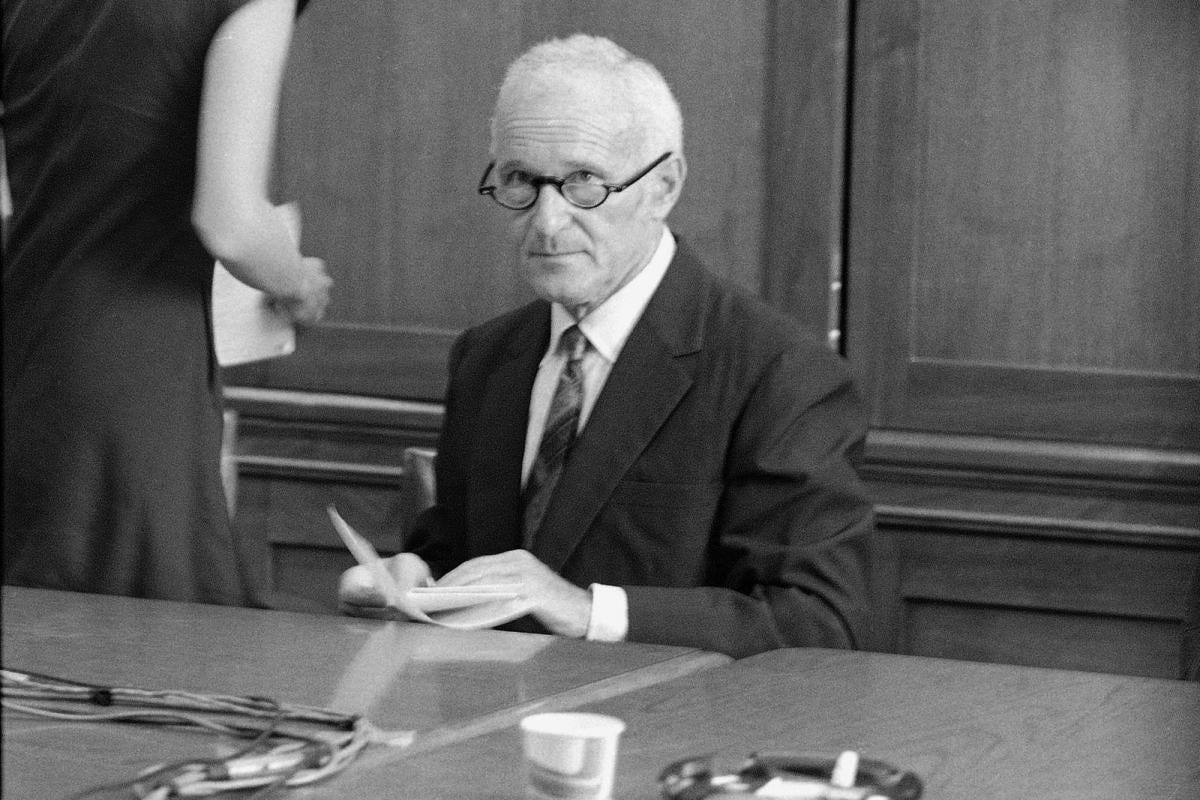
American efforts to neutralize Lumumba continued. In October, CIA chemist Sidney Gottlieb arrived in Congo. He had recently been involved in plots to assassinate Fidel Castro and had earlier led the infamous MK-Ultra program, which pursued behavior modification – mind control – through illegal experimentation. In his luggage was a lethal poison meant to be slipped into Lumumba’s toothpaste or food.
The following month, a man with the codename QJ/WIN arrived in Congo. Recruited in Europe to carry out the killing, he was described as ruthless and hardened.
Yet this particular plot collapsed. Larry Devlin, the CIA station chief in Congo, objected to the method. He saw no practical way to get close enough to Lumumba and believed the agency already had other means of removing him. The poison was discarded in the Congo River.
The covert assassination plan may have been abandoned, but the political offensive continued. At UN headquarters in New York, diplomats had spent weeks debating which Congolese delegation should be seated: Lumumba’s or Kasavubu’s. On November 24, after pressure from the United States, the General Assembly voted to recognize Kasavubu’s delegation.
For Lumumba, this was the end of any realistic hope that the UN might restore him to power.
A Daring Escape
One rainy evening in November, he escaped house arrest by hiding in one of the cars that drove household staff home after their shift.
His goal was Stanleyville in the east, where his support was strongest. From there, he hoped to establish a rival government and reclaim power. But instead of rushing straight there, his convoy, which included his family and closest allies, drove through towns and villages where jubilant crowds greeted them. It was a fatal delay.
Shortly before midnight on December 1, the group reached the Sankuru River. There was no bridge, so they had to cross in a small boat. Lumumba made it across with the first group, while his wife and youngest son remained behind. Once on the far bank, he climbed back into the boat to return for them.
By then, Mobutu’s soldiers had caught up. They were waiting on the riverbank.
Lumumba was arrested, beaten, and taken to the prison at Thysville, just south of Léopoldville, while UN troops present, under orders not to intervene, stood and watched. Journalists on the scene saw Congolese soldiers kick and humiliate him in front of an impassive Mobutu.
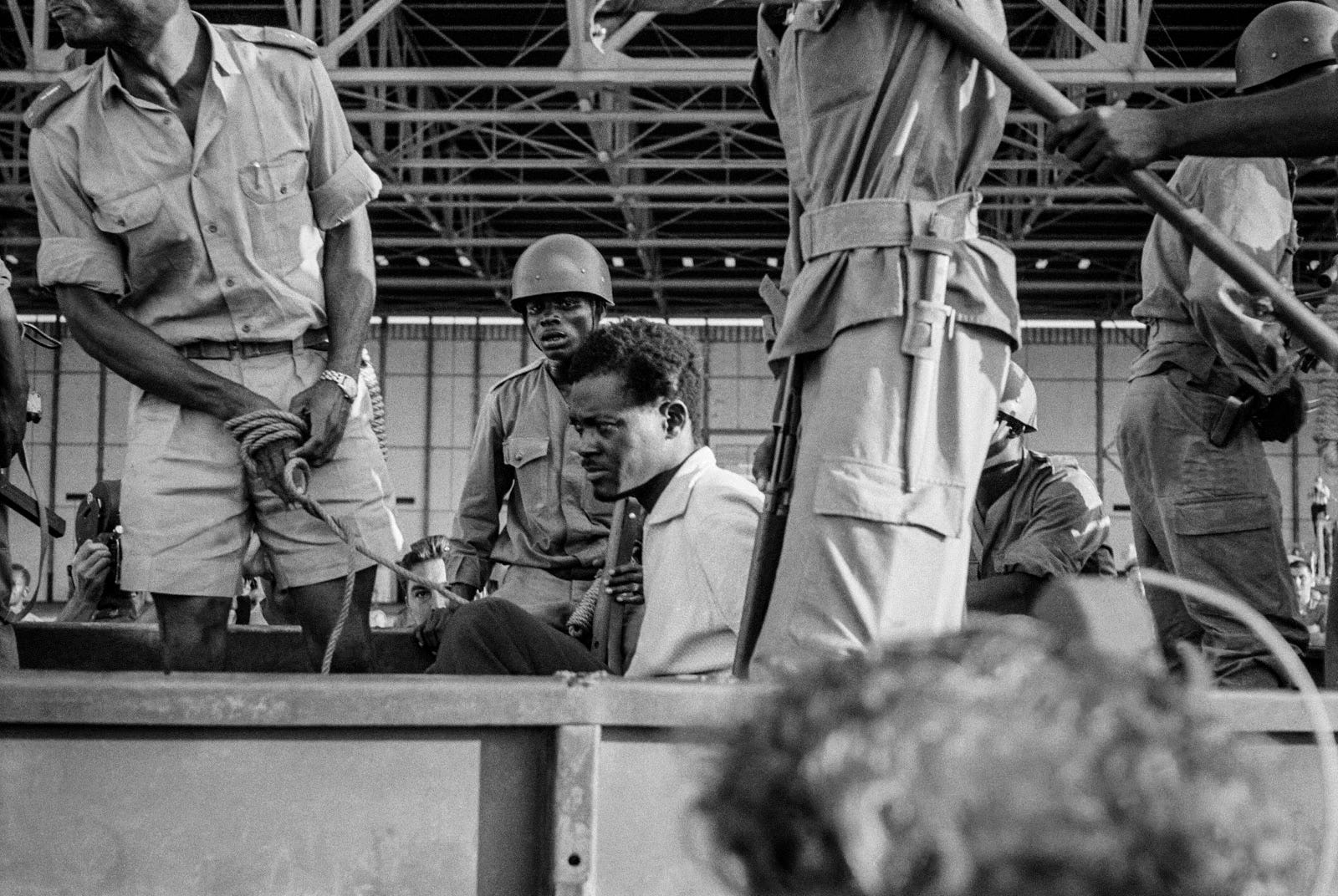
The images badly damaged the UN’s standing. How could an organization with a major peacekeeping presence in the country, one that had managed to protect Belgian civilians, now stand by while the lawful prime minister was beaten before the world?
Even in prison, Lumumba remained dangerous to his enemies. Antoine Gizenga, one of his allies, moved ahead with plans to establish a rival government in Stanleyville. For many Congolese, Lumumba had become the embodiment of freedom itself, and support for his cause continued to grow.
Meanwhile, he endured appalling conditions in Thysville: a damp cell, no shoes, no change of clothes, and unhealthy food. Yet he still retained influence among the soldiers there. In January 1961, some of them mutinied, forcing Kasavubu and Mobutu to intervene in person. Order was restored only after promises of more pay.
A Fatal Decision
The episode terrified American and Belgian officials, who feared that Lumumba might yet regain power. Kasavubu and Mobutu wanted him gone, but worried that a trial or execution carried out openly by their own regime would turn public opinion against them. So they decided to transfer him to Katanga.
Maurice Mpolo, the former minister of sport and youth, and Joseph Okito, the former vice president of the Senate – both long-term Lumumba allies – were sent with him.
The flight to Élisabethville, Katanga’s capital, lasted six hours. Throughout the journey, the prisoners were beaten by the soldiers escorting them. At one point, the pilots locked the cockpit door, trying to shut out the sounds of the assault and to protect themselves from the men carrying it out.
Upon arrival, Lumumba, Mpolo, and Okito were taken to an empty house near the airport. The beating continued: fists, kicks, rifle butts. They were dragged into a bathroom and subjected to outright torture. Some of Katanga’s ministers took part, as did Moïse Tshombe himself.
Later that night, after dark, the three men were driven to a remote clearing in the forest. Military headlights illuminated graves that had already been dug. One by one, they were lined up against a tree and shot. Lumumba was only 35 years old.
Those involved fled the scene in haste.
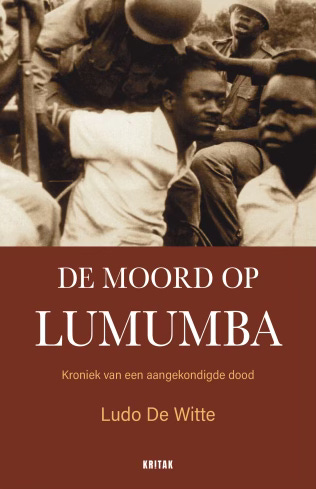
For more than forty years, Belgium maintained that it had played no part in Lumumba’s murder. But in 1999, Belgian historian and journalist Ludo De Witte published De moord op Patrice Lumumba, bringing forward new evidence. Belgian advisers, he showed, had helped formulate the plan to send Lumumba to Katanga. Belgian officers had been present during the beatings and the torture, and had exercised command over the firing squad.
Covered Tracks
Local people heard the shots and discovered the graves, so poorly filled in that an arm protruded from the earth. The next day, Belgians returned and had the bodies exhumed. Wrapped in cloth, the corpses were loaded onto a vehicle, driven elsewhere, and reburied in deeper pits.
But those responsible remained nervous. A few days later, they dug the bodies up again. This time, they were dismembered with a hacksaw and dissolved in barrels of sulfuric acid. Bones and teeth were crushed and scattered. Lumumba’s supporters were not to be left with a grave.
No official statement was issued until February 10, around three weeks after the executions. The first version claimed that Lumumba, Mpolo, and Okito had escaped. Rewards were offered.
Three days later, Katanga’s interior minister announced that the bodies of the “escapees” had been discovered, supposedly after local villagers found and killed them. He refused to say exactly what had happened or where the bodies were buried, but he did display death certificates signed by a Belgian doctor.
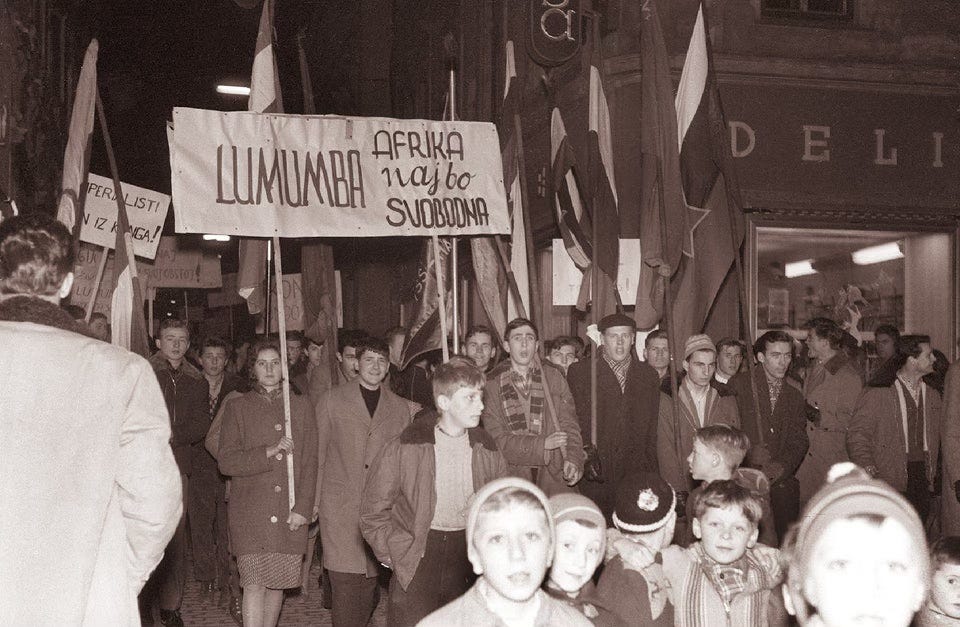
Across the world – in London, New York, Moscow, Warsaw, Amsterdam, Dakar, New Delhi – protests erupted. In Belgrade, thirty thousand young Yugoslavs gathered outside the Belgian embassy, which was eventually stormed and vandalized. In Léopoldville, Lumumba’s widow, Pauline, led a demonstration outside UN headquarters, demanding the return of his body for burial. That demand could, for obvious reasons, not be met.
After Lumumba’s murder, Congo’s struggle for power went on, bloodier and more chaotic with each passing year. In 1965, Mobutu staged yet another coup – this time with no intention of sharing power.
Read more about his catastrophic thirty-year reign and how it ties to the ongoing humanitarian crisis in the Democratic Republic of the Congo here.

A Late Apology
Despite Western attempts to portray Lumumba as a deranged extremist who had brought destruction upon himself, history has transformed him into something else: a martyr and a global symbol of anti-imperialism, independence, and Pan-Africanism.
Not long after the publication of De Witte’s book, Belgium launched an official inquiry. Its conclusions, published in 2002, stopped short of acknowledging direct Belgian responsibility for Lumumba’s murder, but did admit that Belgium bore a “moral responsibility” for having failed to prevent it. Foreign Minister Louis Michel formally apologized for Belgium’s role.
On June 30, 2020, ahead of the sixtieth anniversary of Congolese independence and amid the Black Lives Matter protests of that summer, King Philippe of Belgium expressed his “deepest regrets” for the “past injuries” and “painful episodes” Belgium had inflicted during the colonial era.
It was the first time a Belgian monarch had acknowledged any form of culpability, although critics quickly pointed out that regret is not the same as apology. Adam Hochschild, author of King Leopold’s Ghost – the book that helped reignite global attention to Belgium’s crimes in Africa – has been among those arguing that Belgium should pay reparations to Congo.
Then, in the summer of 2022, Belgium returned a gold tooth that had belonged to Lumumba. His family received it in a small ceremony in Brussels. It was the only known physical remnant of the murdered prime minister.
For years, the tooth had been kept as a macabre trophy by Gerard Soete, a Belgian police commissioner who had taken part in the destruction of Lumumba’s body. In 2016, the Belgian state seized it after Soete’s daughter displayed it in a newspaper interview.
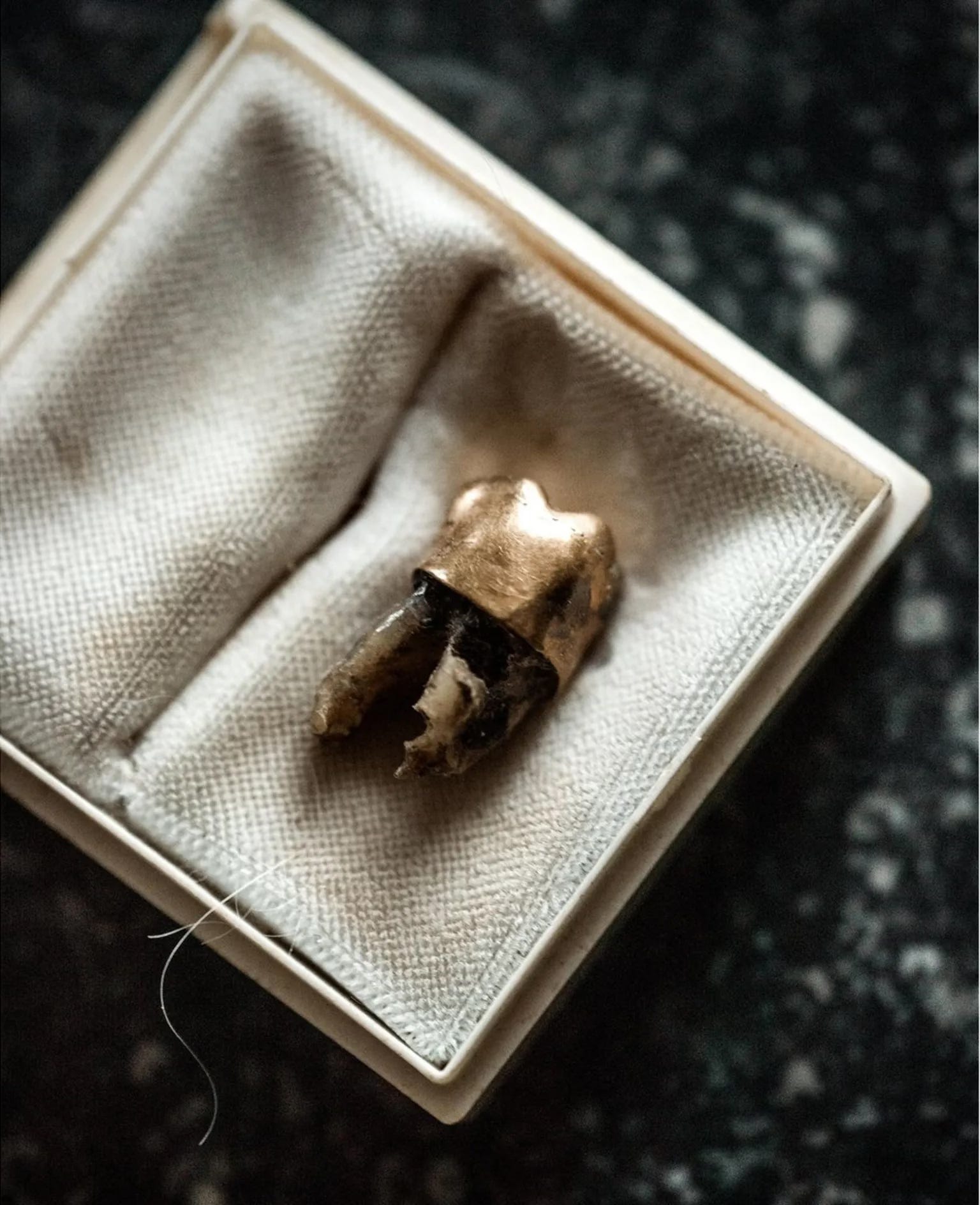
At the ceremony, Belgian Prime Minister Alexander De Croo formally apologized for Belgium’s role in Lumumba’s murder:
“For the transfer of Patrice Emery Lumumba to Katanga, the Congolese authorities at the time received assistance from Belgian diplomats, officials, and military personnel.
The parliamentary inquiry commission, therefore, concluded that the Belgian government showed a clear lack of concern for Patrice Lumumba’s physical integrity and, after his assassination, deliberately spread falsehoods about the circumstances of his death.
Several ministers of the Belgian government at the time, therefore, bear a moral responsibility for the circumstances that led to this murder. This is a painful and unpleasant truth. But it must be told.
Belgian ministers, diplomats, officials, or soldiers may not have intended to have Patrice Lumumba assassinated – no evidence has been found to support that. But they should have understood that his transfer to Katanga would put his life in danger.
They should have warned. They should have refused any cooperation in the transfer of Patrice Lumumba to the place where he was executed. They chose not to see. They chose not to act. A man was murdered for his political convictions, his words, his ideals.
As a democrat, I find this indefensible.
As a liberal, I find it unacceptable.
And as a human being, I find it abhorrent.
I also wish to pay a heartfelt tribute to the two other men executed at the same time as Patrice Emery Lumumba: Maurice Mpolo and Joseph Okito.
This moral responsibility of the Belgian government has been acknowledged, and I reaffirm it today, on this official day of farewell by Belgium to Patrice Emery Lumumba.”
De Croo also condemned Belgian colonialism in broader terms:
“Like slavery, the colonial model was, in itself, a pernicious system. It was indeed a model – a system – and it shamefully tarnishes the history of our country.
We must acknowledge this plainly and without evasion if we want to build a sincere and honest relationship with the countries we once occupied: the Congo, Rwanda, Burundi.
The Belgian government unequivocally condemns colonization as a system of governance and ideology – in the Congo, in Burundi, in Rwanda, and elsewhere.
This system led to serious violations of human rights, many forms of discrimination, and a fundamentally warped view of Africans among some Belgians.
That outlook has left traces that remain visible to this day and finds expression in acts of racism that still occur far too often in Belgian society.
I condemn this racism in the strongest possible terms. It is long past time to put an end to it once and for all.”
At the time of writing, it remains unclear if and when Étienne Davignon’s trial will begin. At 93, he is the only surviving person implicated in Lumumba’s murder.
Further reading:
Books:
The Political Economy of Third World Intervention: Mines, Money, and U.S. Policy in the Congo Crisis by David Gibbs (1991)
The Rise and Fall of Patrice Lumumba: Conflict in the Congo by Thomas R. Kanza (1994)
Peace Enforcement: The United Nations Experience in Congo, Somalia, and Bosnia by Jane Boulden (2001)
The Assassination of Lumumba by Ludo De Witte (2001)
The Congo: From Leopold to Kabila: A People’s History by Georges Nzongola-Ntalaja (2002)
The State of Africa: A History of the Continent Since Independence by Martin Meredith (2005)
Strategic Intelligence: Understanding the Hidden Side of Government by Loch K. Johnson (2006)
Legacy of Ashes: The History of the CIA by Tim Weiner (2007)
The Congo Wars: Conflict, Myth and Reality by Thomas Turner (2007)
Lumumba: Africa’s Lost Leader by Leo Zeilig (2008)
Congo: The Epic History of a People by David Van Reybrouck (2010)
Belgium and the Congo, 1885–1980 by Guy Vanthemsche (2012)
The Fortunes of Africa: A 5000-Year History of Wealth, Greed, and Endeavor by Martin Meredith (2014)
Death in the Congo: Murdering Patrice Lumumba by Emmanuel Gerard and Bruce Kuklick (2015)
Katanga 1960–63: Mercenaries, Spies and the African Nation that Waged War on the World by Christopher Othen (2015)
Articles:
”The C.I.A. and Lumumba” by Madeleine G. Kalb for The New York Times (August 2, 1981)
Belgium must apologize for colonialism, face its racism” by Raf Casert for Associated Press (February 11, 2019)
”Belgian King Expresses ’Deepest Regrets’ For DR Congo Colonial Abuses” by BBC (June 30, 2020)
”The Widow Who Led A Bare-Chested Protest Against An Assassination” by Eromo Egbejule for OZY (July 5, 2020)
“Belgium returns Patrice Lumumba’s tooth to family 61 years after his murder” byv Jason Burke for The Guardian (June 20, 2022)
“Patrice Lumumba: Why Belgium is returning a Congolese hero’s golden tooth” by Damian Zane for BBC News (June 20, 2022)
“Belgium prime minister officially apologizes for the death of Patrice Lumumba” by Jean-Pierre Stroobants for Le Monde (June 21, 2022)
“Belgian court sends ex-diplomat, 93, to trial over 1961 murder of Congo leader” by Jennifer Rankin for The Guardian (March 17, 2026)
‘”Africa Will Write Its Own History.’ Who Was Patrice Lumumba?” by Matthew Mpoke Bigg for The New York Times (March 19, 2026)
Great history 💪
Fascinating read.