


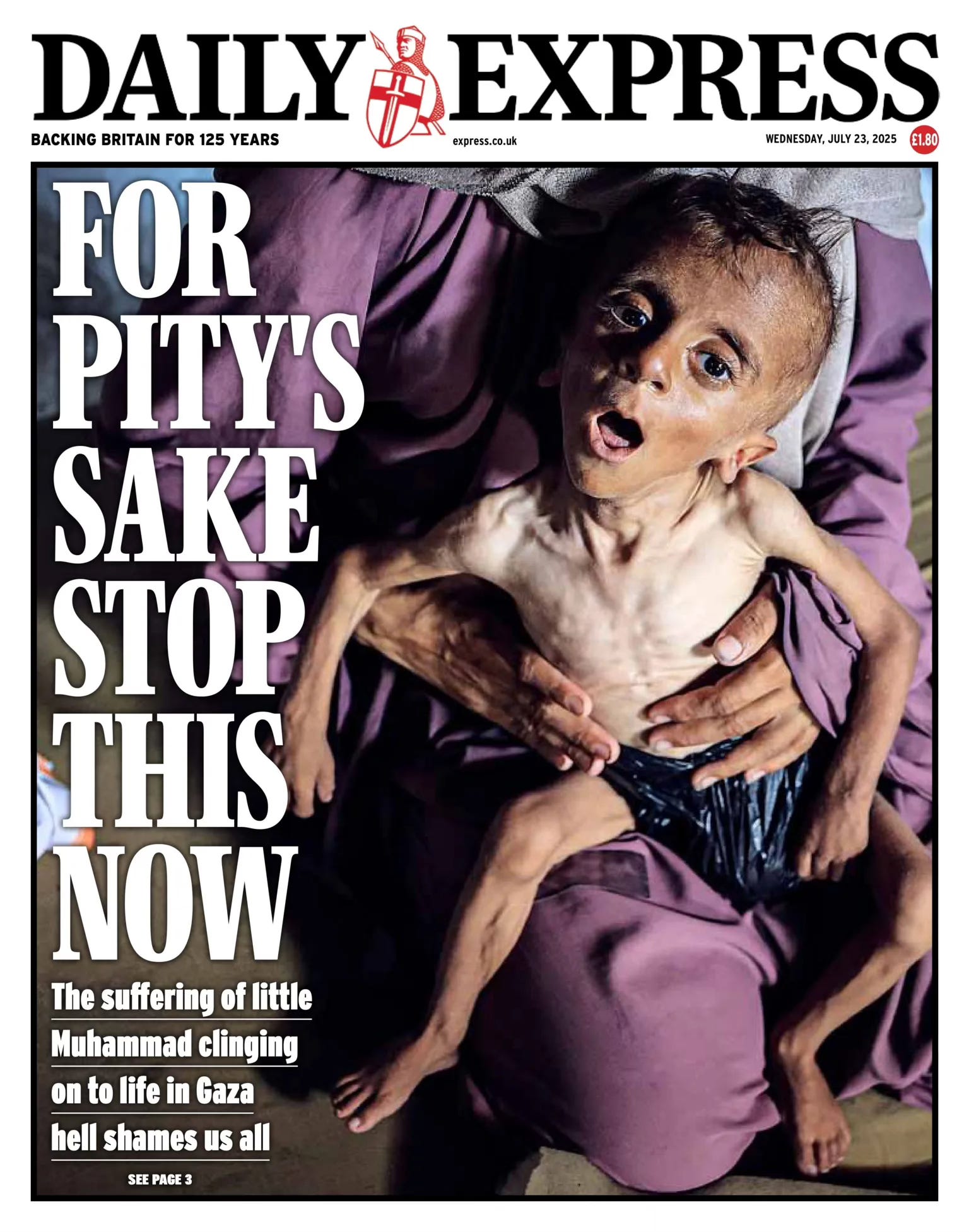
The list could, of course, be made even longer. But when I think of the live-streamed genocide unfolding in Gaza, two historical parallels come to mind first.
The genocide deniers – those who spend more time condemning protestors than Israeli ministers openly declaring their intent to annihilate Gaza, or who show more outrage over slogans than tens of thousands of slaughtered civilians and the even greater number mutilated and maimed – remind me of the spring of 2004. I was 17 at the time and spent a couple of weeks reading Philip Gourevitch's We Wish to Inform You That Tomorrow We Will Be Killed with Our Families, his searing account of the genocide in Rwanda.
One of several memorable passages was the part about how the Clinton administration forbade U.S. officials from using the word "genocide" to describe what was happening:
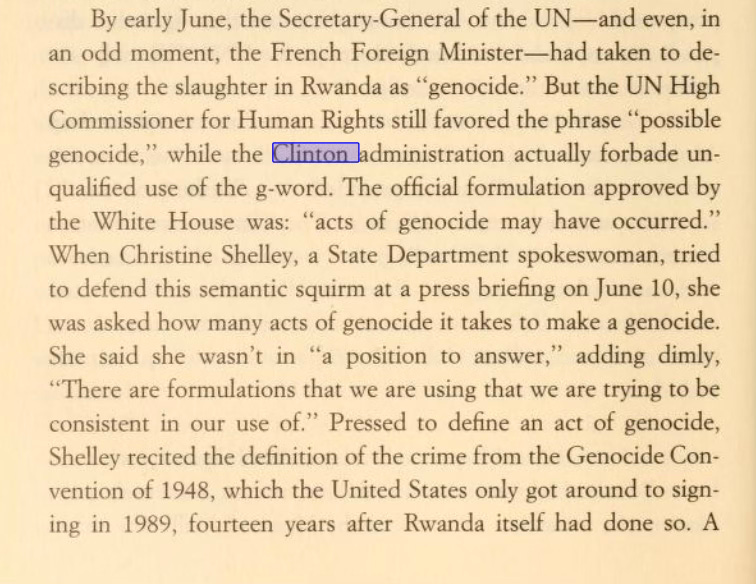
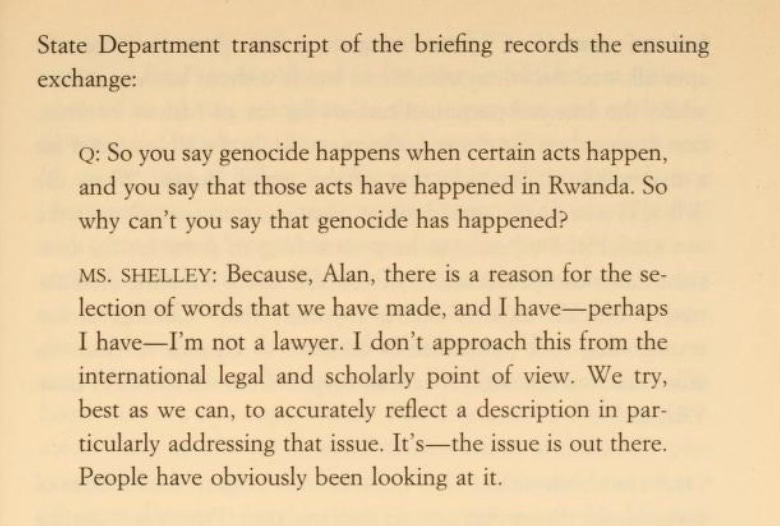
The New York Times reported on it as it transpired. The quote below comes from an article published on June 10, 1994:
"Trying to avoid the rise of moral pressure to stop the mass killing in Rwanda, the Clinton Administration has instructed its spokesmen not to describe the deaths there as genocide, even though some senior officials believe that is exactly what they represent.
That decision has left the Administration at odds with the Secretary General of the United Nations and a cast of distinguished experts who say there is no doubt that the violence, which is said to have killed at least 200,000 people and perhaps as many as 400,000, is part of the deliberate and widespread extermination of an ethnic group.
But American officials say that so stark a label could inflame public calls for action the Administration is unwilling to take. Rather than compare the massacre with, for example, the deaths under the Khmer Rouge in Cambodia, the State Department and the National Security Council have drafted guidance instructing spokesmen to say merely that' acts of genocide may have occurred'."
Naive as I was then, young enough to be convinced that the worst of human history was behind us, I could hardly imagine a world that would allow it to happen again.
And yet, here we are. Once more. And our weak Western governments have only now, in July 2025, begun talking about maybe calling for the EU to review its association agreement with Israel. But of course, only part of it. Tearing it up entirely is out of the question.
Even if we judged the situation only on what has happened since the fall of 2023, which we shouldn't, any halfway competent government would have raised the alarm in the second week of October. By then, it was already clear what Israel intended to do to Gaza. Ministers had been explicit from the start: calling Palestinians "human animals," declaring that the entire population bore collective guilt for October 7, vowing to cut off food, water, and medicine, fantasizing aloud about nuking Gaza, and dreaming of annexing ever larger swaths of Palestinian land.
The time for platitudes is long past. Empty statements about "pushing" Israel to allow aid convoys or "urging" it to follow international law are far from enough. Comprehensive sanctions. Immediate boycott. Total diplomatic and economic isolation. A full-scale international intervention? That's what's needed to stop this nightmare.
Because right now, the remaining population of Gaza is being deliberately starved by Israel. Palestinians who risk venturing to the few and newly established aid distribution centers often become targets, gunned down in what have become near-daily massacres.
Yesterday, over 100 aid organizations sounded the alarm: without immediate action, mass starvation will spread uncontrollably. And yet, in a failure that defies basic humanity, the "political will" to stop it is nowhere to be found.
History has shown us that genocide isn't always committed with weapons. Often, it's the conditions themselves, engineered by the perpetrators, that do the killing.
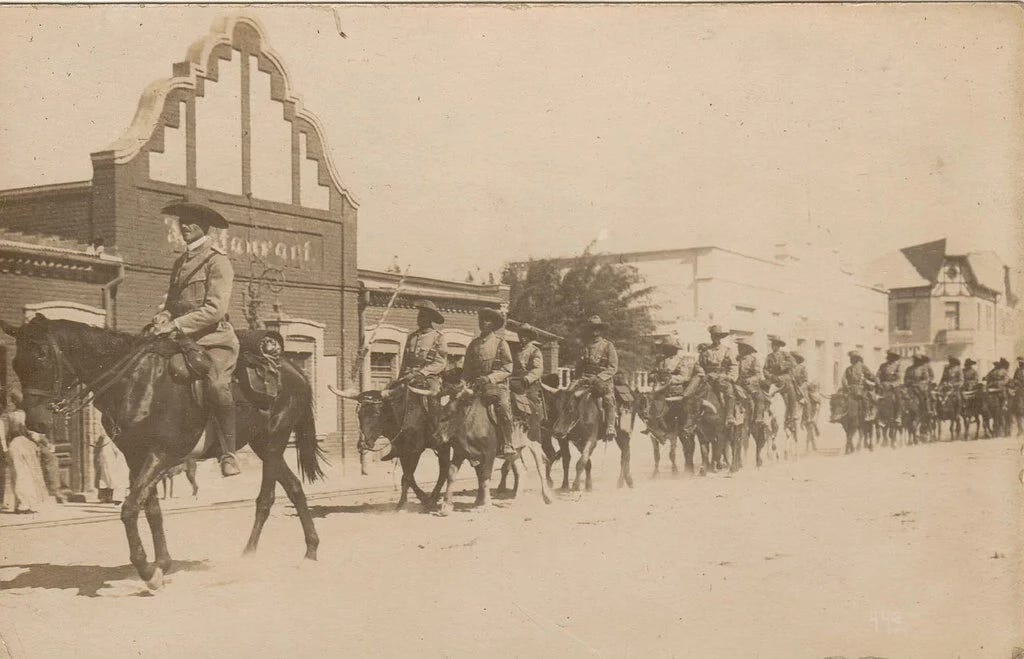
Take Germany's genocide in Namibia between 1904 and 1908. German colonization had begun in the 1880s, and after years of brutal oppression, the Nama and Herero people rose in resistance.
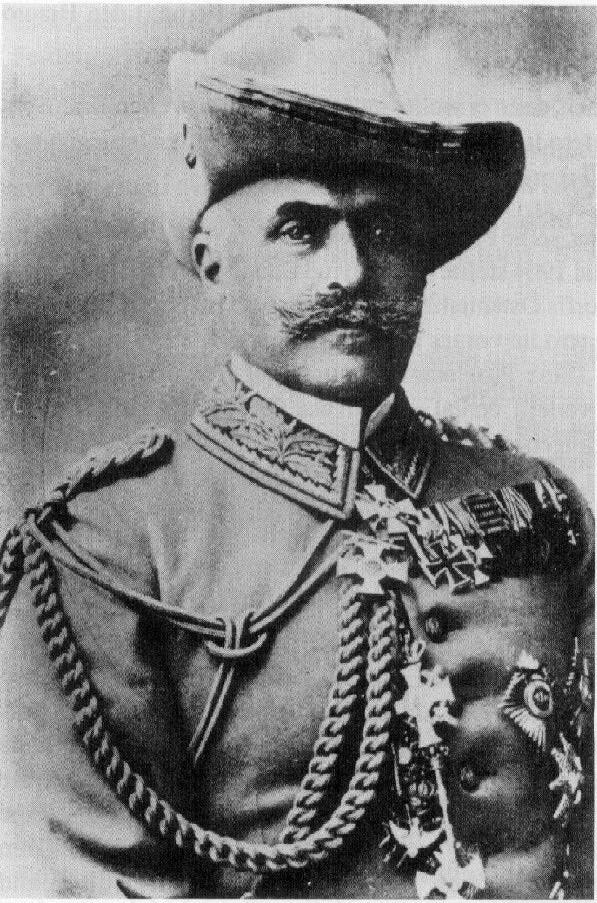
In June 1904, General Lothar von Trotha, a veteran of the German army, arrived with 6,000 soldiers, more than the total number of German settlers in the colony. His aim? To crush resistance through sheer terror. In Martin Meredith's The Fortunes of Africa: A 5000-Year History of Wealth, Greed, and Endeavor, one of Von Trotha's statements is quoted:
"I know enough tribes in Africa. They all have the same mentality insofar as they yield only to force. It was and remains my policy to apply this force by absolute terrorism and even cruelty. I shall destroy the rebellious tribes by shedding rivers of blood and money. Only then will it be possible to sow the seeds of something new that will endure."
Battles ensued, and the Herero and Nama managed to secure some victories. But ultimately, they were no match for Germany's modern weapons. After a decisive German victory at the Battle of Waterberg in the summer of 1904, around 50,000 Herero, primarily civilians, were driven into the Kalahari Desert.
The Germans hunted down and executed as many stragglers as possible. But since they wouldn't be able to catch up with everyone and their water rations were running low, von Trotha decided to seal off all known waterholes. German forces patrolled the desert's edge with shoot-to-kill orders for any Herero who returned.
Without supplies, people died quickly. The Herero desperately dug holes in the earth in search of water. Their only protection against freezing nights was desert bushes. Dead bodies and livestock marked their path like a trail of extinction.
But von Trotha wasn't satisfied. In October 1904, he issued the "Vernichtungsbefehl", the extermination order.
"I, the Great General of the German soldiers, address this letter to the Herero people. The Herero are no longer considered German subjects ... The Herero people will have to leave the country. Otherwise I shall force them to do so by means of guns. Within the German boundaries, every Herero, whether found armed or unarmed, with or without cattle, will be shot. I shall not accept any more women or children. I shall drive them back to their people – otherwise I shall order shots to be fired at them."
Patrols were dispatched to hunt down Herero people remaining in the colony: those who had survived the Battle of Waterberg but failed to flee into the desert, along with the 20,000 to 30,000 Herero who had been living elsewhere in the territory. They were systematically rounded up and executed: shot, stabbed, burned alive, or hanged. No one was spared: not women, not children, not the elderly. In some cases, Herero were deceived with promises of safety, only to be slaughtered minutes later.
Although the extermination order was officially directed at the Herero, German soldiers often struggled to distinguish between different ethnic groups, and members of other communities were also killed.
Yet even amid the carnage, some voices in the German administration saw a perverse utility in preserving Herero lives – not out of mercy, but as a supply of cheap, expendable labor. By early 1905, camps were constructed to detain captured Herero, most of them women and children. Many who had survived in the wilderness by eating insects and roots eventually surrendered. Starved and barely more than walking skeletons, they staggered forward and collapsed at the feet of German soldiers.
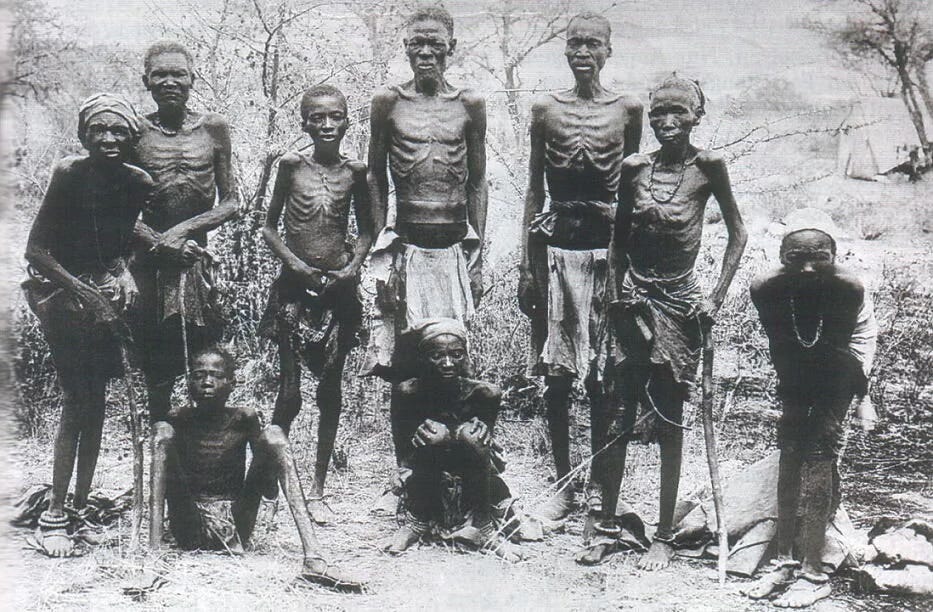
These were not shelters. They were concentration camps. Or, as Israeli ministers today euphemistically call them, "humanitarian cities." Built close to German settlements, the camps ensured that prisoners were readily available for forced labor: laying railroad tracks, constructing roads, or loading and unloading cargo ships. Many were also leased to private businesses and households, where they were exploited as domestic servants or agricultural workers.
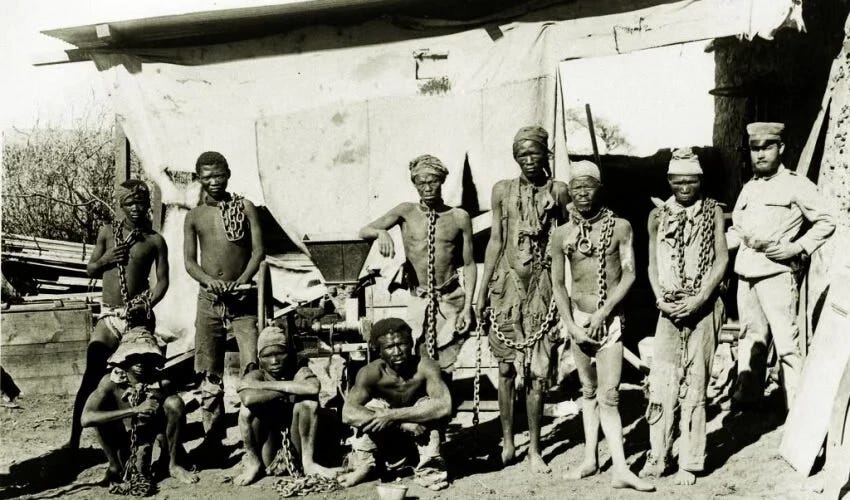
Inside the camps, prisoners were packed into overcrowded halls behind barbed wire. They were given meager rations of uncooked rice and flour and forced to work from sunrise until late into the night, under constant threat of brutal corporal punishment. Heinrich Vedder, a German missionary who visited the camp at the coastal town of Swakopmund, observed that the prisoners were "driven to death like cattle and like cattle they were buried".
This reign of terror wasn't chaotic – it was calculated. It served a clear economic and political purpose, as made disturbingly clear in a letter written by Hans Tecklenburg, vice-governor of German South-West Africa, and cited in David Olusoga and Casper W. Erichsen's The Kaiser's Holocaust: Germany's Forgotten Genocide and the Colonial Roots of Nazism:
"The more the Herero people now feel the consequences of the uprising on their own bodies, the less the coming generations will feel inclined to rebel. Sure, the death of so many natives has a negative commercial impact, but the natural life-force of the Hereros will soon allow them to recover their numbers; the future generations, which could possibly be mixed with a bit of Damra blood, would thus have been bottle-fed with (an understanding of) their inferiority to the white race."
In the fall of 1905, General von Trotha issued yet another extermination order, this time targeting the Nama people, who soon met the same fate as the Herero in the German concentration camps. By the time the killing stopped, up to 80 percent of the Herero and around half of the Nama population had been wiped out.
"How could it happen?" was the question I asked myself then, as a clueless teenager. Today I know.
For nearly two years, we've watched Israel reduce Gaza to rubble, massacre close to 60,000 people, and produce an entire generation of children without arms, without legs, without parents. Those who survived the bombs are now being starved – deliberately, methodically – as Israel inches closer to its goal of ethnically cleansing Palestine.
And all of it has happened in plain sight. With the cameras rolling. With our politicians watching.
"How could it happen?" should, therefore, never be asked again. It should be permanently struck from the vocabulary of shock.
Further reading:
Let Us Die Fighting by Horst Drechsler (1966)
The Kaiser's Holocaust: Germany's Forgotten Genocide and the Colonial Roots of Nazism by David Olusoga and Casper W. Erichsen (2014)